
News
2027 Elections: Vote buying becoming more open, difficult to detect — Festus Okoye

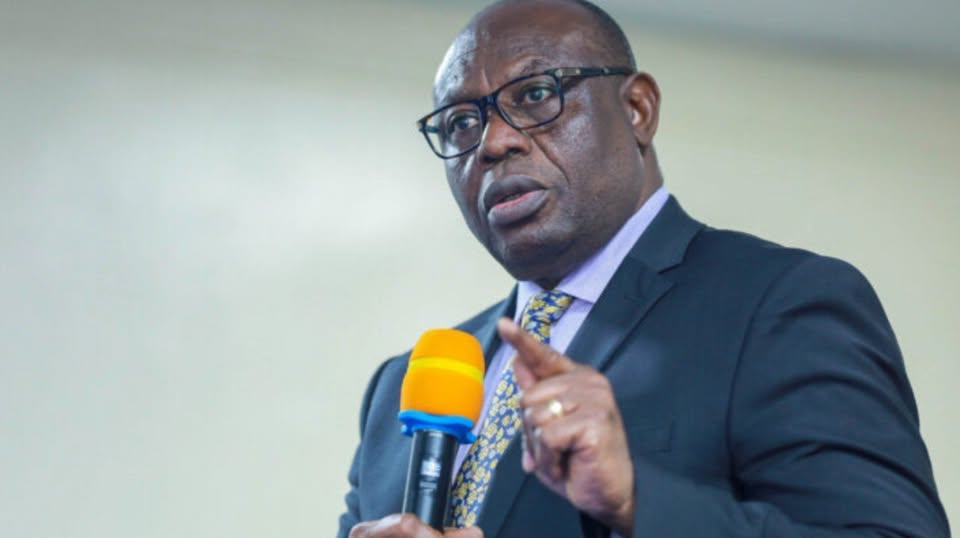
A former National Commissioner of the Independent National Electoral Commission (INEC), Festus Okoye, has warned that vote buying is becoming more open and increasingly difficult to detect ahead of Nigeria’s 2027 general election.
Okoye said the practice had evolved from discreet cash distributions sometimes presented as empowerment programmes to more direct transactions at polling units.
He made the remarks on Saturday during a virtual masterclass organised by the Lagos chapter of the Society of Nigerian Broadcasters (SNB), where he discussed challenges that could affect the credibility of the 2027 elections.
According to Okoye, voters could now receive money from multiple political actors at the same polling location, making it more difficult for electoral authorities and security agencies to identify and prevent the practice.
He warned that the development could undermine the integrity of the electoral process if stronger measures were not put in place to deter voter inducement and hold perpetrators accountable.
Okoye also identified insecurity as another major threat ahead of the 2027 general election.
He expressed concern that the level of security personnel and resources deployed during off-cycle elections might not be sufficient to cover the much larger geographical and logistical demands of a nationwide general election.
According to him, this could create particular difficulties in communities already affected by insecurity, raising questions about how voting would take place and how election results would be collated in areas where normal electoral activities are disrupted.
The former INEC commissioner further raised concerns about the conduct of political party primaries ahead of the elections.
He said the control of party primaries by governors had left some politicians dissatisfied, with some potentially seeking alternative political platforms ahead of 2027.
Okoye also expressed concern over what he described as a growing perception that the judiciary has become the institution that ultimately determines political mandates after elections.
He warned that such a perception could weaken public confidence in the electoral process and democratic institutions.
Against this backdrop, Okoye urged journalists and broadcasters to strengthen their investigative and legal knowledge ahead of the 2027 elections.
He said a better understanding of electoral laws, constitutional provisions and the practical processes governing elections would enable journalists to hold political actors accountable and provide more accurate reporting during the election period.
The 2027 general election is expected to place renewed attention on issues including voter inducement, electoral security, political party primaries and public confidence in Nigeria’s democratic institutions.
Okoye’s warning adds to calls for electoral stakeholders to address potential vulnerabilities well ahead of the polls to ensure that voters can freely exercise their rights and that election results reflect the choices made at the ballot box.


-

 Latest6 days ago
Full List: Meet the 2026 Nobel Prize winners across six categories
-

 Football6 days ago
Premier League Matchweek 7: Five Fixtures That Could Shape the Weekend
-

 Business4 days ago
Dangote Refinery IPO: 70% Subscription claim meets fourfold demand assertion as investors seek clarity
-

 Latest5 days ago
Umahi defends Lagos-Calabar highway route changes amid public outcry
-
Business5 days ago
Dangote Refinery IPO Extension: Was the 70% subscription report overhyped?
-

 Latest3 days ago
UCTH faces morgue crisis as 50 unclaimed corpses await mass burial
-

 Featured5 days ago
El-Rufai, ADC governorship candidate’s court appearance puts Kaduna opposition politics in focus
-

 Business3 days ago
BREAKING: Nigeria’s Inflation Rate Drops to 14.63% in September