
Featured
Tinubu’s Renewed Hope: Reforms, hardship and the unanswered question of a second term

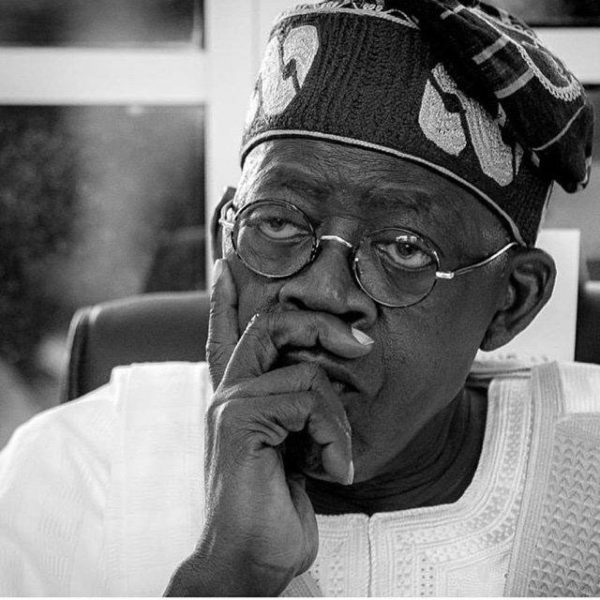
President Bola Ahmed Tinubu came into office in May 2023 promising to rebuild Nigeria’s economy, improve electricity supply, create jobs, strengthen national security and make life more affordable under his Renewed Hope agenda.
More than three years into his administration, however, the central question is whether the policies introduced by his government have translated into meaningful improvements in the lives of ordinary Nigerians.
Tinubu’s 2023 manifesto, titled Renewed Hope 2023: Action Plan for a Better Nigeria, presented an ambitious programme covering the economy, energy, security, agriculture, education, healthcare, infrastructure and governance. It promised a more productive economy, improved electricity, one million jobs in the digital economy, better food security and a stronger response to terrorism and other forms of criminality.
Some of the administration’s policies have produced measurable changes, particularly in foreign exchange management, public revenue mobilisation, student financing and the structure of the petroleum market. But persistent insecurity, high living costs, inadequate electricity and widespread economic hardship raise serious questions about implementation and the distribution of the gains from reform.
As Nigeria approaches another presidential election, the administration must be judged not only by the policies it introduced but also by the results Nigerians can see and experience.
Electricity: Where is the promised improvement?
Reliable electricity was one of the major expectations of the Renewed Hope agenda. Tinubu promised to make power more accessible and affordable to homes and businesses, nearly double generation and improve transmission and distribution infrastructure.
The administration has taken steps to reform the electricity market, including implementing the Electricity Act 2023, encouraging state participation in electricity regulation and introducing tariff changes intended to improve investment and service delivery.
Yet electricity supply remains a major constraint on households and businesses.
The Nigerian Electricity Regulatory Commission’s second-quarter 2026 report put average hourly grid generation at approximately 4,022 megawatt-hours, equivalent to about 4,022 megawatts of average output. This remains far below the level required to provide reliable electricity to a population exceeding 200 million.
The regulator also reported that the national metering rate stood at 62 per cent, leaving millions of customers without meters. Distribution companies recorded average aggregate technical, commercial and collection losses of 36 per cent, compared with an allowed target of 16.92 per cent.
The financial burden is also substantial. NERC reported that the Federal Government incurred an electricity subsidy obligation of approximately ₦1.93 trillion in 2025. Despite this support, consumers continue to experience poor supply, estimated billing disputes and the additional cost of generators, fuel and alternative energy.
The question is not simply how much money the government has committed to the power sector. Nigerians need to know how much electricity generation has actually increased, how much has reached consumers, how many homes have gained reliable supply and what measurable improvements have resulted from public spending.
If the administration promised to nearly double generation, what is the baseline against which that promise should be measured, and how close is Nigeria to achieving it?
Petrol subsidy removal: Economic reform at what cost?
One of Tinubu’s first major policy decisions was the removal of the petrol subsidy, announced during his inauguration on May 29, 2023.
The President argued that the subsidy had become unsustainable and that the money spent maintaining it could be redirected towards infrastructure, education, healthcare and other public services.
The decision was welcomed by some economists and investors who had long argued that the subsidy system encouraged smuggling, drained public resources and distorted the petroleum market.
However, the immediate consequences for households were severe. Petrol prices rose sharply, increasing transportation, food distribution and production costs. The resulting pressure contributed to the wider cost-of-living crisis.
The emergence of the Dangote Petroleum Refinery has created a significant opportunity to reduce Nigeria’s dependence on imported refined products. Nevertheless, domestic refining has not insulated consumers from international oil prices, foreign exchange movements and crude supply constraints.
Reuters reported in September 2026 that petrol prices had climbed to around ₦1,400 per litre in Lagos and Abuja, with some northern locations recording higher prices.
This raises a fundamental question about the gains promised from subsidy removal: where is the transparent accounting showing how much has been saved, how much has been redirected to public services and what measurable benefits have reached ordinary Nigerians?
The government must also explain why a country with substantial crude oil resources and a major domestic refinery continues to expose consumers to such high fuel costs.
Was subsidy removal accompanied by adequate public transport, targeted support for vulnerable households and effective social protection? Have the promised savings translated into better roads, hospitals, schools and jobs at a scale that citizens can identify?
The reform may have addressed a major fiscal problem, but its long-term success should be measured by whether it improves the welfare of Nigerians.
Insecurity: Can Nigerians feel safe under Renewed Hope?
Tinubu’s manifesto identified national security as a priority, promising stronger security institutions, better equipment, improved intelligence and a more effective response to terrorism, kidnapping and other criminal activities.
The administration has increased security spending, made changes within the military and security leadership and expanded cooperation with international partners.
There have also been military operations against armed groups and criminal networks in different parts of the country.
However, insecurity remains one of Nigeria’s most serious challenges. Communities in the North-East continue to face insurgency, while banditry and mass kidnappings remain major concerns in parts of the North-West and North-Central regions. Attacks, communal violence and criminal activities have also affected other parts of the country.
An Associated Press report published in September 2026, citing a report by SBM Intelligence, said 7,825 people were abducted between July 2025 and June 2026, while kidnappers collected an estimated ₦7.78 billion in ransom payments.
The Armed Conflict Location and Event Data project has also warned that Nigeria’s kidnapping crisis has continued beyond its 2025 peak, with mass abductions remaining a serious concern.
These figures underline the gap between security operations and the everyday experience of citizens.
How many communities previously under the control of armed groups have been permanently secured? How many abducted persons have been rescued? Have kidnapping networks been dismantled, their financial channels disrupted and their sponsors prosecuted?
Can farmers return safely to their farms, traders travel without fear of abduction and children attend school without the threat of mass kidnapping?
The government cannot measure security success only by the number of operations conducted or suspects arrested. The most important measure is whether Nigerians are safer.
Economy: Improved indicators, but has life become easier?
The Tinubu administration inherited an economy facing high debt-service obligations, weak revenue generation, foreign exchange pressures and structural challenges. Its decision to unify the exchange rate and remove petrol subsidies represented a major departure from previous economic management.
The reforms have attracted support from international financial institutions and some investors. Nigeria has recorded improvements in selected macroeconomic indicators, including foreign reserves and economic growth.
The International Monetary Fund’s June 2026 assessment estimated that the economy grew by about 4 per cent in 2025 and projected growth of approximately 4.1 per cent in 2026. It also acknowledged that the reforms had improved macroeconomic conditions and strengthened resilience.
However, the IMF warned that living conditions remained difficult. It estimated that poverty had reached 63 per cent under Nigeria’s national poverty line and that 27 million people faced food insecurity in the autumn of 2025.
This exposes one of the biggest weaknesses in the administration’s economic argument: improving national economic indicators does not automatically mean improving household welfare.
A stronger foreign reserve position does not necessarily put food on a family’s table. Increased government revenue does not automatically translate into better public services. Economic growth is important, but its benefits must be reflected in employment, purchasing power, access to essential services and reduced poverty.
The administration must therefore answer a difficult question: how many Nigerians are better off today than they were before May 2023?
Jobs and youth empowerment: Where are the opportunities?
Tinubu promised to create one million new jobs in the digital economy and expand opportunities for young Nigerians through technology, entrepreneurship, manufacturing and infrastructure development.
The Nigerian Education Loan Fund has also been established to provide loans to eligible students in tertiary institutions, while government-backed programmes have been introduced to support small businesses and entrepreneurship.
These are relevant interventions, but they do not resolve the wider employment challenge.
Many graduates continue to struggle to secure stable employment, while millions of Nigerians depend on informal work, small businesses and low-paying activities to survive.
The administration needs to publish clear figures showing how many sustainable jobs have been created since 2023, how many are directly attributable to its policies and how many beneficiaries of its youth programmes have moved into stable employment.
It must also distinguish between temporary engagements, training opportunities, business grants and permanent jobs.
A digital economy cannot thrive on ambition alone. It requires reliable electricity, affordable internet, access to capital, quality education and an environment where businesses can grow.
Agriculture, food prices and the cost of living
Food security was another major commitment of the Renewed Hope manifesto. Tinubu promised to increase agricultural production, develop agricultural hubs, improve storage facilities and reduce post-harvest losses.
The government has announced agricultural interventions and support programmes, but food affordability remains a major concern.
Insecurity in farming communities, high transportation costs, expensive fertilisers, inadequate irrigation and poor storage infrastructure continue to affect agricultural production and distribution.
The administration must demonstrate whether its interventions have resulted in increased domestic food production, reduced post-harvest losses and lower prices for essential food items.
How many farmers have received the promised support? How much farmland has returned to productive use following improved security? How many storage facilities have been completed and are operational?
Food security should not be judged by the number of programmes announced or tonnes of fertiliser distributed. It should be measured by whether farmers earn better incomes and families can afford nutritious meals.
Education and healthcare: Are public services improving?
The student loan programme is one of the administration’s more visible initiatives in education. It is intended to reduce financial barriers to higher education and expand access for students who might otherwise struggle to pay their fees.
However, access to loans is only one part of the education challenge. Poor infrastructure, overcrowded classrooms, inadequate teaching facilities, industrial disputes and the cost of education continue to affect students and families.
The government must demonstrate how its policies are improving learning outcomes, reducing the number of out-of-school children and strengthening public universities and basic education.
Healthcare presents a similar challenge. Nigeria continues to face concerns about inadequate facilities, shortages of medical personnel, limited access to affordable medicines and the financial burden of treatment.
The administration needs to show how its health-sector spending is improving primary healthcare, reducing maternal and child mortality, expanding health insurance and making essential medicines more affordable.
A government that promises a better quality of life must be judged by the condition of its schools and hospitals, not simply by policy documents and budget announcements.
What does an independent assessment say?
The debate over Tinubu’s performance is not based only on opposition criticism.
A June 2026 assessment by the AdvoKC Foundation, through its BAT-O-METER initiative, reviewed 53 campaign promises made by the President. The report rated 11 as fully delivered, representing 20.8 per cent; 41.5 per cent were classified as compromised, while 37.7 per cent were rated broken.
The report acknowledged progress in areas including the student loan programme, small-business support and education reforms. However, it identified outstanding commitments involving electricity metering, kidnapping, the Ajaokuta Steel Company, rail projects and environmental restoration.
The assessment is one independent accountability exercise, rather than a definitive verdict on every commitment in the full manifesto. Nevertheless, it offers a basis for asking the government to provide more detailed evidence of what has been delivered.
The second-term question: Has Renewed Hope earned renewed trust?
As the 2027 presidential election approaches, Tinubu and the All Progressives Congress will seek to convince Nigerians that the administration deserves another four years.
The President’s supporters can point to difficult but significant economic reforms, improved macroeconomic indicators, the student loan initiative, changes in the electricity market and efforts to attract investment.
Critics, however, will point to high petrol prices, persistent insecurity, weak electricity supply, poverty, food affordability and the slow translation of policy announcements into visible improvements in public services.
Both sides must be examined against evidence.
In November 2026, Tinubu unveiled a new second-term policy document, the From Reforms to Prosperity Agenda 2027–2031. It promises, among other things, 6 per cent annual economic growth, inflation below 8 per cent and peak electricity distribution of 10,000 megawatts.
But many of these ambitions echo commitments made in 2023. The question is why Nigerians should believe that promises which remain only partially fulfilled will be achieved during another term.
The new agenda also raises an important accountability test: will the administration publish clear baselines, costs, timelines, responsible officials and independently verifiable performance reports for each major commitment?
Ultimately, whether Tinubu deserves a second term is a decision for Nigerian voters. But that decision should not be based solely on party loyalty, political alliances, campaign speeches or promises of future prosperity.
Voters should ask whether their lives have improved, whether their communities are safer, whether electricity is more reliable, whether food and transportation are affordable, whether more people have decent jobs and whether public institutions are delivering better services.
They should also consider the difficult economic conditions inherited by the administration and the long-term consequences of reforms that may take time to produce results. But reform cannot become a permanent excuse for poor delivery.
The Renewed Hope manifesto was a contract of expectations between the President and the Nigerian people. More than three years later, the country needs a transparent account of what has been achieved, what has failed, how public resources have been spent and what remains unfinished.
The central question is no longer what Tinubu promises to do if re-elected. It is what he has demonstrably delivered with the mandate Nigerians gave him in 2023 — and whether that record is strong enough to justify another four years.


-

 Features1 week ago
How ADC leadership crisis put Atiku’s 2027 ambition at risk
-
 Energy1 week ago
NNPC plans 5–10% stock market listing, targets 2027 for IPO preparations
-
 Business5 days ago
DisCos urge Minister to end blame game, apologise to Nigerians over blackouts
-

 Health6 days ago
Study links Pfizer COVID-19 vaccine to higher death rates than Moderna shot
-
 Business1 week ago
Power supply to improve in 72 hours as FG moves to restore generation – Tegbe
-
 Latest1 week ago
How internal party disputes could shape the 2027 elections
-
 Business4 days ago
Fuel price: Our eyes on you, FCCPC tells oil marketers
-

 Football5 days ago
Flamingos arrive in Abuja after historic U-17 Women’s World Cup victory