
Covid-19
When Covid-19 becomes common like Malaria

By Kelechi Decca
I am persuaded to believe that we will have to live with this Black Swan disease outbreak for the next two years before we finally rein it in. It may even graduate to become common like Malaria as it loses the awe and fear factor we attach to it.
At today’s Development Committee briefing of the IMF/World Bank Group, which took place online anyway, it became clearer that this disease is not something that a month to two months lockdown can handle.
While lockdowns seem to be one of the most effective tools at present, the world is not likely to remain locked down for longer.
Countries will have to device ways and means to cautiously open up for business while still tackling the disease.
I read a new report that came out today which points to the likelihood of European countries making adjustments to their visa rules which will require applicants to provide proof of “Covid-19 free” while applying for Schengen Visa.
The Report notes that if the European Commission, which has already called for the prolongation of the border closure until mid-May, decides to extend external borders until September, this means non-EEA nationals and residence permit holders will not be able to travel to these countries.
It is a sure thing that once the risks from the pandemic are reduced, and the Schengen Area starts going back to normality, the member states will start asking for additional documents regarding applicant’s health conditions. This is seen as the best boost businesses need to rebound in confidence.
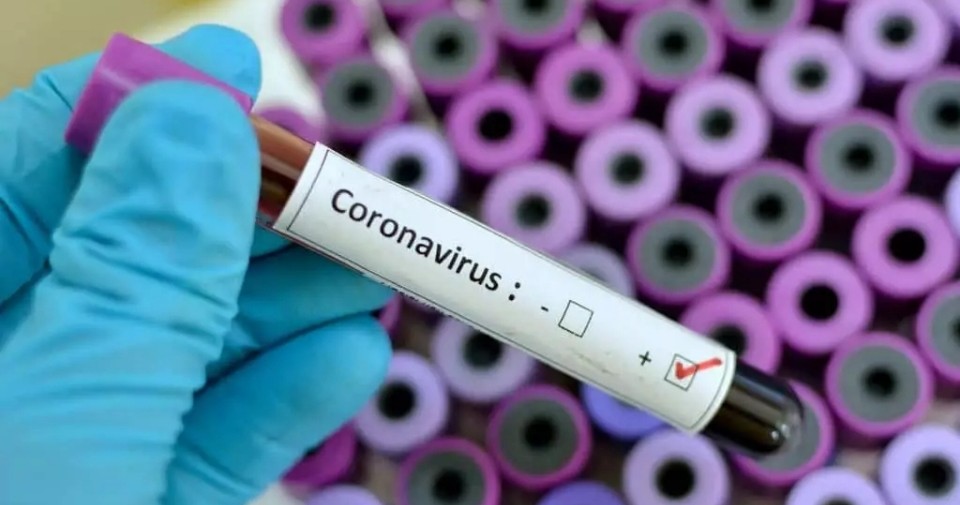
To this end, those wishing to travel to the Schengen Area after the Member States start to gradually go back to normal, may have to present a negative COVID-19 test.
When the Schengen Borders open up in August or September, if they do, Schengen Visa applicants may need to submit a Coronavirus test that has resulted negative, taken within the last two weeks prior to the visa application.
The traveller may be required to take a new test before travelling to the Schengen area, as to make sure that he/she has not been infected in the meantime.
As an added check, as soon as the COVID-19 vaccine is confirmed and available for all, visa applicants may also be required to be vaccinated in the future, in particular, if the virus remains active.
Another new Report notes that because not all countries would be open to vaccination, there’ll be alternatives. And one of such alternative is the Immunity Passport.
The phone based “Immunity Passport” which is already being developed by a company in the United States will be based on an upgrade of an already deployed surveillance technologies used in China, and South Korea.
Your Immunity Certificate will be a code identity on your digital fingerprint.
People who’ve recovered from COVID-19 would be tested for the presence of antibodies. With a little tech to verify their identities, they could show the world that they’re disease-free and ready to return to normal life.
Surely, the unusual is fast becoming the usual.
And by 2023, we would forget what the usual/normal was.
And this will get interesting because we are getting somewhere..


-

 Latest1 week ago
Pastor Chris Oyakhilome announces mother’s passing at 88 [VIDEO]
-

 Latest2 days ago
US Immigration fees rise from October 16 as USCIS announces new charges
-

 Football6 days ago
How David Beckham made $51.1m from 2026 World Cup, surpassing winners’ prize
-

 Comments and Issues7 days ago
Fani-Kayode on Atiku: Separating claims from the record
-

 Health5 days ago
COVID-19 Hospital care under scrutiny as US Senate hears patient, family testimonies
-

 Crime1 week ago
Deaths in NSCDC Custody: Can Nigeria guarantee the safety of detainees?
-

 Business5 days ago
OpenAI shelves GPT-6.1 astra release over safety concerns
-

 Featured1 week ago
Atiku, APC trade accusations over corruption allegations ahead of 2027 elections