
News
How Russia’s annexation of Crimea in 2014 was a clear violation of the Budapest Agreement

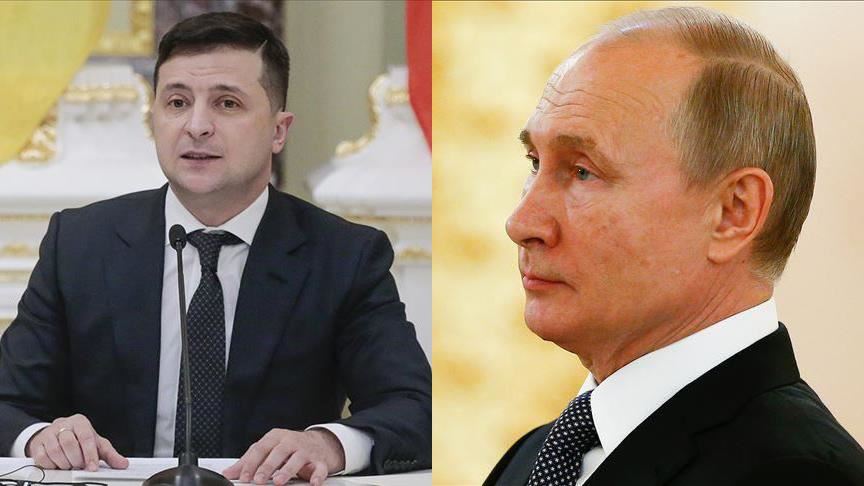
The issue of Ukraine returning its nuclear weapons to Russia in 1994 and the Russian seizure of Crimea in 2014 have an interesting strategic connection.
After the collapse of the Soviet Union, Russia was panicked that Ukraine (now the third largest nuclear weapons state in the world) would not return the weapons to Russia. The West — led by the US — was concerned about Ukraine being a nuclear weapons state outside of nuclear weapons control regimes.
At the time, Ukraine had an estimated 1,900 strategic warheads, 176 intercontinental ballistic missiles, 44 cruise missile-armed strategic bombers and 2,600 tactical nuclear weapons — not a bad stash.
After lengthy negotiations, Ukraine along with the US, Russia and Britain signed the Budapest Memorandum, which in return for Ukraine relinquishing its weapons, promised that none of the nations would use force or threats against Ukraine and all would respect its sovereignty and existing borders. The agreement also vowed that, if aggression took place, the signatories would seek immediate action from the United Nations Security Council to aid Ukraine.
Russia’s annexation of Crimea in 2014 was a clear violation of the Budapest Agreement, and the first test of its security assurances to Ukraine. Despite being a signatory to the agreement, Moscow did not participate in the consultations, and vetoed a resolution against the annexation at the United Nations Security Council. The US imposed some ineffectual sanctions on Russia, but Europe continued to do business with him.
Despite the assurances of the Budapest memorandum, Putin’s aggression went unchallenged. He achieved control of Crimea despite the political kabuki theater the West threw at him.

A Ukrainian Army officer looking over a destroyed missile silo near Pervomaisk, Ukraine, in 2001.
Now, many Ukrainians believe they made a mistake to de-nuclearise, and believe that possessing nuclear weapons could have worked to deter Putin’s invasion.
Ukraine also now sees clearly an historical fact: a nuclear-armed state has never faced a full-scale invasion by a foreign power, regardless of its own actions.
Its concerns were presciently noted by John Mearsheimer in 1993 who argued in Foreign Affairs that a nuclear arsenal was “imperative” if Ukraine was “to maintain peace.” The deterrent, he added, would ensure that the Russians, “who have a history of bad relations with Ukraine, do not move to reconquer it.”
Ukraine chose to trust the US and its allies; but it now sees (as do other nascent nuclear weapons states) the enduring lesson from giving up its weapons: security guarantees and promises of territorial integrity are meaningless. The message these states internalized is stark: nations that sacrifice their nuclear deterrents in exchange for promises of goodwill are often signing their own death warrants.
In Ukraine’s view, it gave away the deterrent value of being a nuclear weapons state for nothing and now faces the destruction of its nation.


-

 Featured5 days ago
Inside INEC’s race to prepare for Nigeria’s 2027 elections
-

 Featured5 days ago
2027: APC unveils nationwide campaign timetable, Tinubu to rally in 12 states
-

 Latest7 days ago
UCTH faces morgue crisis as 50 unclaimed corpses await mass burial
-

 Aviation1 week ago
Germany opens online application route for student, EU Blue Card and other long-stay visas
-

 Business7 days ago
BREAKING: Nigeria’s Inflation Rate Drops to 14.63% in September
-

 Business6 days ago
President Tinubu and the Low Transport Fares Fiasco
-

 Business5 days ago
Court dismisses ₦170m Trade Fair contract claim, says Zenith Bank was not a party
-
 Business2 days ago
Naira faces exchange rate gap as Dollar hits N1,380 on parallel market