
Business
Naira trades at N1,778 per Pound as UK inflation lifts Sterling

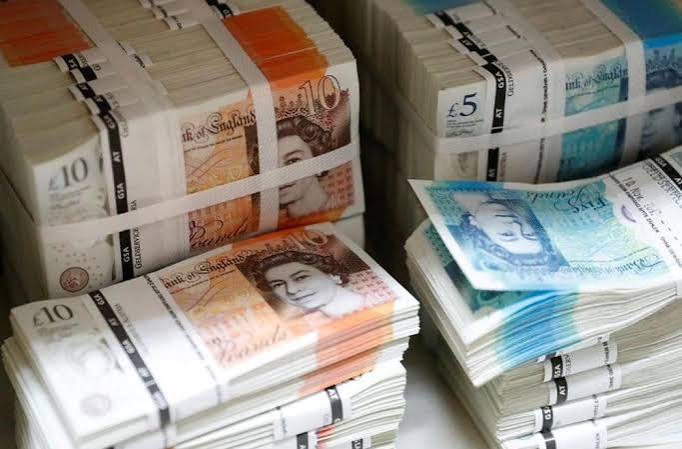
The naira traded at around N1,778 against the British pound during the second trading session of the week, maintaining a relatively narrow range over the past month amid developments in Nigeria’s foreign exchange market and rising inflation in the United Kingdom.
Market data indicated that the naira-pound exchange rate had fluctuated between N1,749 and N1,841 per pound over the past 90 days, reflecting periods of volatility and subsequent consolidation.
The latest trading pattern suggests that the pair is approaching a resistance zone between N1,785 and N1,790 per pound. A sustained move above that range could push the exchange rate towards the psychological N1,790 level.
On the downside, N1,779.40 was identified as an important short-term support level in the supplied market analysis, although a confirmed break below it would be needed to establish a clearer downward trend.
The naira has experienced substantial pressure in recent years, with the pound exchange rate previously breaching N2,000 amid external shocks and domestic foreign exchange challenges.
However, recent months have seen relatively moderate movements, supported in part by efforts to improve market liquidity and strengthen confidence in the official foreign exchange market.
The Central Bank of Nigeria (CBN) has maintained a tight monetary policy stance to contain inflation and attract foreign portfolio investment into naira-denominated assets.
READ ALSO; Naira faces exchange rate gap as Dollar hits N1,380 on parallel market
Nigeria’s gross external reserves were reported at $55.1 billion, while net foreign exchange reserves, after excluding short-term swaps, forward commitments and other foreign exchange liabilities, were estimated at $46 billion in the figures provided.
The apex bank has also pursued measures aimed at improving transparency in exchange-rate determination, reducing disparities between the official and parallel markets, clearing outstanding foreign exchange obligations and meeting legitimate commercial demand through the official window.
Higher yields on short-term government securities, including Open Market Operations bills and Nigerian Treasury Bills, have also helped make naira-denominated assets attractive to offshore investors.
Increased foreign portfolio inflows can strengthen dollar supply in the domestic market and support the naira without requiring the CBN to rely exclusively on reserve sales.
Meanwhile, the British pound strengthened against the US dollar during Wednesday’s European trading session, reaching approximately $1.34 after higher-than-expected UK inflation data reinforced expectations of a tighter monetary policy outlook.
Data from the UK Office for National Statistics showed that headline consumer price inflation accelerated to 3.5 per cent year-on-year in September, exceeding the 3.4 per cent forecast and August’s 3.1 per cent reading.
Core inflation, which excludes food, energy, alcohol and tobacco, also rose to 2.8 per cent, above the 2.7 per cent forecast.
The stronger inflation figures have prompted investors to reassess the Bank of England’s interest-rate outlook, with markets anticipating the possibility of further monetary tightening.
However, the timing and scale of any rate changes will depend on subsequent inflation readings, economic activity and policymakers’ assessment of price pressures.
Investors are now looking towards the UK’s September retail sales figures and preliminary October purchasing managers’ index data, scheduled for release on Friday, for further indications of the economy’s direction.
Developments in the United States are also expected to influence currency movements, particularly expectations surrounding the Federal Reserve’s next interest-rate decision and the outlook for economic growth.
For Nigeria, the pound-naira exchange rate will continue to depend on both domestic foreign exchange supply and demand conditions and movements in the international currency market.
Although stronger portfolio inflows and improved reserve buffers could support the naira, sustained stability will also depend on consistent dollar supply, investor confidence and broader economic fundamentals.


-

 Business1 week ago
Dangote Refinery IPO: 70% Subscription claim meets fourfold demand assertion as investors seek clarity
-

 Featured4 days ago
Inside INEC’s race to prepare for Nigeria’s 2027 elections
-
Business1 week ago
Dangote Refinery IPO Extension: Was the 70% subscription report overhyped?
-

 Latest6 days ago
UCTH faces morgue crisis as 50 unclaimed corpses await mass burial
-

 Featured4 days ago
2027: APC unveils nationwide campaign timetable, Tinubu to rally in 12 states
-

 Business6 days ago
BREAKING: Nigeria’s Inflation Rate Drops to 14.63% in September
-

 Featured1 week ago
El-Rufai, ADC governorship candidate’s court appearance puts Kaduna opposition politics in focus
-

 Aviation1 week ago
Germany opens online application route for student, EU Blue Card and other long-stay visas