
Business
China remains Nigeria’s largest creditor

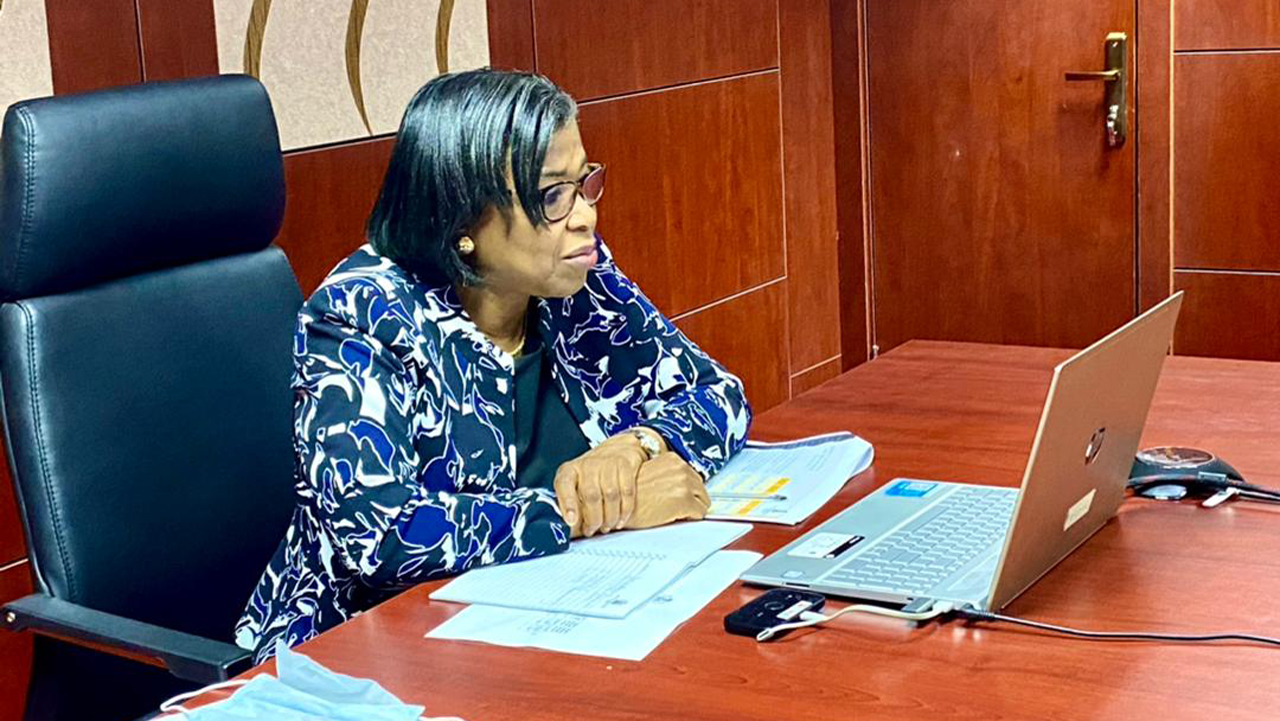
According to the Debt Management Office, DMO, the five countries Nigeria is indebted to are China, France, Japan, India, and Germany.
The agency said Nigeria owes these five countries a total of $5.16 billion as at March, 2023, marking an increase of 2 percent compared to the $5.07 billion in December 2022.
In the quarter reviewed, DMO said Nigeria has borrowed $4.34 billion from China through the Exim Bank of China. The loan is 84 percent of the country’s total bilateral debt, implying that the Asian nation is Nigeria’s largest creditor.
In close proximity are France, with a $593.75 million loan to Nigeria through its Agence Francaise Development; and Germany ($144.75 million) through Kreditanstalt Fur Wiederaufbua.
Others are Japan’s $62.02 million, through the Japan International Cooperation Agency, and India’s $26.64 million, through the Exim Bank of India.
READ ALSO: Dwindling revenue threatens Nigeria’s capacity to repay debt —DMO
According to the African Development Bank, Chinese loans are considered as being less bureaucratic and more welcoming than their Western counterparts, but there are massive gaps in how these loans are structured, hence the concerns about the security of Nigeria’s assets.
On the question of whether China can take over assets in Nigeria in the event of a default, the DMO said Africa’s biggest economy usually plans for its debt servicing every year.
Also, the debt office said all external loans are reviewed by legal officers from the Federal Ministry of Justice, and the legal opinion of the attorney-general of the federation and the minister of justice is obtained before any external loan agreement is signed.
READ ALSO: Arik Air challenges AMCON’s high debt exposure claim
“Nigeria explicitly provides for debt service on its external and domestic debt in its annual budgets. In effect, this means that debt service is recognized and payment is planned for,” the DMO said.
“In addition, a number of the projects being (and to be) financed by the loans are either revenue generating or have the potential to generate revenue.”
On Friday, the Debt Management Office (DMO) published its quarterly debt report, stating that Nigeria’s total public debt — federal and state governments — hit N49.85 trillion at the end of the first quarter (Q1) of 2023.
The latest figure increased by N3.60 trillion from the sum of N46.25 trillion recorded at the end of December 2022.
Nigeria’s debt is divided majorly into external and domestic debt. The external debt is in four major categories (agreements): multilateral, bilateral, commercial, and promissory notes.









-
 Latest6 days ago
Israel marks 3 years since October 7 Hamas attack amid Gaza strikes, election debate
-

 Energy6 days ago
Fuel Battle: Dangote, marketers and government clash over petrol imports
-
 Energy1 week ago
Petrol, diesel prices rise 86% in 2026 as costs hit fresh highs
-

 Football7 days ago
Nigeria’s World Cup exit under spotlight as FIFA’s DR Congo files emerge
-
 Energy1 week ago
Has Iran lost control of the Strait of Hormuz? Oil flows rebound as war disruptions persist
-

 Latest7 days ago
US Court set to rule on release of FBI, DEA records on Tinubu
-

 Latest17 hours ago
Full List: Meet the 2026 Nobel Prize winners across six categories
-

 Business7 days ago
Nigerian investors at a crossroads as fixed-income yields slide