
Business
Zenith Bank boosts interim dividend by 20% as pre-tax profit rises, capital strengthens

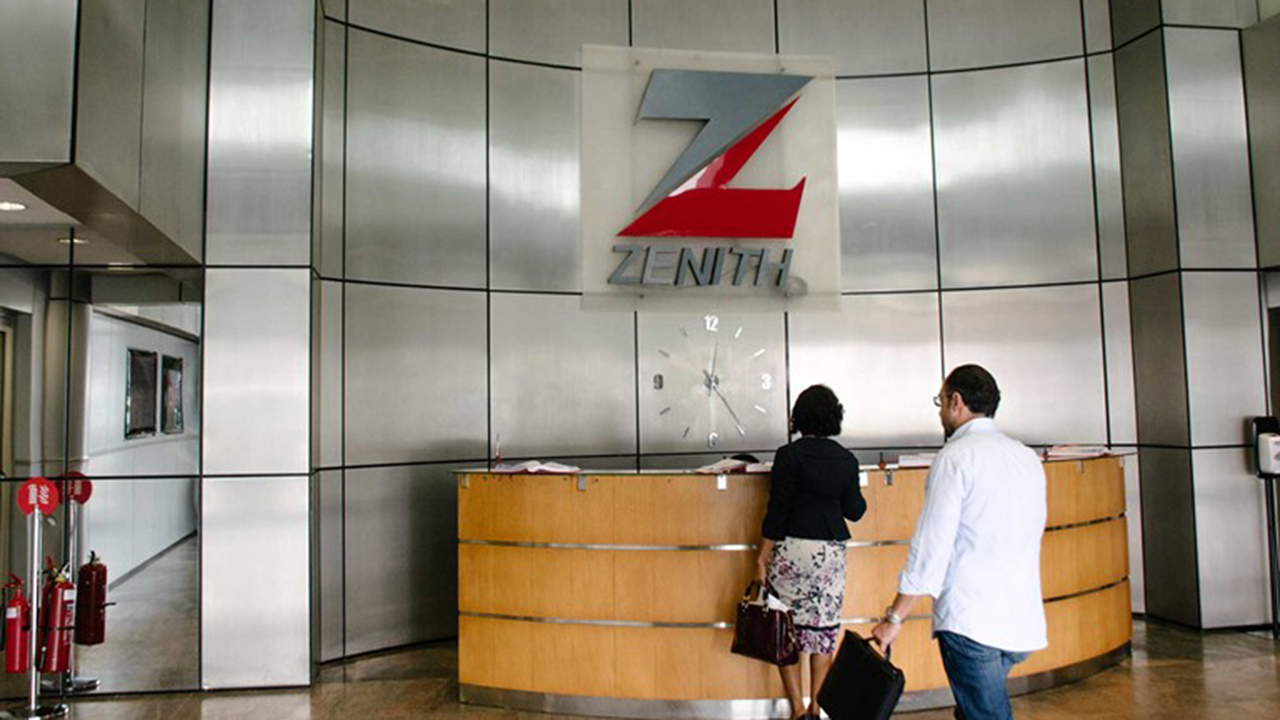
Zenith Bank Plc has increased its interim dividend by 20 per cent to N1.50 per share and recorded a 1.91 per cent growth in profit before tax to N637.60 billion, highlighting the resilience of its core business and strong capital position amid changing market conditions.
The bank’s audited half-year results for the period ended June 2026 showed that profit before tax rose from N625.63 billion in the corresponding period of 2025, while net fee and commission income increased by 39.60 per cent to N178.77 billion.
The improved performance in pre-tax earnings and fee-based income underscores the bank’s capacity to generate revenue from its established banking franchise despite a sharp reversal in trading income.
Zenith’s profit after tax stood at N430.76 billion, compared with N532.18 billion recorded in the first half of 2025, while gross earnings declined by 24.63 per cent to N1.90 trillion.
The reduction in net profit was accompanied by a more than doubling of tax expenses to N206.84 billion from N93.45 billion in the corresponding period of the previous year.
The bank’s earnings were also affected by a significant shift in trading income, which moved from a gain of N467.79 billion in the first half of 2025 to a loss of N92.24 billion in the period under review.
This reversal contributed to a 74.20 per cent decline in non-interest income to N158.16 billion.
However, the 39.60 per cent growth in net fee and commission income provided a positive counterpoint, reflecting increased contributions from fee-generating banking services.
Net interest income, which remains a major component of traditional banking earnings, stood at N1.25 trillion, down 7.41 per cent from N1.35 trillion a year earlier.
READ ALSO; Zenith Bank strengthens continental footprint with N361bn Q1 profit
Zenith Bank maintained strong capital buffers, with its capital adequacy ratio at 25.10 per cent and common equity tier-one ratio at 21.92 per cent.
The capital position provides a cushion against potential financial shocks and supports the bank’s capacity to finance businesses and pursue growth opportunities following Nigeria’s banking sector recapitalisation exercise.
Total assets increased by 5.33 per cent to N32.65 trillion, while customer deposits rose to N26.35 trillion. Loans and advances stood at N12.05 trillion.
The bank’s loan-to-deposit ratio of 45.73 per cent also indicates scope to expand lending, subject to credit demand, risk considerations and regulatory requirements.
On asset quality, impairment charges fell by 81.48 per cent to N141.12 billion from N762.05 billion in the first half of 2025. The cost of risk also declined substantially to 2.36 per cent from 14.38 per cent.
The improvement in impairment charges reduced the burden of credit-loss provisions on earnings, although the non-performing loan ratio increased to 5.20 per cent from 4.39 per cent, making continued monitoring of loan quality important.
Despite lower profit after tax, Zenith proposed an interim dividend of N1.50 per share, compared with N1.25 in the corresponding period of 2025.
The 20 per cent increase demonstrates the bank’s continued commitment to shareholder distributions while maintaining substantial regulatory capital buffers.
The bank’s operating cost-to-income ratio, however, increased to 45.12 per cent from 31.58 per cent a year earlier, reflecting the pressure that lower income can place on operating efficiency.
An assessment by Anchoria Investment Analysts valued Zenith shares at a target price of N150.00, against a reference market price of N134.70, implying potential price appreciation of approximately 11.36 per cent.
The valuation incorporated the Dividend Discount Model, relative valuation multiples and residual income.
At the reference price, the bank traded at a trailing price-to-earnings ratio of 5.90 times and a price-to-tangible-book ratio of 1.15 times. The assessment also estimated an earnings yield of 15.56 per cent and a dividend yield of 7.42 per cent.
The results come after the Central Bank of Nigeria’s recapitalisation programme reached its March 31, 2026 deadline, ushering in a new phase in which banks are expected to demonstrate their ability to deploy stronger capital bases productively.
For Zenith, its expanded balance sheet, strong capital ratios, higher fee income and increased interim dividend provide important indicators of financial resilience.
The bank’s performance in the second half of 2026 will be shaped by its ability to sustain recurring income, manage credit risks, improve operating efficiency and translate its capital strength into long-term earnings growth and shareholder value.


-
 Featured1 week ago
Tinubu’s Renewed Hope: Reforms, hardship and the unanswered question of a second term
-

 Featured7 days ago
The cost of Renewed Hope: How Nigeria’s economic reforms are reshaping everyday family life
-

 Crime3 days ago
Kwara bandit deal under scrutiny as footage shows security operatives negotiating with terrorists [VIDEO]
-

 Business6 days ago
CBN forex reforms under scrutiny as Nigeria’s reserves drop $300m in 10 days
-

 Business7 days ago
NCC plans spectrum incentives to push telecom operators into more network investment
-

 Entertainment5 days ago
2027 Grammys: Asake, Wizkid, Tems, Ayra Starr lead Nigerian nominees in African music category
-

 Latest7 days ago
Nigeria’s security crisis deepens as October death toll hits 835, highest in 2026
-

 Sports1 week ago
Kenya’s Timothy Kibii wins Port Harcourt International Marathon