
Crime
NCoS highlights success in inmate rehabilitation, reintegration efforts
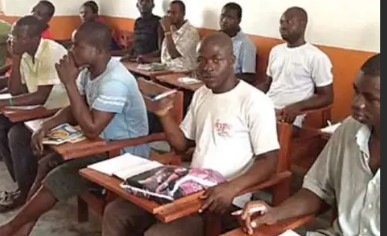
The Nigerian Correctional Service (NCoS) has reported significant progress in its inmate rehabilitation programs, emphasizing educational and vocational training initiatives designed to prepare inmates for successful reintegration into society.


The Nigerian Correctional Service (NCoS) has highlighted its achievements in inmate rehabilitation, showcasing programs that provide educational and vocational training to facilitate successful reintegration into society.
Mr. Abubakar Umar, the Service Public Relations Officer (SPRO), shared these insights in an interview with the press on Wednesday in Abuja.
He emphasized that these programs, including vocational training and educational initiatives, equip inmates with the necessary tools to return to society as productive citizens.
“The government’s commitment to inmate rehabilitation is not just about reforming behaviour. It is about empowering inmates with the skills and qualifications needed to contribute positively to society once they complete their sentences,” Umar stated.
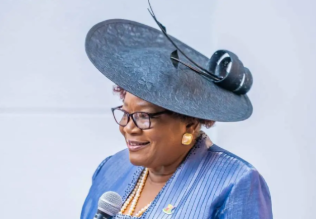
He identified the prioritization of inmate rehabilitation through structured educational, vocational, and psychosocial support programs as one of the most impactful reforms under the administration of President Bola Tinubu and Minister of Interior, Dr. Olubunmi Tunji-Ojo.
“Rehabilitation is at the core of what we do. It’s not enough to just secure the inmates; we also need to prepare them for a life outside the prison walls.
The correctional service is not just a holding centre—it is a reformation ground.
We have inmates who entered our facilities with no formal education and are now PhD candidates.
That is the success story we want Nigerians to hear,” he said.
Umar cited the remarkable story of an inmate who entered a custodial center without a WAEC certificate and has since earned a Bachelor’s degree, completed a Master’s program, and is currently pursuing a PhD.
“The inmate has authored five books, including ‘The Catalyst of Self Development,’ ‘The Eagle and the Storm,’ and ‘Crime Scenes,’ among others.
This is the real success of our rehabilitation programs. As I am talking to you right now, five inmates recently graduated from the National Open University of Nigeria (NOUN), earning degrees in disciplines such as Political Science, Criminology, and Peace Studies, among others. These are real, measurable impacts and not speculation,” he affirmed.
The NCoS, Umar said, has also invested heavily in vocational training programs, enabling inmates to acquire skills that will support them upon release.
He explained that the government’s approach to inmate rehabilitation is holistic, ensuring that inmates are not left to face the world alone upon release.
ALSO READ : FRSC deploys personnel, vehicles for nationwide Easter road safety operation
“Inmates are trained in a wide range of trades, including welding, carpentry, hairdressing, and barbering, among others. We ensure that inmates are not just educated, but also equipped with marketable skills. Upon completion of their sentence, they are given starter packs with the tools they need to set up their own businesses,” he said.
Umar shared examples of former inmates who have transformed their lives, contributing positively to their communities and demonstrating the effectiveness of the NCoS’s programs.
“We have numerous success stories. Inmates who were once incarcerated are now employers of labour, skilled professionals, and active contributors to their communities,” he said.
Umar urged the public and stakeholders to continue supporting the Service, especially under the leadership of the current Controller-General, Sylvester Nwakuche, whom he described as “a seasoned officer with a vision for true correctional transformation.”
He also appealed to the public to recognize and support the NCoS’s efforts in rehabilitating inmates, emphasizing that the NCoS is more than a security agency and is a reform-oriented institution responsible for the rehabilitation of over 70,000 inmates nationwide.
He called for a shift in focus, urging Nigerians to acknowledge the positive changes within the correctional system rather than focusing on isolated negative reports.
“Our goal is to uncover the root causes of anti-social behaviours and help these individuals return to society better than they came in.
The government’s reforms are working, and the results speak for themselves. This is our mandate and we are fulfilling it,” he assured.
NAN reports that as of April 2025, the NCoS reported a total of 79,611 inmates, including both convicted individuals and those awaiting trial, with 53,225 pretrial inmates (66 percent) and 26,841 convicted inmates (34 percent).
The official capacity of the Nigerian prison system is 50,153.
CREDITS : NAN










-

 Latest7 days ago
Pastor Chris Oyakhilome announces mother’s passing at 88 [VIDEO]
-

 Football5 days ago
How David Beckham made $51.1m from 2026 World Cup, surpassing winners’ prize
-

 Latest1 day ago
US Immigration fees rise from October 16 as USCIS announces new charges
-

 Comments and Issues6 days ago
Fani-Kayode on Atiku: Separating claims from the record
-

 Crime1 week ago
Police arrest suspect, launch manhunt for 2 others over Delta Education Director’s death
-

 Latest1 week ago
How adulterated palm oil, coloured pepper are putting consumers at risk
-

 Crime7 days ago
Deaths in NSCDC Custody: Can Nigeria guarantee the safety of detainees?
-

 Business4 days ago
OpenAI shelves GPT-6.1 astra release over safety concerns