
Featured
Viral Debate Rekindles Tensions Over Citizens Recording Police Despite Court Ruling

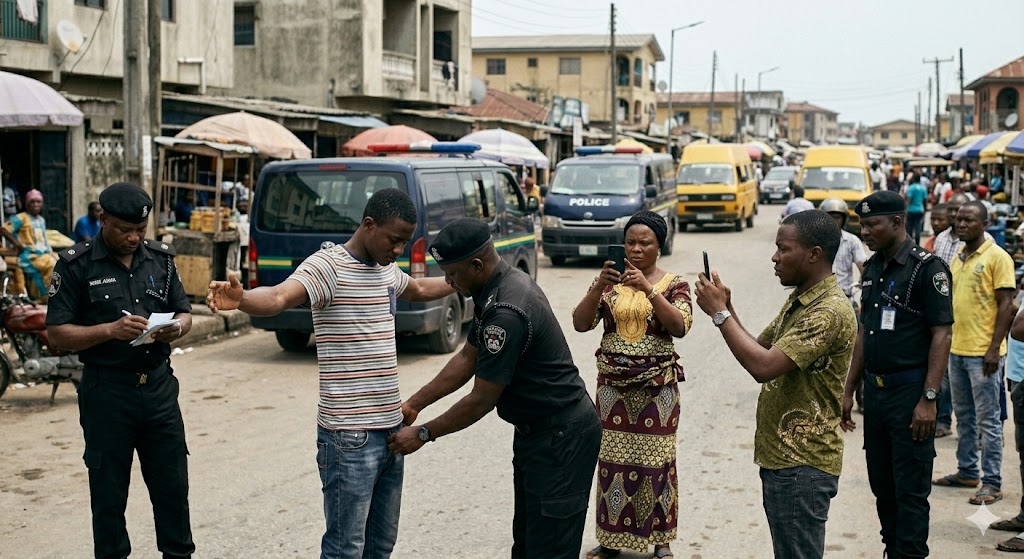
A heated national debate has resurfaced over the rights of citizens to record police officers on duty, following a viral social media post and renewed discussion around a previous court ruling affirming the legality of filming law enforcement in public spaces.
The controversy comes amid ongoing efforts by the Nigeria Police Force to improve accountability and discipline within its ranks, with recent publicized sanctions against officers accused of misconduct and abuse of power.
The latest wave of discussion was triggered by a widely shared online post arguing that citizens should not use smartphones to film police officers in ways that could be perceived as confrontational or disruptive.
The post suggested that while internal disciplinary reforms within the police are ongoing, civilians should avoid “harassing” officers with cameras during street encounters, warning that such actions could escalate tensions.
The remarks quickly divided public opinion. Many Nigerians particularly young social media users defended the right to record police officers, describing it as a critical safeguard against extortion, arbitrary arrest, and abuse of power.
Others argued that some individuals deliberately film officers in a provocative manner during sensitive operations, potentially escalating already tense encounters on the street.
Despite the online debate, Nigerian courts have previously upheld the legality of recording police officers performing their duties in public spaces.
In a ruling by the Federal High Court sitting in Warri, Delta State, the court affirmed that citizens have the legal right to record law enforcement officers while they carry out official duties in public. Legal experts have repeatedly noted that public officials operating in open spaces do not have an expectation of privacy while performing official functions.
The ruling has since been cited in public discourse as a key reference point in discussions about police accountability and citizens’ digital rights.
The debate is unfolding against the backdrop of ongoing internal reforms within the Nigeria Police Force, which has in recent years increased public communication around disciplinary actions taken against officers accused of misconduct.
Authorities have emphasized efforts to improve professionalism and rebuild public trust, including sanctions against officers found guilty of extortion or abuse of power.
However, rights advocates say a persistent gap remains between official policy and ground-level enforcement, where confrontations between citizens and officers sometimes escalate when recording devices are involved.
They argue that until police officers uniformly respect judicial pronouncements and internal directives, tensions over smartphone recording are likely to continue at checkpoints and during street encounters.
Analysts say the renewed debate highlights a deeper issue in Nigeria’s evolving digital rights landscape, where technology is increasingly used as both a tool for accountability and a point of friction in public order enforcement.
While courts have clarified the legality of recording public officials, implementation on the streets remains inconsistent, fueling periodic clashes between citizens asserting their rights and officers enforcing operational control.


-

 Business1 week ago
Dangote Refinery IPO: 70% Subscription claim meets fourfold demand assertion as investors seek clarity
-
 Featured4 days ago
Inside INEC’s race to prepare for Nigeria’s 2027 elections
-

 Featured4 days ago
2027: APC unveils nationwide campaign timetable, Tinubu to rally in 12 states
-

 Latest7 days ago
UCTH faces morgue crisis as 50 unclaimed corpses await mass burial
-

 Business7 days ago
BREAKING: Nigeria’s Inflation Rate Drops to 14.63% in September
-

 Aviation1 week ago
Germany opens online application route for student, EU Blue Card and other long-stay visas
-

 Business6 days ago
President Tinubu and the Low Transport Fares Fiasco
-
 Business4 days ago
Court dismisses ₦170m Trade Fair contract claim, says Zenith Bank was not a party