
Crime
Alleged 27bn fraud: Court overrules Ishaku’s admissibility objection
An FCT High Court in Maitama has rejected former Taraba Governor Darius Ishaku’s objection to the admissibility of certain documents in his N27 billion criminal breach of trust trial. The court ruled that the witness’s statement to the EFCC was admissible, setting the stage for further proceedings in July.

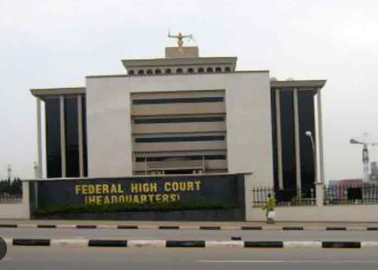
A Federal Capital Territory (FCT) High Court sitting in Maitama on Wednesday overruled an objection raised by the former Taraba State Governor, Darius Ishaku, regarding the admissibility of some documents presented by the prosecution.
Ishaku is being prosecuted by the Economic and Financial Crimes Commission (EFCC) on behalf of the Federal Government, alongside Bello Yero, former permanent secretary, Bureau for Local Government and Chieftaincy Affairs in Taraba State.
Both defendants face a 15-count charge of criminal breach of trust, conspiracy, and conversion of public funds amounting to N27 billion.
They have pleaded not guilty to the charges.
Earlier in the proceedings, Paul Ogbole SAN, counsel for Ishaku, had objected to a statement intended to be tendered by the prosecution through the first prosecution witness (PW1).
Justice Slyvanius Oriji, however, overruled Ogbole’s objection, citing that it did not meet the required provisions of the law. He held that the statement made by PW1 to the EFCC upon his arrest could not contravene the law because the witness was not the suspect or defendant in the current case.
Justice Oriji stated, “The provisions of Sections 15(4) and 17(2) of the Administration of Criminal Justice Act, 2015 were made by the legislature to complement Section 29(1) of the Evidence Act.” He questioned if the counsel would like to be granted a trial-within-trial to ascertain the voluntariness of the statement. “The objection is overruled and the statement received in evidence,” he declared. The matter was subsequently adjourned until July 2, 2025, for cross-examination of PW1 and continuation of the matter.
At the resumed hearing on Wednesday, PW1, Ismail Lawal, former personal assistant to Ishaku, concluded his evidence.
The prosecution counsel, Rotimi Jacobs (SAN), sought to tender the witness’s statement made at the EFCC office.
Ogbole again objected, arguing that Lawal made the statement under caution and that there was no legal presence or video recording, citing provisions of Sections 17(2) and 15(2) of the Administration of Criminal Justice Act (ACJA). Adeola Adedipe (SAN), however, did not object to the document’s admissibility.
In response, Jacobs referred the court to Section 237 of the Evidence Act, which he argued rendered admissible under ACJA void.
ALSO READ : Man arraigned in Ado-Ekiti for alleged cell phone theft
He maintained that the witness’s statement was consistent with his testimony and that the presence of a lawyer is not mandatory during the making of a statement, as long as someone of the person’s choice is present.
He informed the court that in this instance, the witness’s friend, Omotosho, was present. Jacobs, therefore, urged the court to admit the document as evidence.
Earlier in his evidence, led by Jacobs, the witness informed the court that, based on the instructions of the former governor, Ishaku, he disbursed money severally to different sources.
He testified that he collected money from the permanent secretary in Jalingo, Chindo Audu, a liaison officer in Abuja, and Dauda Moses.
He added that the money was usually in cash, ranging from N20 million to N100 million, and was sent to various recipients in line with the ex-governor’s instructions.
Lawal further stated that he also collected money from Taiwo Jones, and when Jones was unavailable, from John Olumba and Emmanuel Uwazurike, sometimes receiving the monies via his personal account.









-

 Football1 week ago
Post-World Cup Shake-Up: Managerial changes, record transfers dominate football headlines
-

 Football1 week ago
WAFCON 2026: Super Falcons target winning start as Nigeria face debutants Malawi
-

 Energy7 days ago
Nigeria wastes enough gas to Ggenerate 62,400GWh of electricity amid deepening energy crisis — NOSDRA
-

 Business4 days ago
Information Minister, VON DG to lead ARCON’s 2026 Advertising Industry Colloquium
-

 Business5 days ago
Cooking gas dealers slash prices amid intensifying market competition
-

 Latest7 days ago
ADC petitions Judge after Appeal Court overturns deregistration ruling
-
 Health7 days ago
Fauci’s personal diaries fuel renewed scrutiny of COVID-19 vaccine safety
-

 Football6 days ago
UEFA threatens FIFA World Cup boycott over proposed private investment plan