
Business
The Pros and Cons of Nigeria’s $10bn Surge in Capital Importation

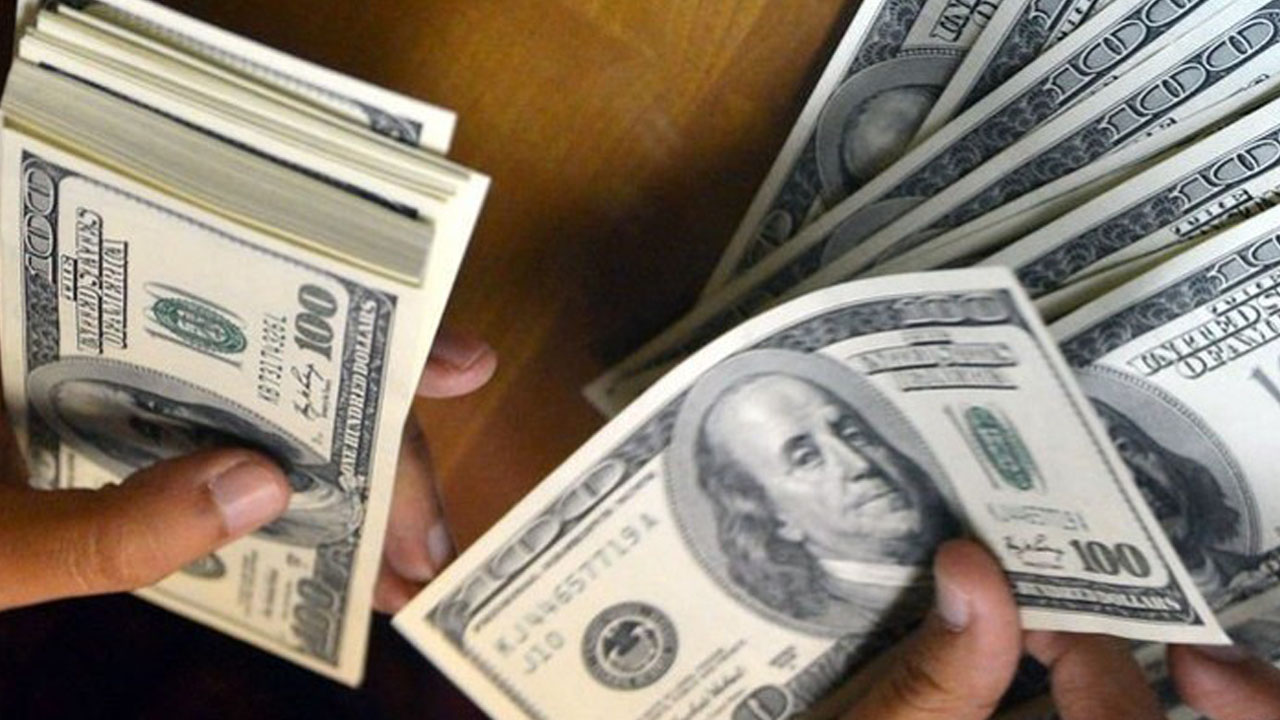
In the past couple of days, Nigeria’s news media have been inundated with a story saying that capital importation into Nigeria in the first quarter 2026 stood at $10.37 billion, a surge of about 84 per cent compared to the same period last year. Capital importation is money (foreign exchange, FX) or assets flowing into a country from abroad for investment or business purposes. Capital importation into Nigeria stood at $5.64 billion in the first quarter 2025; and rose to $6.44 billion in the last quarter 2025, according to the National Bureau of Statistics (NBS).
The casual impression of these figures is that Nigeria has suddenly become attractive to foreign investors; hence the quantum leap in FX inflow during the period under review. However, a decomposition of the capital importation exposes the dangers inherent in the ‘ballooning’ figures. Specifically, when the entire capital is broken down into Foreign Direct Investment (FDI), Foreign Portfolio Investment (FPI) and ‘Other’ investments, a worrisome trend emerges.
In Nigeria’s $10.37 billion for first quarter 2026 being lavishly hyped, Foreign PortfolioInvestment (FPI) accounted for a whopping $9.86 billion or 95.09 percent, while FDI comprised only a minuscule 1.30 per cent or $235 million. FPI via money market instruments sales took the lion’s share of $6.50 billion; bonds $3.23 billion; equities/stocks $131.81 million; and ‘Other’ investments $374.48 million or 3.61 per cent.
The preponderance of the FPI in these data means that foreign investors are buying so much of Nigeria’s stocks, bonds, treasury bills (all short-term instruments, with no controls). On the other hand, the infinitesimal FDI figure means that foreigners are unwilling or reluctant to directly buy or build businesses (long-term ventures, with a lot of controls) here in Nigeria.
FPI, widely regarded as “hot money” is highly prone to easy disappearance from any domainin response to headwinds from various locations across the globe. This accounts for why the Central Bank of Nigeria (CBN) has only been able to stabilize the Naira exchange rate in the FX market, and by extension, the macroeconomic milieu of the country. Beyond this, the monetary authorities have not been able to advance real development.
During the first quarter 2026, Nigeria’s stock of external reserves showed some periodic depletions, essentially owing to some FPIs that left the country due to the raging Middle East war. This phenomenon known as “capital flight” meant that some investors pulled away their ‘paper investments’ from Nigeria: a flight to safety kind of move.
However, owing to the tight monetary stance of the CBN that has ensured a very high interest environment in Nigeria for upwards of three years, the monetary authorities’ financial assets are being patronized for their very attractive yields. The CBN through its Monetary Policy Committee (MPC) has consistently hiked the benchmark interest rate in the economy (the Monetary Policy Rate, MPR) up to a peak of 27.5 per cent.
Through the hiked MPR and high Cash Reserve Ratio (CRR), the CBN claims to be fighting the high and soaring inflation rate in the Nigerian economy—which peaked at 34.85 per cent in December 2024. Although the rate has declined markedly to about 15 per cent in February 2026, headwinds arising from the lingering Middle East war have altered the trajectory—with the headline inflation rising above 16 per cent as of April 2026.
All of these, especially the external headwinds, and local policy-induced outcomes, have presented the CBN with massive uncertainty and foggy economic outlook. Consequently, at its last MPC meeting, the monetary authority opted to maintain the tight monetary stance, by keeping the MPR at 26.5 per cent, and the CRR at 45 per cent, among others. All these remain pointers to attractive FPI inflow, and disincentive to FDIs.
The crucial role of FDI in real economic development cannot be overemphasized. It builds factories and creates jobs; and brings technology and skills (as foreign firms train local staff). Therefore, diminishing FDI implies a ‘shrinking’ economy: no new factories are being built, no appreciable expansion or new investments by existing businesses, and many businesses shutting down or reducing capacity utilization, etc.
In point of fact, what the surge in FPI into Nigeria (and its underpinning policies) has been for the country was unrestrained exodus of many of the long-established businesses. Many of them not only got scorched by the fallouts of the Federal Government economic policies, but had to relocate outside the country to use Nigeria only as a market outpost.
Critical stakeholder-groups such as the Manufacturers Association of Nigeria (MAN), Lagos Chamber of Commerce and Industry (LCCI), Nigeria Employers Consultative Association (NECA), among others have lamented to no end, the negative impact of the CBN’s policies on their businesses. The high interest rates regime, underpinned by the high MPR, implied effective lending rates by commercial banks standing at between 30 to 35 per cent.
This implied a double whammy for businesses: unavailability and unaffordability of credit facilities—leading to the asphyxiation of most Micro, Small and Medium-sized Enterprises (MSMES)—and this reflecting in worsening unemployment and underemployment rates. While these businesses are being stifled, Government’s monetary and fiscal policies were inadvertently sustaining the high import-dependency of the country. The non-competitiveness of the business environment somehow made importation of finished goods more feasible and viable (even lucrative) thanactual local production.
The country’s grossly dilapidated infrastructure has always been a huge constraint to FDI inflow. The epileptic power supply situation in Nigeria has become legendry; decaying seaport and airport facilities are equally repulsive to serious investors, both local and foreign. Also, the frustrating red tape and bureaucracy soaked in corruption—all combine to scare away discerning foreign investors.
It is also no brainer to state that the lingering and worsening insecurity in Nigeria stands as a cogent reason for the FPI inflow surge into the country. The world is a global village; and every country is in competition with the rest of the world; and so, every discerning investor (FDI, especially) would opt for a domain that offers peace and safety. Lately, Nigeria has been ranking highly in the list of “Most Terrorized Nations” of the world—a huge disincentive to investment inflows.
All said, therefore, the surging FPI could only mean the partial confidence of foreign investors—who would want to share in the ‘benefits’ of Nigeria’s economic reforms, while staying away from the problems of the country. Truly, the investors are ‘voting’ with their investments!


-

 Business5 days ago
Abuja gears up for Jetour T2’s rugged-luxury experience
-

 Business7 days ago
Nigeria Business Outlook: Dangote IPO, markets, inflation and naira in focus this week
-

 Business6 days ago
Dangote IPO rush crashes Bamboo login as investors flood platform
-

 Business5 days ago
Dangote: Petrol price gap fuels smuggling as Nigeria faces fresh pump price surge
-

 Business5 days ago
Tinubu’s economic reforms face public confidence test as cost-of-living crisis persists
-

 Latest1 week ago
Hamzat meets Pastor Chris Oyakhilome, hails Christ Embassy’s community impact
-

 News4 days ago
UK, Canada pledge closer cooperation on trade, defence and AI
-

 Business6 days ago
August inflation faces upward pressure despite disinflation trend – Analysts