
Latest
Fresh twist in PFIPC saga as Senate moves to address N1.3bn budget controversy

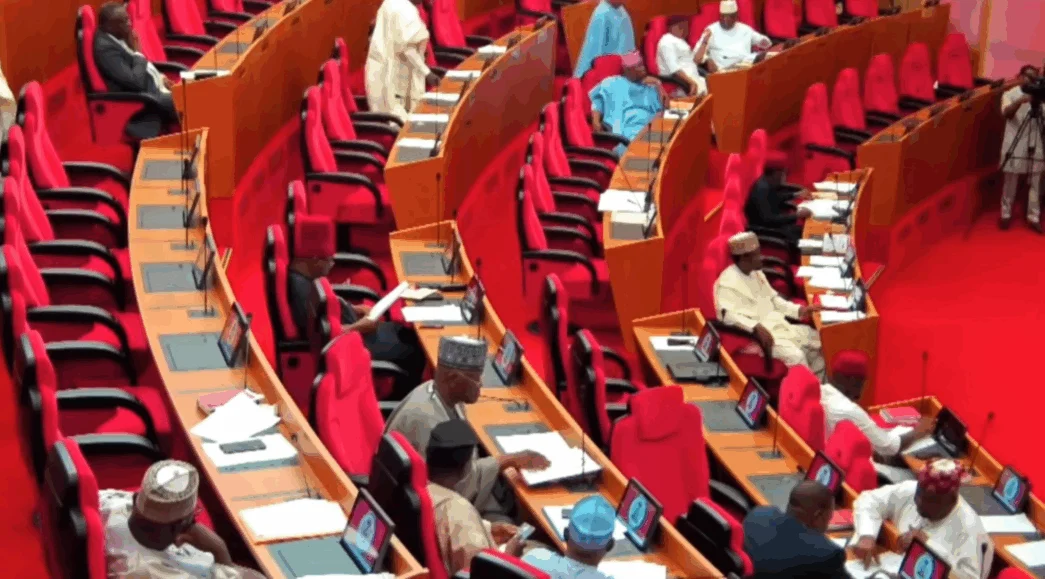
The Senate is expected to address the controversy surrounding the N1.3 billion allocation to the controversial Presidential Foreign Intervention Promotion Council in the 2026 Appropriation Act when plenary resumes on Tuesday, amid fresh revelations over how the agency allegedly secured government recognition through a forged appointment letter.
Multiple Presidency and civil service sources familiar with the matter said the Senate leadership is expected to clarify issues surrounding the controversial budgetary provision following growing public scrutiny and allegations of complicity in the inclusion of the allocation.
According to sources, the controversy stems from an alleged forged appointment letter bearing the falsified signature of the President’s Chief of Staff, Femi Gbajabiamila, which was reportedly accepted by officials at the Civil Service Headquarters without proper verification.
The document allegedly enabled Prince Adeniyi Adeyemi Mathew to obtain office space at the Federal Secretariat Complex in Abuja, giving the purported council an appearance of official government recognition for more than a year.
Sources who spoke on condition of anonymity because of the sensitivity of the matter said the alleged fraud succeeded due to failures in due diligence across several government institutions, including the Budget Office, the House of Representatives and the Civil Service Headquarters.
They maintained that the forged appointment letter became the foundation upon which the council gained legitimacy, allowing it to interact with government ministries, diplomatic missions, members of the National Assembly and private organisations.
A source within the National Assembly disclosed that the N1.3 billion allocation was reportedly inserted into the 2026 budget without any representative of the council appearing before the Senate Committee on Establishment and Public Service to defend the proposal.
According to the source, the provision was introduced alongside other budget items transmitted from the Presidency rather than as a separate request.
“It was not brought in as a stand-alone item. It was done collectively with others that came in directly from the Presidency. So there was no defence or oversight.
“But I understand the Senate leadership will address the controversy on Tuesday to douse the growing tension and allegations of complicity involving any of its presiding officers,” the source said.
Presidency officials explained that the alleged scheme exploited weaknesses in the government’s administrative processes.
One senior official stated that appointments into agencies under the Presidency are constitutionally made by the President, while appointment letters are issued by the Office of the Secretary to the Government of the Federation after presidential approval.
READ ALSO: Atiku questions Presidency’s PFIPC explanation, demands independent inquiry
According to the source, the Chief of Staff does not possess constitutional authority to appoint directors-general or heads of federal agencies.
“In government, appointments are made by the President. The appointment letter is then issued by the Secretary to the Government of the Federation. The Chief of Staff has never appointed anyone at that level,” the official explained.
Another senior civil servant alleged that Adeyemi presented a forged appointment letter purportedly signed by Gbajabiamila and attached it to documents requesting office accommodation at the Federal Secretariat.
“He forged a letter with the Chief of Staff’s signature, which was not even the authentic signature. The Chief of Staff cannot make such appointments.
“He attached the fake appointment letter to his request for office space. Officials were expected to know that such appointments could not originate from the Chief of Staff, but that verification was not carried out,” the source said.
According to the official, once office space was allocated, the council acquired an appearance of legitimacy that enabled it to operate freely.
“Once you have an office at the Federal Secretariat, it confers a high level of legitimacy. He had official letterheads, a website and was able to receive visitors there. After that, few people questioned the authenticity of the organisation until concerns were raised,” the source added.
The official further disclosed that although the office was eventually sealed following Adeyemi’s initial arrest and reassigned to another government official, he allegedly continued operating from another location.
A separate Presidency official suggested that the controversial budget allocation may have resulted from inadequate scrutiny within the National Assembly.
The source argued that frequent turnover among lawmakers may have contributed to institutional gaps, making it easier for the council to secure budgetary recognition.
“He probably knew someone in the National Assembly and requested that funds be allocated to the organisation. Because it already had an office, letterhead and other trappings of government, it appeared legitimate.
“People have continued asking how such an organisation found its way into the federal budget,” the official said.
The source also alleged that Adeyemi had breached the conditions attached to his bail and could be rearrested.


-

 Featured6 days ago
Ranking the seven greatest World Cup finals of all time
-

 Business7 days ago
OPay breaks silence on viral September shutdown claim
-
 Latest6 days ago
Tinubu’s FBI records: Omokri challenges claims, cites 2003 Embassy reply
-

 Business4 days ago
X3M Ideas donates 50 Walkie-Talkies to strengthen security operations in Onigbongbo
-

 Latest5 days ago
2027: Atiku vows direct payment of local government funds if elected president
-

 Latest6 days ago
2027: Atiku, Obi absent as opposition begins talks on single presidential candidate
-

 Latest2 days ago
Cole-Alegbe unveils memoir, urges leaders to harness technology for lasting impact
-

 Latest6 days ago
Anambra 2027: INEC, NDC clash over 10 disputed Assembly candidates