
Health
Liver failure risk: NAFDAC warns Nigerians against fake Menofix capsules

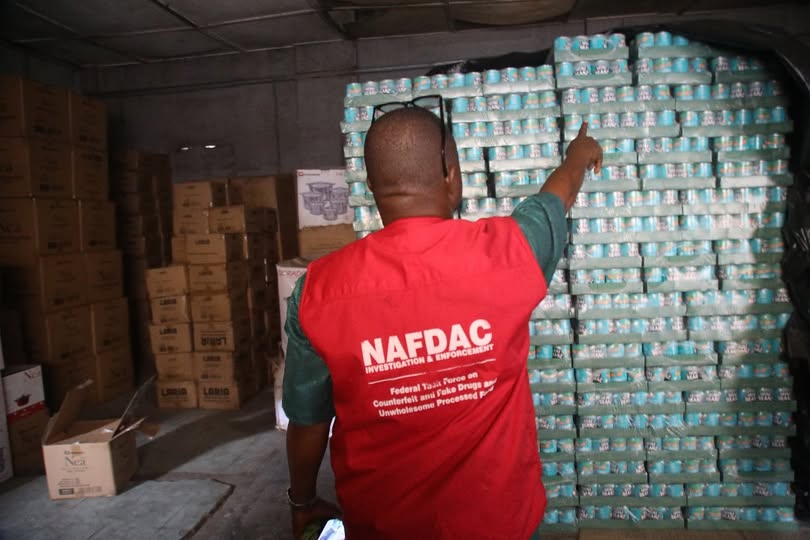
The National Agency for Food and Drug Administration and Control (NAFDAC) has warned Nigerians against the sale, distribution, purchase and use of an unregistered Menofix product, citing potential health risks associated with the supplement.
In a public alert issued on Tuesday, the agency said it received a complaint regarding the marketing and sale of Menofix capsules, which are promoted as a hormone-free, vegetarian-friendly multivitamin and herbal supplement for women experiencing perimenopause and menopause.
Following an investigation by its Post-Marketing Surveillance Directorate, NAFDAC confirmed that the product is not registered with the agency.
According to NAFDAC, the Menofix capsules currently being marketed are different from two similarly named products that have been duly registered.
The agency identified the registered products as Menofix Herbal Capsule (NAFDAC Reg. No. A7-103321L) and Menofix Powder (NAFDAC Reg. No. A7-103342L), both of which are classified as herbal and nutraceutical products manufactured by Gudugudu Herbal Worldwide Enterprises.
READ ALSO; NAFDAC seals distilleries in crackdown on illegal sachet alcohol production
NAFDAC noted that the unregistered Menofix product is widely available over the counter, through online sales platforms and in retail outlets across the country.
The agency also raised concerns over the product’s safety, warning that some of its ingredients have been linked to rare but serious liver-related adverse effects, including hepatitis, elevated liver enzyme levels, jaundice and liver failure.
It disclosed that investigations are ongoing to trace the product’s distribution network and curb its circulation.
As part of its enforcement efforts, NAFDAC said all zonal directors and state coordinators have been directed to intensify surveillance and remove the unregistered product wherever it is found.
The agency advised retailers, healthcare professionals and consumers to refrain from selling, purchasing or using unregistered medical products and urged Nigerians to obtain medicines and supplements only from authorised or licensed suppliers.
NAFDAC further encouraged healthcare providers and members of the public to report suspected cases involving the sale of substandard or falsified medicines and medical devices to the nearest NAFDAC office as it continues efforts to safeguard public health.


-

 Featured1 week ago
Nigeria’s youth unemployment paradox: Graduates struggle as millions survive in informal jobs
-

 Business1 week ago
Nigerian Banks earn N521.8bn from E-banking, card fees in nine months
-

 Energy1 week ago
Nigeria’s power crisis deepens as ₦639bn unpaid gas debt threatens electricity supply
-
 Featured6 days ago
Tinubu’s Renewed Hope: Reforms, hardship and the unanswered question of a second term
-

 Latest1 week ago
Dalung claims ‘message from Buhari’s grave’ urges Nigerians to vote Atiku in 2027
-

 Featured6 days ago
The cost of Renewed Hope: How Nigeria’s economic reforms are reshaping everyday family life
-

 Latest1 week ago
Ondo shuts ponmo processing centre after discovery of human waste
-

 Education1 week ago
Nigeria’s education crisis deepens as schools battle infrastructure deficits