
Business
Nigeria’s 2bcf/d gas supply raises hopes for better power, lower generator costs

By Diden Abigail Owuntarose
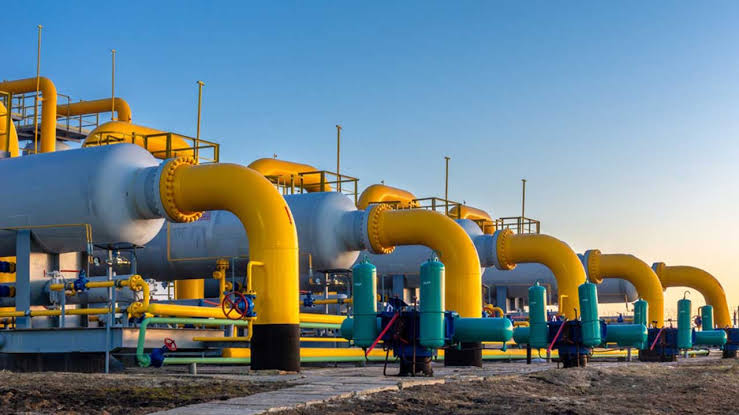
Nigeria’s domestic gas supply has crossed the two billion cubic feet per day (2bcf/d) threshold, raising expectations that increased gas availability could eventually improve electricity supply to businesses and industries.
The development was disclosed by the Minister of State for Petroleum Resources (Gas), Ekperikpe Ekpo, as the Federal Government steps up efforts to boost domestic gas production, expand infrastructure and attract fresh investment into the sector.
Ekpo said total gas production had risen to about 7.5bcf/d, up from approximately 6.8bcf/d in 2023.
The Federal Government is targeting further growth in production, with plans to reach 10bcf/d by 2027 and 12bcf/d by 2030.
According to the government, the additional gas is expected to support electricity generation, manufacturing, fertiliser production, petrochemicals and other productive sectors of the economy.
For businesses in Lagos, however, the critical issue is whether the increase in gas supply will translate into more hours of grid electricity and reduce dependence on expensive petrol and diesel generators.
Gas remains central to Nigeria’s electricity generation system, with a significant proportion of grid power generated by gas-fired plants.
More gas availability could therefore enable power plants to operate at higher levels, but increased gas production does not automatically translate into electricity delivered to consumers.
Data from the Nigerian Upstream Petroleum Regulatory Commission (NUPRC) showed that average domestic gas delivery reached 2.05bcf/d in the first half of 2026.
However, the figure represented only about 65 per cent of the 3.16bcf/d Domestic Gas Delivery Obligation allocated for the period.
The regulator also disclosed that only 23 of about 63 companies allocated Domestic Gas Delivery Obligations were actively supplying gas to domestic customers during the period.
READ ALSO; Gas truck collision shuts down major Ilorin Road, motorists warned
To address the gap between gas obligations and actual physical deliveries, NUPRC has been developing a Gas Swap Framework that would enable operators with stranded gas to work through companies with the infrastructure required to deliver supplies to domestic consumers, including power generators.
The development highlights one of the major challenges confronting Nigeria’s gas-to-power ambitions: producing gas is only the first stage of a much longer chain.
The gas must be processed and transported to power plants, converted into electricity and subsequently transmitted and distributed through the national grid before businesses and households can benefit.
There have nevertheless been infrastructure developments aimed at strengthening the gas and electricity value chains.
The Obiafu-Obrikom-Oben (OB3) gas pipeline, designed to transport up to 2bcf/d, is expected to strengthen the connection between Nigeria’s eastern and western gas networks.
The Nigerian National Petroleum Company Limited said the completion of the River Niger crossing section in April unlocked the pipeline’s full transmission capacity.
However, the extent to which the additional capacity translates into increased deliveries to power plants and other end users will depend on actual gas availability, commercial arrangements and supporting infrastructure.
Lagos is also receiving investments in electricity transmission infrastructure.
In August, the Federal Government inaugurated a 2x60MVA, 132/33KV gas-insulated substation at Apapa, alongside two 100MVA transformers at the Ijora Transmission Substation.
The government said the projects were designed to improve electricity supply to major commercial and industrial areas including Apapa, Ijora, Costain, Oyingbo and Customs.
Meanwhile, operational data from the Nigerian Electricity Regulatory Commission (NERC) showed that grid-connected power plants had an average available capacity of 4,758 megawatts in August 2026, with an average load factor of 86 per cent.
Despite the improvement in gas supply, energy-sector analysts caution that gas alone cannot resolve Nigeria’s electricity crisis.
The Natural Resource Governance Institute, in a July 2026 assessment, identified challenges involving gas supply, electricity transmission and payments as factors that could constrain the ability of gas-fired power generation to meet Nigeria’s rapidly growing electricity demand.
For Lagos businesses, the ultimate measure of the government’s gas expansion will therefore be its impact on actual electricity availability.
A fashion designer, restaurant, barbing salon, printing company or small-scale manufacturer may see little benefit from higher national gas production if electricity from the grid remains unpredictable and businesses continue to rely heavily on generators.
Generator dependence has become a major operating expense for many businesses, particularly enterprises that require electricity for extended periods.
A sustained improvement in grid supply could potentially reduce expenditure on petrol and diesel, freeing funds for inventory, wages, equipment, expansion and other productive investments.
The latest gas production figures therefore represent a potentially important development for Nigeria’s energy sector, but they do not yet guarantee cheaper or more reliable electricity for businesses.
The decisive test will be whether the additional gas reaches power plants consistently, whether generation companies can convert the supply into higher electricity output, and whether transmission and distribution networks can deliver the additional power to consumers.
For Lagos, Nigeria’s commercial hub, the bigger question is no longer simply how much gas the country produces, but how much of that gas can ultimately be converted into reliable electricity, lower operating costs and more productive hours for businesses.


-

 Latest4 days ago
US Immigration fees rise from October 16 as USCIS announces new charges
-

 Health1 week ago
COVID-19 Hospital care under scrutiny as US Senate hears patient, family testimonies
-

 Business1 week ago
OpenAI shelves GPT-6.1 astra release over safety concerns
-

 Business4 days ago
Nigeria’s $55bn reserves raise fresh questions over naira value
-
 Latest1 week ago
ADC’s 2027 Strategy: Who are the key players and what are their roles?
-

 Latest1 week ago
‘Our Uranium lit Europe, while Niger stayed in darkness’ — PM tells UN
-

 Health3 days ago
Florida sues Pfizer over deceptive COVID-19 vaccine marketing
-

 Business1 week ago
OPay leads Nigerian financial apps as smartphone adoption hits 75%