
Business
Nigeria’s poverty crisis worsens as multidimensional rate Climbs to 38.7%

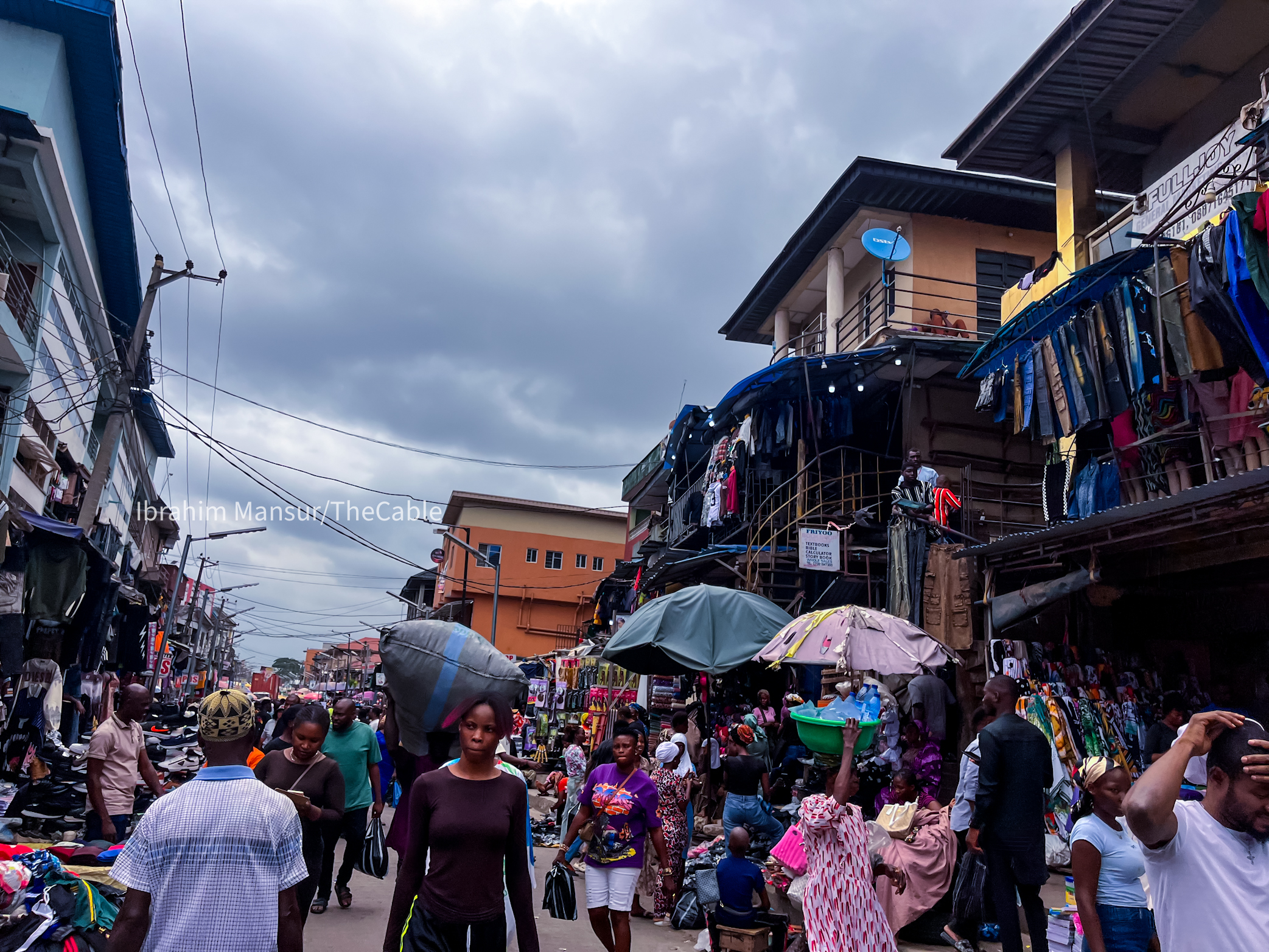
Nigeria’s multidimensional poverty rate rose to 38.7 per cent in 2024 from 33 per cent in 2021, leaving an additional 17.9 million people struggling with overlapping deprivations in essential areas of life, according to a new report by the United Nations Development Programme (UNDP).
The 2026 Global Multidimensional Poverty Index (MPI) report, released on Monday and produced by the UNDP in collaboration with the Oxford Poverty and Human Development Initiative (OPHI), estimated that 90.1 million Nigerians were living in multidimensional poverty in 2024, compared with 72.2 million in 2021.
The report identified Nigeria as the country with the largest increase in the number of people living in multidimensional poverty among five countries that recorded rising figures over their latest measurement periods.
Afghanistan, the Central African Republic, Guinea and Kyrgyzstan were the other countries that experienced increases.
The latest figures represent a reversal of the progress Nigeria recorded between 2018 and 2021, when the proportion of people experiencing multidimensional poverty declined.
According to the report, Nigeria’s multidimensional poverty index value increased from 0.175 in 2021 to 0.208 in 2024, reflecting a deterioration in both the incidence and intensity of deprivation.
The intensity of deprivation among multidimensionally poor Nigerians also rose from 52.9 per cent to 53.6 per cent over the same period.
The findings highlight the scale of the challenges confronting households that struggle to access basic services and necessities, including adequate nutrition, education, electricity, clean drinking water, sanitation and decent housing.
The latest figures show that Nigeria’s progress in reducing multidimensional poverty over the preceding years was not sustained.
The report’s historical data showed that the country’s MPI value declined from 0.230 in 2013 to 0.202 in 2018 and 0.175 in 2021 before climbing to 0.208 in 2024.
Similarly, the proportion of Nigerians living in multidimensional poverty fell from 42.3 per cent in 2013 to 37.2 per cent in 2018 and 33 per cent in 2021, before rising to 38.7 per cent in 2024.
The number of affected Nigerians followed a similar pattern, declining from 76.3 million in 2018 to 72.2 million in 2021 before increasing sharply to 90.1 million in 2024.
READ ALSO; Bayelsa governor faces scrutiny over N2.3tn FAAC inflow, 88.5% poverty rate
The reversal suggests that the improvements recorded during the earlier period were insufficient to prevent a renewed increase in the number of people experiencing multiple forms of deprivation.
However, the report cautioned that its estimates are based on household surveys conducted in different years. Nigeria’s latest figures are derived from 2024 data and should not be interpreted as a direct measurement of poverty in 2026.
The distinction is important because the report measures conditions captured by the relevant household survey rather than providing a real-time assessment of the country’s poverty situation.
Unlike conventional income-based poverty measures, which assess people’s economic circumstances through earnings or expenditure, the Multidimensional Poverty Index examines the overlapping disadvantages individuals experience in their daily lives.
The global MPI measures deprivation across three broad dimensions: health, education and standard of living.
These dimensions are assessed through 10 indicators covering nutrition, child mortality, years of schooling, school attendance, cooking fuel, sanitation, drinking water, electricity, housing and household assets.
A person is classified as multidimensionally poor when their household experiences deprivation in at least one-third of the weighted indicators.
The approach recognises that poverty extends beyond a lack of money. A household may experience several disadvantages simultaneously, such as children missing school, inadequate access to healthcare, unreliable electricity, unsafe drinking water and poor sanitation.
By measuring these overlapping disadvantages, the index provides a broader picture of living conditions and the barriers that prevent households from meeting their basic needs.
The increase in Nigeria’s MPI value therefore indicates that the combined burden of deprivation worsened between 2021 and 2024, with more people affected and the average intensity of deprivation among those classified as poor increasing.
The report also highlighted substantial geographical differences in multidimensional poverty across Nigeria.
According to the findings, poverty incidence ranges from 3.7 per cent to 88.3 per cent across the subnational regions covered by the analysis.
The wide gap illustrates the uneven distribution of access to essential services and living standards across different parts of the country.
The report compared Yobe and Sokoto, two Nigerian subnational regions with similarly high MPI values, to demonstrate that communities can experience different combinations of deprivation even when their overall poverty levels are comparable.
For instance, the specific challenges affecting one community may be more closely associated with education or access to electricity, while another may experience greater deprivation in sanitation, nutrition or other indicators.
The comparison underscores the importance of examining individual poverty indicators when designing interventions rather than relying exclusively on overall poverty rates.
The findings suggest that effective poverty reduction strategies must take account of local conditions and the particular forms of deprivation affecting communities.
Beyond Nigeria, the 2026 Global MPI report estimated that approximately 1.2 billion people across 108 countries live in acute multidimensional poverty.
The figure represents 18.9 per cent of the 6.3 billion people covered by the index.
Sub-Saharan Africa recorded the highest multidimensional poverty rate among the world’s regions, with 616 million people, equivalent to 51.4 per cent of its population, living in poverty.
The region accounts for more than half of the world’s multidimensionally poor population, highlighting the scale of deprivation across countries facing persistent challenges in healthcare, education, infrastructure and access to basic services.
South Asia followed with 393 million people living in multidimensional poverty.
The report’s findings demonstrate that poverty remains heavily concentrated in regions where large populations face overlapping disadvantages in essential areas of life.
For Nigeria, which accounts for a significant share of the population in sub-Saharan Africa, the increase in multidimensional poverty adds to the wider regional challenge of improving living conditions and expanding access to essential services.
Of the 1.2 billion people living in multidimensional poverty worldwide, approximately 998 million, or 83.3 per cent, reside in rural areas, compared with 200 million in urban areas.
The incidence of multidimensional poverty in rural communities stands at 28.7 per cent, against seven per cent in urban areas.
The figures highlight the disadvantages faced by rural populations, where access to essential services and infrastructure can be more limited.
The report also identified children as disproportionately affected by multidimensional poverty.
Children below the age of 18 account for 617 million, or 51.5 per cent, of the world’s multidimensionally poor population.
Globally, approximately one in every three children lives in multidimensional poverty, compared with one in seven adults.
In sub-Saharan Africa, 355 million children experience multidimensional poverty, accounting for 57.7 per cent of the region’s poor population.
The findings underline the particular vulnerability of children to deprivation involving nutrition, education, healthcare, sanitation and other basic needs.
Such disadvantages can have consequences beyond childhood, affecting educational attainment, health outcomes and future economic opportunities.
Despite the overall increase in global multidimensional poverty, the report highlighted evidence that substantial progress remains possible.
Of the 89 countries with comparable data over time, 33 reduced their MPI values by at least half in fewer than 15 years. Six of those countries are in sub-Saharan Africa.
The findings demonstrate that sustained improvements in living conditions are achievable when countries make progress in addressing the overlapping disadvantages that keep people in poverty.
The report’s conclusions are particularly relevant to the United Nations Sustainable Development Goals, which include a target to reduce by at least half, by 2030, the proportion of men, women and children living in poverty in all its dimensions.
Nigeria’s latest figures, however, point to the challenge of sustaining progress and preventing households from falling back into deprivation.


-
 Latest5 days ago
Israel marks 3 years since October 7 Hamas attack amid Gaza strikes, election debate
-

 Energy5 days ago
Fuel Battle: Dangote, marketers and government clash over petrol imports
-

 Energy6 days ago
Petrol, diesel prices rise 86% in 2026 as costs hit fresh highs
-

 Energy7 days ago
Has Iran lost control of the Strait of Hormuz? Oil flows rebound as war disruptions persist
-

 Football6 days ago
Nigeria’s World Cup exit under spotlight as FIFA’s DR Congo files emerge
-

 Latest6 days ago
US Court set to rule on release of FBI, DEA records on Tinubu
-

 Business6 days ago
Nigerian investors at a crossroads as fixed-income yields slide
-

 Business7 days ago
LoveWorld Trade and Investment Forum to Convene Business Leaders in Accra