
Business
Fuel tax looms as IMF questions where Nigeria’s subsidy savings went

By Olusegun Odunewu
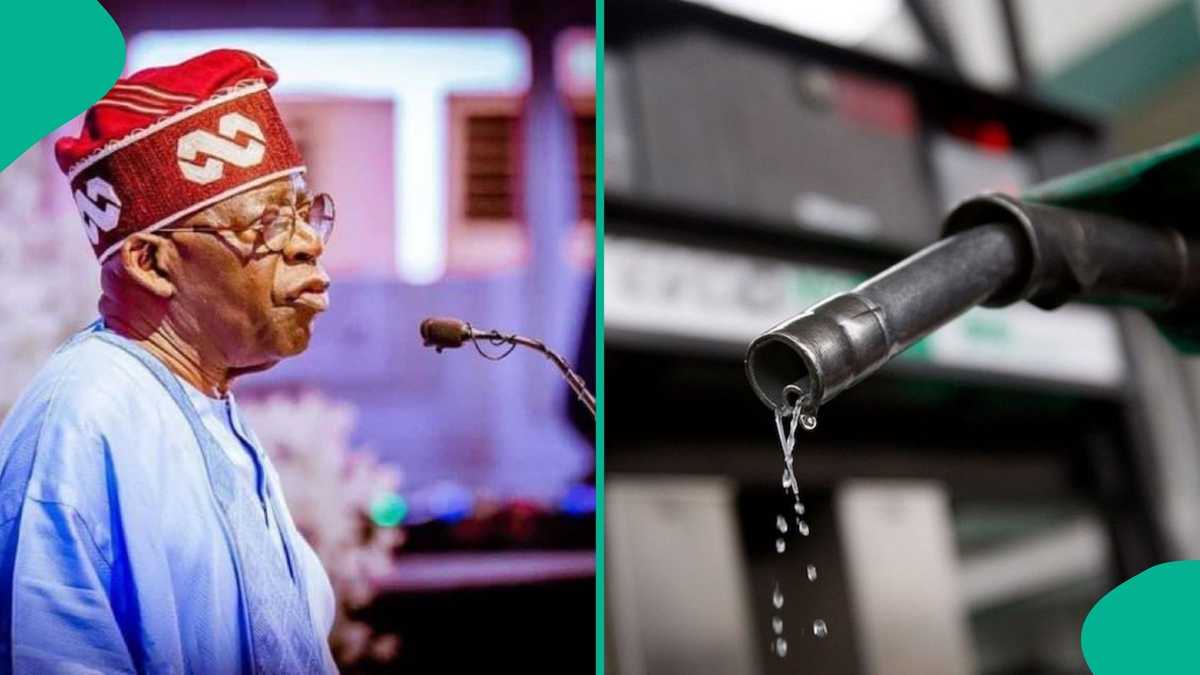
Nigeria’s plan to introduce a five per cent surcharge on fossil fuel products is raising fresh questions about the cost of economic reforms, the transparency of public spending and the government’s readiness to impose another financial burden on households and businesses still grappling with high energy costs.
The Minister of Finance and Coordinating Minister of the Economy, Taiwo Oyedele, recently disclosed that the Federal Government would activate the fuel tax when the economy had stabilised and Nigerians’ incomes had improved sufficiently to absorb the additional cost.
The proposed levy, which requires a ministerial order published in the Official Gazette before implementation, is intended to generate revenue for road infrastructure and a fuel reserve designed to cushion future price shocks.
However, the announcement has triggered resistance from citizens and business groups, who fear that an additional charge on petroleum products could raise transportation, production and distribution costs, ultimately feeding into consumer prices.
A central question emerging from the controversy is whether the government can demonstrate that previous savings from petrol subsidy removal have translated into measurable improvements in citizens’ living conditions before seeking additional revenue from fuel consumers.
Subsidy savings under scrutiny
President Bola Tinubu announced the removal of petrol subsidy on May 29, 2023, setting off a major adjustment in fuel prices and transportation costs.
READ ALSO; Fuel tax not on the table for now — Oyedele
The Federal Government subsequently reported that subsidy removal generated ₦15.8 trillion in savings for the federation between June 2023 and December 2025.
However, the figure does not represent money sitting in a dedicated government account. It reflects estimated resources made available through the policy change, while the government has also reported increased revenues, borrowing and expenditure during the period.
An analysis published by Channels Television on August 19, 2026, said the Federal Government’s reported incremental resources between June 2023 and December 2025 amounted to ₦20.4 trillion, while incremental expenditure reached ₦30.64 trillion.
The government has attributed much of the increased spending to debt servicing, higher public-sector wage costs, infrastructure commitments and other obligations.
While these explanations provide context for the use of public resources, they leave a critical accountability question: how much of the fiscal space created by subsidy removal has been converted into projects and social interventions that Nigerians can identify and assess?
The International Monetary Fund (IMF), in its 2026 Article IV consultation report on Nigeria, raised concerns about the tracking of subsidy savings.
The report said estimated savings from subsidy removal did not appear to have accrued fully to the budget in 2025, adding that challenges remained in tracking whether and how the savings reached government accounts.
It also identified weaknesses in fiscal reporting and called for stronger public financial management and greater transparency in government expenditure.
These findings do not establish that the funds were stolen, but they reinforce the need for clearer accounting and independently verifiable evidence of how the resources were allocated.
Economists warn about timing and household hardship
The proposed tax comes as the government continues to defend its economic reforms against criticism that improved fiscal indicators have yet to translate into broad-based prosperity.
Nigeria’s headline inflation rate eased to 14.63 per cent in September 2026 from 15.39 per cent in August, according to data reported by Reuters. Food inflation, however, remained high at 19.59 per cent.
For households, the significance of a fuel surcharge extends beyond the amount paid at filling stations.
Petrol is a major input into road transportation, commercial power generation and the movement of agricultural produce and manufactured goods. An additional levy could therefore create indirect costs even for people who do not own vehicles.
Professor Suleiman A.S. Aruwa, in a policy commentary published in August 2026, argued that Nigeria’s fiscal reforms had focused on revenue mobilisation and stabilisation without adequately addressing expenditure reform and underlying socioeconomic challenges, including poverty, unemployment and inequality.
His analysis points to a broader policy dilemma: increasing government revenue may improve the capacity to finance public services, but the benefits depend on spending efficiency, accountability and the extent to which the burden falls on vulnerable households.
Oyedele has argued that suppressing fuel prices is not a sustainable solution and that income growth must outpace price increases to deliver lasting prosperity.
He also maintained that the government would be able to suspend the proposed tax temporarily during future price shocks to reduce pressure on consumers.
However, the minister has not provided a specific implementation date or a measurable income threshold that would determine when Nigerians could afford the levy.
Without published criteria, the promise that the tax will be introduced only after economic stabilisation risks leaving households uncertain about when the additional cost might arrive.
Businesses fear another increase in operating costs
The pressure is particularly acute for small businesses that depend on petrol-powered generators because of unreliable electricity supply.
A tailor, Niyi Osundare, said the proposed levy could further undermine businesses already struggling with fuel prices, declining purchasing power and rising operating expenses.
He questioned how small enterprises could absorb another increase when some were already finding it difficult to remain profitable.
Osundare also challenged the government’s assurance that the levy would not be introduced until incomes improved, arguing that many business owners had yet to recover from the effects of subsidy removal.
Lawyer and public affairs analyst Kunle Onatade similarly questioned the proposal, arguing that the government should first demonstrate the benefits Nigerians had received from the resources generated by subsidy removal.
He alleged that the new levy could become another revenue stream without sufficient accountability over its eventual use. His allegation remains an opinion rather than established evidence of wrongdoing.
The Association of Small Business Owners of Nigeria has also urged the government to prioritise relief for households and enterprises, warning that additional fuel charges could worsen financial pressures on businesses.
What safeguards are needed?
The proposed surcharge framework exempts household kerosene, cooking gas, compressed natural gas and clean or renewable energy products. These exemptions could limit the direct impact on some household energy sources, but petrol and other taxable fossil fuels remain important inputs across the economy.
A key safeguard would be a publicly accessible account showing the amount collected, the projects funded, the locations of completed road works and the resources committed to the proposed fuel reserve.
The government would also need to explain how the reserve would operate, who would manage it, what circumstances would trigger intervention and how any temporary tax waiver would be authorised.
Independent audits and periodic public reports could help establish whether the revenue delivers the promised benefits rather than simply increasing the resources available to the government.
Another consideration is whether the government can establish objective measures of economic stability and household income growth before activating the levy. Such measures would make the minister’s assurance more transparent and open to public scrutiny.
The IMF has similarly stressed the importance of improving revenue mobilisation while ensuring that the timing of reforms takes account of poverty and food insecurity and that social protection programmes are adequately funded.
For Nigerians already bearing the costs of higher fuel prices, the debate is therefore not simply about whether the government should collect more taxes. It is about whether the proposed levy will deliver demonstrable public benefits, whether its burden will be fairly distributed and whether the institutions responsible for managing the revenue can be held accountable.


-
 Business1 week ago
Dangote Refinery IPO: 70% Subscription claim meets fourfold demand assertion as investors seek clarity
-
 Featured4 days ago
Inside INEC’s race to prepare for Nigeria’s 2027 elections
-
Business1 week ago
Dangote Refinery IPO Extension: Was the 70% subscription report overhyped?
-

 Latest6 days ago
UCTH faces morgue crisis as 50 unclaimed corpses await mass burial
-
 Featured4 days ago
2027: APC unveils nationwide campaign timetable, Tinubu to rally in 12 states
-

 Business6 days ago
BREAKING: Nigeria’s Inflation Rate Drops to 14.63% in September
-

 Featured1 week ago
El-Rufai, ADC governorship candidate’s court appearance puts Kaduna opposition politics in focus
-
 Aviation1 week ago
Germany opens online application route for student, EU Blue Card and other long-stay visas