
Business
Nigerian Banks slash dividends as CBN bad loan rules squeeze shareholders

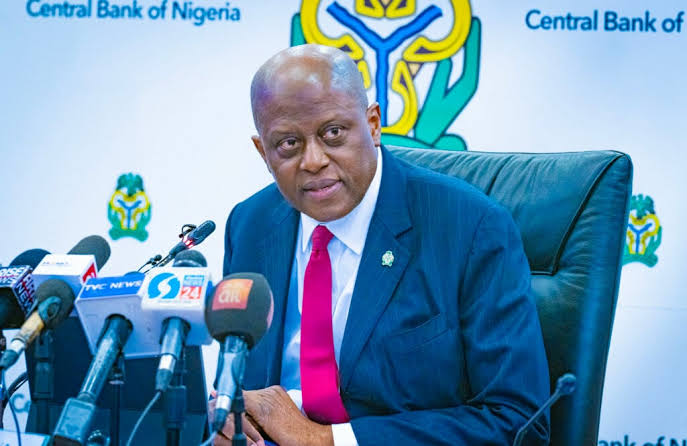
Nigerian bank shareholders are facing a sharp decline in dividend payments as tighter Central Bank of Nigeria (CBN) regulations, rising impairment charges and unresolved bad loans force several lenders to suspend or reduce payouts, despite reporting substantial profits.
Only three banks—Zenith Bank, Guaranty Trust Holding Company (GTCO) and Stanbic IBTC—declared interim dividends from their 2026 half-year results, compared with six lenders in 2024. The development highlights a widening divide between banks that have cleared legacy credit exposures and those still struggling to meet regulatory requirements.
United Bank for Africa (UBA), which paid shareholders N2.00 per share as an interim dividend in 2024, reduced the amount to 25 kobo in 2025 before declaring no interim dividend in 2026. Access Holdings has also suspended interim payouts, while Fidelity Bank’s half-year accounts were still awaiting CBN approval as of October 2026.
The decline is even more pronounced in full-year dividends. Access Holdings, First HoldCo and Fidelity Bank paid no dividend for the 2025 financial year, while UBA’s total payout fell by 95 per cent, from N5.00 per share in 2024 to 25 kobo in 2025.
FCMB Group also reduced its dividend from 55 kobo to 35 kobo per share.
By contrast, GTCO doubled down on shareholder returns, paying a record N12.76 per share for 2025, while Zenith Bank raised its dividend to N10.00 from N5.00. Stanbic IBTC increased its payout to N6.50, and Wema Bank raised its dividend to N1.25.
Together, Zenith, GTCO and Stanbic IBTC paid approximately N978 billion in dividends for 2025, exceeding the combined payouts of the other listed banks.
READ ALSO: NGX loses N3trn in three days as Dangote Cement, Aradel, Banks lead sell-off
The dividend squeeze is largely linked to the CBN’s efforts to force banks to recognise troubled loans and strengthen their balance sheets.
In a circular issued on June 13, 2025, the regulator directed banks still relying on regulatory forbearance for bad loans or single-obligor limits to suspend dividend payments until they had fully exited the arrangement and secured regulatory confirmation of their capital and provisioning positions.
Exiting the forbearance framework has required lenders to recognise substantial credit losses and increase impairment provisions. First HoldCo recorded approximately N826 billion in impairment charges for 2025, compared with N742 billion for Zenith Bank, N524 billion for Access Holdings and N331 billion for UBA. Estimates put impairment charges across nine banks at about N3.2 trillion.
The pressure has continued into 2026. UBA, for instance, reported net loan impairment charges of N255.1 billion in the first nine months of the year, compared with N46.1 billion in the corresponding period of 2025.
Asset quality is also determining which lenders can distribute profits. Under CBN prudential rules, banks with non-performing loan ratios above 10 per cent are barred from paying dividends, while those with ratios between five and 10 per cent face restrictions.
The restrictions have created a difficult situation for shareholders who participated in the banking sector’s recapitalisation exercise. Nigerian banks raised approximately N4.65 trillion over the past two years to meet the CBN’s new capital requirements, much of it from existing investors through rights issues and public offers.
Yet, some of these investors are now confronting suspended dividends and, in certain cases, dilution arising from additional share issues.
Although several lenders have promised improved shareholder returns, regulatory compliance, asset quality and the cost of rebuilding provisions remain major obstacles.
First HoldCo has adopted a policy of paying at least 60 percent of profits as dividends, subject to regulatory approval. UBA has also indicated expectations of stronger profitability and dividend capacity, while Fidelity has guided towards a payout ratio of 25 to 40 per cent.
The next major test will come with the banks’ 2026 full-year results, expected between March and May 2027.


-

 Crime5 days ago
Kwara bandit deal under scrutiny as footage shows security operatives negotiating with terrorists [VIDEO]
-

 Business1 week ago
CBN forex reforms under scrutiny as Nigeria’s reserves drop $300m in 10 days
-

 Business1 week ago
NCC plans spectrum incentives to push telecom operators into more network investment
-

 Business3 days ago
NGX loses N3trn in three days as Dangote Cement, Aradel, Banks lead sell-off
-

 Entertainment7 days ago
2027 Grammys: Asake, Wizkid, Tems, Ayra Starr lead Nigerian nominees in African music category
-

 Latest1 week ago
Nigeria’s security crisis deepens as October death toll hits 835, highest in 2026
-

 Football5 days ago
Argentine teen footballer Abel Nunez dies after suffering head injury during match
-

 Latest6 days ago
2027 Elections: 66% of Nigerians feel no connection to political parties, 89% fear vote-buying – Survey