
Energy
Nigeria: A tale of faulty refineries

At the ongoing Nigerian International Petroleum Summit, the Minister of State for Petroleum Resources, Ibe Kachikwu, lamented the country’s low oil- producing capacity.
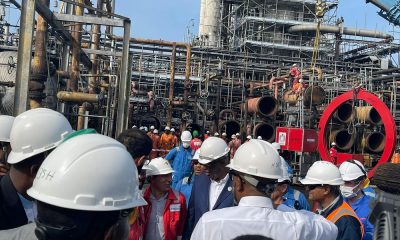
He informed OPEC members and an audience of international investors of plans to revive the refineries.
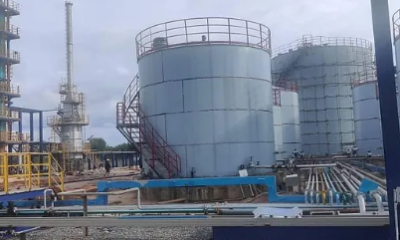
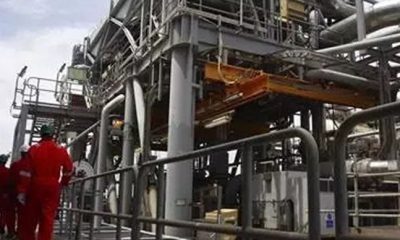
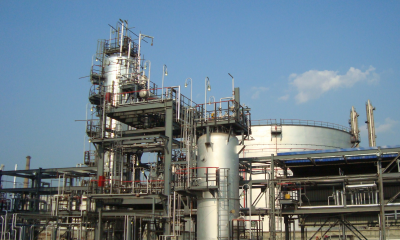
Nigeria’s four principal refineries in Port Harcourt, Kaduna, Warri are old and prone to frequent breakdown.
The two refineries in Port Harcourt commissioned in 1965 and 1989 has an installed capacity of 210bpd, combined, operates at 31.7 percent capacity. The Kaduna refinery, commissioned in 1980 with an initial capacity of 100,000 barrels per day and later 110,000 bpd operates at 27.9% capacity utilization.
The Warri refinery which was commissioned in 1978 with an initial capacity of 100,000 barrels per day but a later additional capacity of 25,000 barrels per day was added with current capacity utilization at just 10.1%.
According to Kachikwu, the refineries are currently producing at 14 percent capacity, one of the lowest in Organization of Petroleum Exporting Countries (OPEC).
National Daily learnt that the Federal Government may have shortlisted Petrodel resources, matrix, BP, Gunvor Nigeria Limited and Honey Group to take over the country’s refineries.
Recall that the Olusegun Obasanjo administration, at its twilight, sold the nation’s refineries to Bluestar consortium led by Nigerian industrialist Aliko Dangote for $750 million.
The Yaradua administration, which took in 2004 over reversed the transaction. Dangote has since embarked on his own refinery project, scheduled for completion by 2020.
A reported concession of the Port Harcourt refinery to a group led by Oando Plc and Agip was halted by the National Assembly. All parties involved (Minister of State for Petroleum, Ibe Kachikwu, Oando Group CEO Wale Tinubu later denied the proposal.
Nigeria currently imports petroleum products, leaving the country susceptible to foreign exchange volatility. Landing cost for petrol is currently in the N170 range, but the government is unwilling to increase pump prices, to prevent a public uproar.
This has left the NNPC as the sole importer, and the nation in throes of a severe fuel scarcity.








-

 Featured5 days ago
Inside INEC’s race to prepare for Nigeria’s 2027 elections
-

 Latest1 week ago
UCTH faces morgue crisis as 50 unclaimed corpses await mass burial
-

 Featured5 days ago
2027: APC unveils nationwide campaign timetable, Tinubu to rally in 12 states
-

 Business1 week ago
BREAKING: Nigeria’s Inflation Rate Drops to 14.63% in September
-

 Business6 days ago
President Tinubu and the Low Transport Fares Fiasco
-
 Business5 days ago
Court dismisses ₦170m Trade Fair contract claim, says Zenith Bank was not a party
-
 Business2 days ago
Naira faces exchange rate gap as Dollar hits N1,380 on parallel market
-
 Latest5 days ago
Breaking: NNPCL raises petrol price to ₦1,405 per litre amid discount controversy