
News
Adolescent girls produce 15,000 reusable sanitary pads in Kaduna – Official

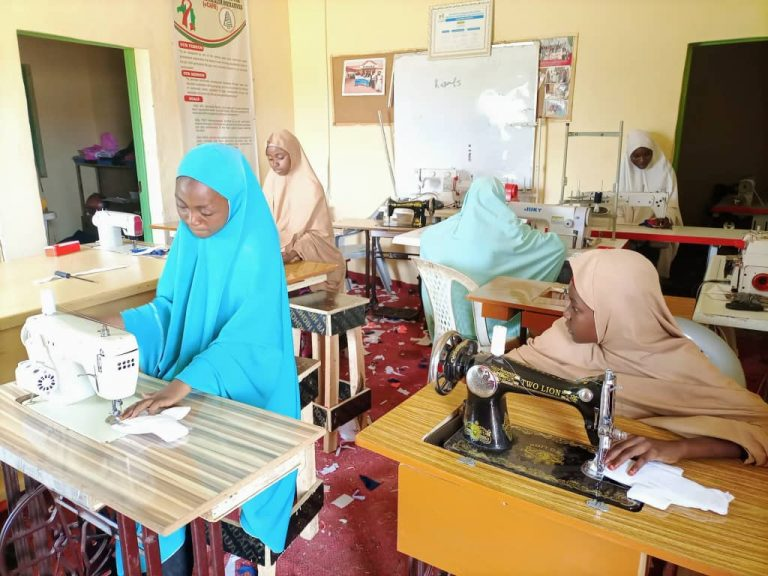
Mr Yusha’u Abubukar, Executive Director, Enhancing Communities Action for Peace and Better Health Initiative (E-Caph), made this known in an interview with the News Agency of Nigeria (NAN) in Kaduna on Friday.
Abubakar said that the sanitary pads were produced by 150 adolescent girls, 15 to 18 years, who were rounding up a three-month training on how to make the pads as a means of livelihood.
He described the production of the reusable pads as “first of its kind” for adolescent young girls in urban slums like Rigasa to be self-reliant and take care of their menstruation hygiene.
He said that the girls were being trained with support from the United Nations Population Fund (UNFPA) under its Risk Communication and Community Engagement project (RCCE).
He added that the RCCE project was under the UN Basket Fund support to COVID-19 Response in the state.
According to him, the girls are becoming the largest producers of locally made reusable pads in Northern Nigeria.
“A significant number of adolescent girls in the Rigasa community cannot afford modern sanitary pads critical for maintaining menstrual hygiene.
“The outbreak of COVID-19 has exacerbated the problem of poverty among vulnerable households in the community and other urban slums in the state.
“This development has left adolescent vulnerable girls helpless with no access to sanitary pads, contraceptives as well as sexual and reproductive health services and information.
“This training has, therefore, empower the vulnerable girls to handle their menstruation hygiene by producing a reusable sanitary pad that can be reused from three to six months.”
The executive director said that the project has equally provided adolescent girls with opportunities to acquire life skills, build support networks, and develop the ability to advocate for themselves.
He noted that recognising, mentoring, harnessing, and documenting the creativity and innovative solutions of young girls remained an effective strategy in dealing with adolescent and young people.
He added that while adolescent girls were trained on how to produce reusable pads, some adolescent boys were trained on shoe making, tailoring and production of face masks.
“We also organised a series of dialogue with adolescent boys and girls on how the COVID-19 affects them and their education and educate them on the misconceptions about SRH and contraceptives.
“We developed risk communication messages on sexual and gender-based violence and COVID-19, and graphics for use in social media and trained the adolescent on online and offline social media marketing.
“We equally distributed 2,000 locally made face masks to young people in the community,” Abubakar said.


-

 Latest3 days ago
US Immigration fees rise from October 16 as USCIS announces new charges
-

 Football1 week ago
How David Beckham made $51.1m from 2026 World Cup, surpassing winners’ prize
-

 Comments and Issues1 week ago
Fani-Kayode on Atiku: Separating claims from the record
-

 Health6 days ago
COVID-19 Hospital care under scrutiny as US Senate hears patient, family testimonies
-

 Business6 days ago
OpenAI shelves GPT-6.1 astra release over safety concerns
-

 Business3 days ago
Nigeria’s $55bn reserves raise fresh questions over naira value
-

 Latest6 days ago
ADC’s 2027 Strategy: Who are the key players and what are their roles?
-

 Latest1 week ago
El-Rufai continued detention revives debate over opposition, detention, political power