
Business
African nations urged to attract private sector collaboration in financing tertiary education

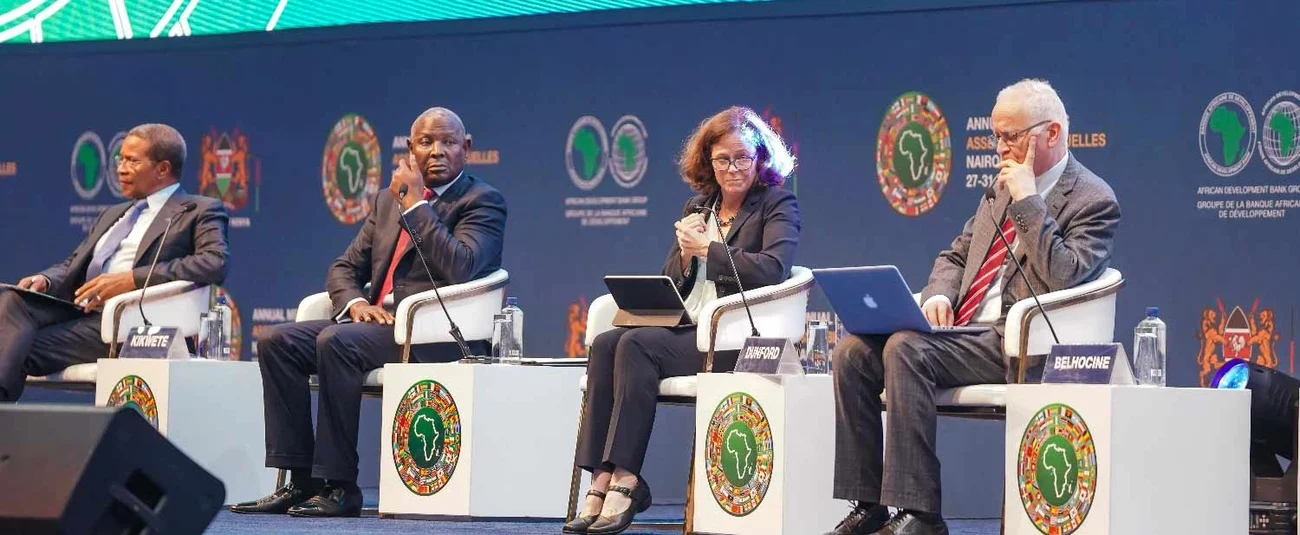
Experts attending an African Development Bank high-level dialogue in Kenya have urged African nations to intensify efforts to attract private-sector financing to enhance tertiary education and equip the continent’s youth with competitive skills.
During a panel discussion at the Bank’s 2024 Annual Meetings in Nairobi, the experts stressed the importance of political commitment to guarantee returns on private sector investments in education.
Former Tanzanian President Jakaya Kikwete, Board Chair of the Global Partnership for Education, called for a renewed commitment to increase national education expenditure to harness Africa’s demographic potential as the world’s largest future labor force.
“To build a stronger tertiary education pipeline, we need to build strong foundations with early learning, primary and secondary education to provide a talent pool of trained young people for lifelong learning that will make them thrive,” Kikwete said.
The Bank organized the event entitled “Policy Dialogue on Innovative Financing for Tertiary Education in Africa: Revitalizing the Role of the Private Sector,” in collaboration with the Kenyan government, the African Union Commission, and the Deutsche Gesellschaft für Internationale Zusammenarbeit (GIZ) GmbH. It explored strategies and best practices to stimulate private-sector financing for tertiary education.
READ ALSO: Tinubu congratulates AFDB President, Akinwumi, on award of Obafemi Awolowo Prize for Leadership
During the session, the African Development Bank signed a Joint Declaration of Intent at the event with GIZ to scale up joint commitments to skills development to enhance youth employability in Africa. The collaboration through the Build Skills initiative will place youth trainees for workplace training within Bank-supported infrastructure projects in agriculture, water or transport sectors for 6 to 12 months. Build Skills aligns with the Bank’s Action Plan on Skills for Employability and Productivity in Africa 2021-2025 which aims to support a skilled and productive labor force.
Birgit Pickel, Director-General Africa, German Federal Ministry for Economic Cooperation and Development (BMZ), said: “This is the first Declaration of Intent between the two organizations in the field of education, and we highly welcome this collaboration. It’s a sign of our intent to scale up our joint commitment to vocational training and skills development in African countries. In light of the current challenges, this is more urgent than ever.”
The African Development Bank has been actively engaged in education and skills development since 1975, committing significant resources to strengthen science, technology, engineering and mathematics infrastructure at tertiary levels and enhance sector policy environments.
READ ALSO: AfDB to disburse $618m to Nigeria for digital, creative enterprises
Dr. Beth Dunford, the Bank’s Vice President for Agriculture, Human, and Social Development, stated that the institution has committed $964 million to tertiary education and skills development over the past decade.
“The focus has been on strengthening infrastructure for Technical and Vocational Education and Training (TVET) and catalyzing private sector investments in skills development and job creation,” Dunford stressed.
She highlighted the Bank’s $80 million support for Nigeria’s Ekiti state Special Economic Zone project and a $23 million investment in Rwanda’s Centre of Excellence for Aviation Skills as some of the projects that will help boost economies and create jobs.
Prof. Mohamed Belhocine, African Union Commissioner for Education, Science, Technology, and Innovation, said increased investment in tertiary education requires national, continental, and global action. He noted that between 2017 and 2019, only seven African countries met the required 6 percent of GDP expenditure on education, with the average standing at around 4 percent of GDP.
Dr. James Mwangi, Group CEO of Equity Holdings, shared how collaboration with tertiary institutions is boosting human resource development across the continent. For example, he said Equity Group has provided scholarships to at least 23,000 students in partnership with the Kenyan government.
Over 10,000 participants registered for the African Development Bank’s hybrid 2024 Annual Meetings, with around 5,000 delegates attending physically. Several heads of state are expected to feature in a presidential dialogue on Wednesday.


-

 Featured7 days ago
Inside INEC’s race to prepare for Nigeria’s 2027 elections
-

 Featured7 days ago
2027: APC unveils nationwide campaign timetable, Tinubu to rally in 12 states
-

 Business4 days ago
Naira faces exchange rate gap as Dollar hits N1,380 on parallel market
-
 Business7 days ago
Court dismisses ₦170m Trade Fair contract claim, says Zenith Bank was not a party
-

 Latest7 days ago
Breaking: NNPCL raises petrol price to ₦1,405 per litre amid discount controversy
-

 Featured1 week ago
From kitchen to Supreme Court: Nigerian’s fight over alleged support for terrorists
-

 Football1 week ago
Maresca reveals Guardiola’s reaction to Man City’s 4-2 defeat to PSG
-

 Business6 days ago
NCC launches Internet Governance Working Group to tackle AI risks, boost online safety