
Business
After the MPC: Six economic signals Nigerians should watch before year-end

By Arthur Eriye
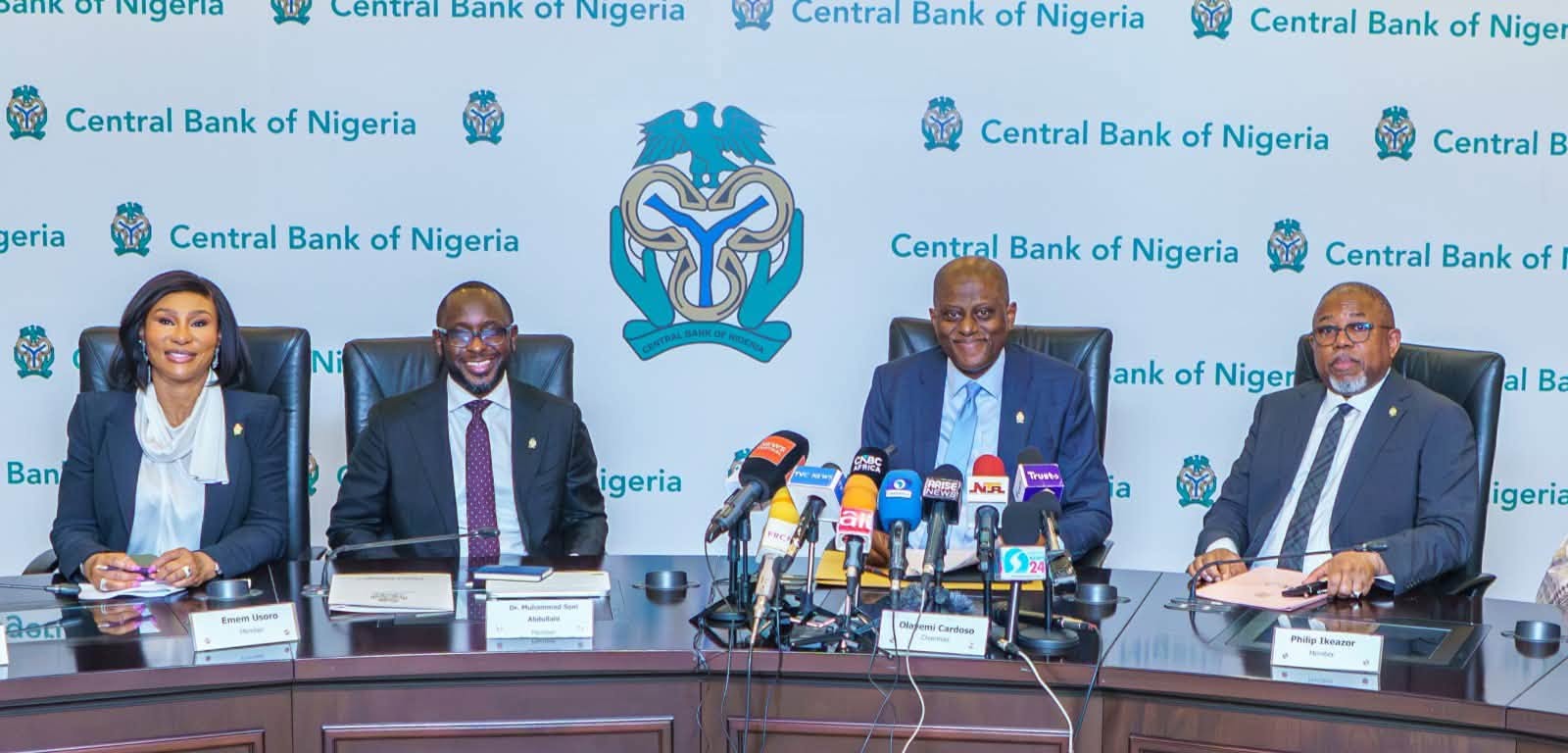
The recent decision by the Central Bank of Nigeria’s (CBN) Monetary Policy Committee (MPC) may have temporarily resolved the ongoing debate regarding the direction of monetary policy. However, for millions of Nigerians, the more pressing concern is what the future holds.
Will inflation finally decrease sufficiently to restore purchasing power? Can the naira sustain its recent stability? Will businesses resume investing despite high borrowing costs? More critically, can the economy achieve growth without creating another cycle of hardship for households already burdened by increasing living expenses?
These questions will shape Nigeria’s economic path for the remainder of 2026.
The MPC’s decision is made at a crucial juncture. Following nearly two years of rigorous reforms—including the liberalization of the foreign exchange market, the removal of subsidies, fiscal adjustments, and one of the most stringent monetary tightening cycles in Nigeria’s history—the economy is beginning to show signs of stabilization. Nevertheless, the advantages of these changes are not evenly distributed.
The National Bureau of Statistics (NBS) has announced that Nigeria’s real Gross Domestic Product (GDP) grew by 3.84 percent in the first quarter of 2026, propelled by robust performances in sectors such as financial services, telecommunications, agriculture, and trade. The International Monetary Fund (IMF) anticipates a growth rate of approximately 3.4 percent for this year, while the World Bank predicts that growth will remain above 3 percent, bolstered by reforms in the foreign exchange market and increased activity in the non-oil sector.
These figures indicate a degree of resilience; however, they do not encompass the complete picture.
For numerous households, the economic recovery is predominantly a matter of statistics.
READ ALSO: CBN retains interest rate at 26.5% as MPC prioritises inflation control, FX stability
Even with a decline in inflation rates, food prices are still rising faster than wage increases, transportation expenses remain high, and consumer spending has diminished due to falling real incomes. The most recent inflation statistics from the NBS reveal that although overall inflation has decreased from its previous highs, food inflation continues to place significant strain on household finances, indicating ongoing supply-side challenges rather than an excess in consumer demand.
This situation elucidates why economists contend that the Central Bank of Nigeria’s (CBN) efforts to combat inflation are entering a more intricate stage.
“The straightforward benefits of tightening monetary policy have mostly been realized,” stated Bismarck Rewane, Managing Director of Financial Derivatives Company Limited. “The remaining inflationary challenges are structural in nature—pertaining to food supply, security issues, logistics, and energy. Monetary policy alone is insufficient to address these problems.
His assessment reflects a growing consensus among analysts that future inflation outcomes will depend less on additional interest-rate adjustments and more on improvements in agricultural production, transportation networks, electricity supply and security across food-producing regions.
That distinction matters because Nigerians are unlikely to experience falling prices in the months ahead.
Rather, economists expect a slower pace of price increases—a process known as disinflation—which, while encouraging from a macroeconomic perspective, may offer limited immediate relief to consumers.
Another closely watched indicator will be the naira.
The currency has experienced greater stability following reforms aimed at improving transparency in the foreign exchange market and attracting foreign portfolio investment. Analysts say the CBN’s commitment to maintaining positive real interest rates has helped improve investor confidence and strengthen external reserves.
READ ALSO: CBN sets July 21–22 MPC meeting as experts weigh rate decision
“If macroeconomic policy consistency is sustained, exchange-rate volatility should continue to moderate,” said Muda Yusuf, Chief Executive Officer of the Centre for the Promotion of Private Enterprise (CPPE). “However, exchange-rate stability must ultimately be supported by stronger export earnings and higher domestic productivity.”
A more stable naira would reduce imported inflation, lower production costs for manufacturers and improve business planning for companies dependent on imported machinery and raw materials.
The challenge, however, lies in balancing monetary discipline with economic expansion.
Commercial lending rates remain among the highest in recent years, with many businesses borrowing at rates exceeding 30 per cent. For manufacturers and small businesses, access to affordable credit has become increasingly constrained.
The Manufacturers Association of Nigeria (MAN) has repeatedly warned that high financing costs, rising electricity tariffs, expensive diesel, foreign exchange pressures and logistics bottlenecks continue to undermine industrial competitiveness.
Investment decisions are therefore becoming increasingly cautious.
Many firms are choosing to preserve liquidity rather than expand operations, while others are delaying recruitment and capital expenditure until financing conditions improve.
Ironically, the same high-interest-rate environment creating challenges for manufacturers has strengthened the earnings outlook for banks.
Higher yields on government securities and improved net interest margins have supported profitability across the banking sector, reinforcing one of the central paradoxes of monetary tightening: policies that strengthen financial institutions can simultaneously constrain productive sectors of the economy.
External developments could further complicate Nigeria’s outlook.
Global oil prices remain vulnerable to geopolitical tensions, OPEC+ production decisions and slowing global demand. For Nigeria, where crude oil remains the principal source of foreign exchange and government revenue, sustained price weakness would place renewed pressure on fiscal balances, external reserves and the exchange rate.
Conversely, stronger oil prices would provide a cushion for public finances while improving the CBN’s capacity to defend macroeconomic stability.
Beyond these cyclical risks lies a deeper structural challenge.
Nigeria’s economy has become increasingly adept at generating output without creating enough quality jobs.
Recent growth in GDP has primarily been fueled by capital-intensive sectors such as finance, telecommunications, and oil, whereas labour-intensive industries, including manufacturing and agriculture, continue to encounter structural challenges.
As a result, economists contend that the next economic milestone for the country should not merely focus on reducing inflation or achieving stronger GDP growth, but rather on fostering more inclusive growth that can create jobs, enhance productivity, and increase household incomes.
Achieving this goal will necessitate improved coordination between monetary and fiscal authorities.
While the Central Bank of Nigeria (CBN) remains committed to maintaining price stability, economists assert that complementary reforms—such as investments in agriculture, expansion of infrastructure, reforms in the electricity market, diversification of exports, and enhancements in the ease of doing business—will be crucial in determining whether the current macroeconomic improvements lead to sustained enhancements in living standards.
As Nigeria approaches the final quarter of 2026, the focus will gradually shift from interest rate levels to the overall effectiveness of economic reforms.
The true indicator of success will not be whether inflation decreases by another percentage point or if GDP growth surpasses expectations.
Instead, it will hinge on whether market prices become more manageable, businesses regain the confidence to invest, private-sector employment accelerates, and households start to experience the benefits of economic recovery beyond mere statistical data.
Ultimately, this is the target that the Nigerian economy should accomplish before the year wraps up.


-

 Business7 days ago
Dangote Refinery IPO: 70% Subscription claim meets fourfold demand assertion as investors seek clarity
-

 Latest1 week ago
Umahi defends Lagos-Calabar highway route changes amid public outcry
-
Business1 week ago
Dangote Refinery IPO Extension: Was the 70% subscription report overhyped?
-

 Featured3 days ago
Inside INEC’s race to prepare for Nigeria’s 2027 elections
-

 Latest6 days ago
UCTH faces morgue crisis as 50 unclaimed corpses await mass burial
-
 Featured3 days ago
2027: APC unveils nationwide campaign timetable, Tinubu to rally in 12 states
-

 Business5 days ago
BREAKING: Nigeria’s Inflation Rate Drops to 14.63% in September
-

 Featured1 week ago
El-Rufai, ADC governorship candidate’s court appearance puts Kaduna opposition politics in focus