
Featured
Algeria awaits constitutional signal on Bouteflika’s fate

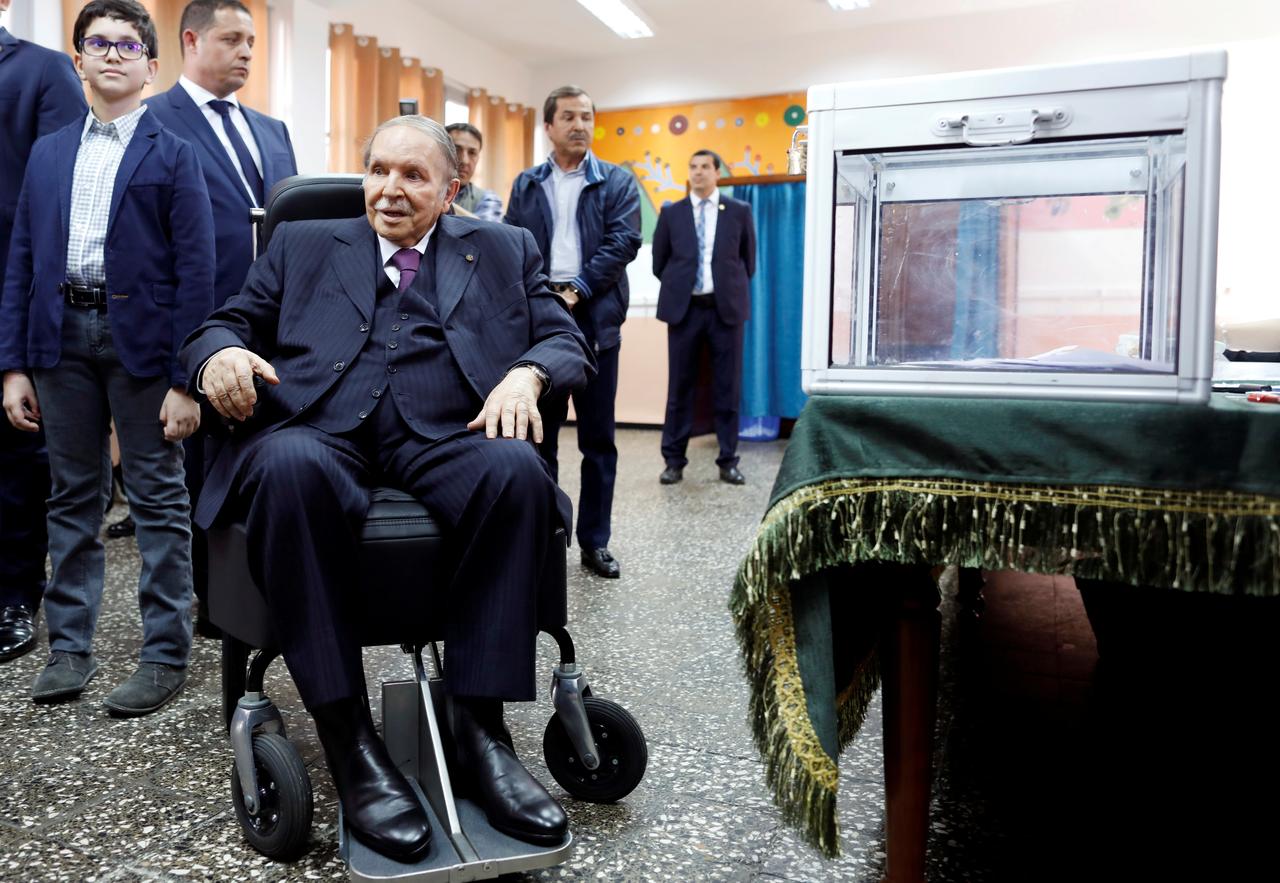
Algerians waited on Wednesday for a decision by the constitutional council on whether ailing President Abdelaziz Bouteflika is fit for office, after the top army officer called for his removal in a bid to defuse mass protests.
Lt-Gen. Ahmed Gaed Salah, addressing officers in a speech broadcast on Tuesday, said the solution to the biggest political crisis since the army canceled elections in 1992 would be the exit of the president on health grounds.
The position taken by the powerful army chief of staff was a clear signal that the president, who has rarely appeared in public since suffering a stroke in 2013, will not survive the protests which have threatened to topple the ruling elite.
The political turmoil has highlighted growing public discontent with the allegations of corruption, nepotism and economic mismanagement that have tarnished Bouteflika’s 20-year rule.
“This is a default solution following the failure of the negotiations on the departure of the President.
“It moves away from the democratic transition and approaches a framed succession,” said Hasni Abidi, a Swiss-based Algerian who heads a think tank.
That approach may break a deadlock for now.
Protesters are pushing for an overhaul of the powerful establishment entrenched in power since independence from France in 1962, and the old guard hopes it can put forward a candidate approved by the army.
For years, rumours have swirled about potential successors but no single credible candidate has emerged with the backing of the military, the political and security establishment who is not at least 70.
The next formal step is for the constitutional council to formally rule on Bouteflika’s fitness for office. The body has not said when it might reach its decision.
Any ruling that he is not fit to rule would have to be ratified by members of parliament’s lower and upper house by a two-thirds majority.
Based on Article 102 of the constitution, the chairman of parliament’s upper house, Abdelkader Bensalah, would serve as caretaker president for at least 45 days in the nation of more than 40 million people.
The last time the army stepped in during a crisis was in 1992, when the generals canceled an election that Islamists were poised to win.
That move triggered a civil war that killed an estimated 200,000 people.
The military remains highly sensitive to any signs of instability and Salah has warned he will not allow the demonstrations to lead to chaos.
The stakes are high, for Algeria is a leading member of OPEC and a top gas supplier to Europe, although so far oil and gas output appears unaffected by the unrest, an International Energy Agency (IEA) official said on Tuesday.
Algeria is also regarded by Western states as a partner in counter-terrorism, a significant military force in North Africa and a key diplomatic player in efforts to resolve crises in neighboring Mali and Libya
| ReplyReply allForward |


-
 Latest1 week ago
Global excitement builds as Healing Streams Live Services returns October 23
-
 Featured7 days ago
Inside INEC’s race to prepare for Nigeria’s 2027 elections
-

 Business1 week ago
President Tinubu and the Low Transport Fares Fiasco
-
 Featured7 days ago
2027: APC unveils nationwide campaign timetable, Tinubu to rally in 12 states
-
 Business4 days ago
Naira faces exchange rate gap as Dollar hits N1,380 on parallel market
-
 Business7 days ago
Court dismisses ₦170m Trade Fair contract claim, says Zenith Bank was not a party
-
 Latest7 days ago
Breaking: NNPCL raises petrol price to ₦1,405 per litre amid discount controversy
-

 Business1 week ago
Rite Foods targets beverage market growth with LIDA Malt