
Business
Analysts weigh in on exchange rate fluctuations as Naira depreciates again

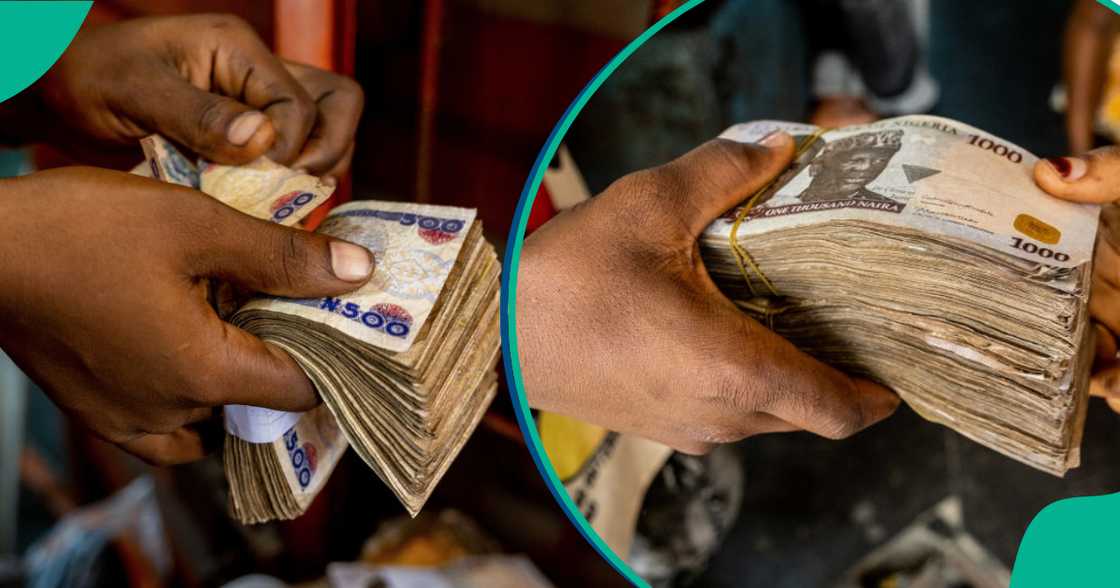
The Nigerian naira weakened further against the U.S. dollar at the official foreign exchange window on Monday, March 17, 2025, continuing its recent trend of volatility in the forex market.
According to data from the Central Bank of Nigeria (CBN), the naira depreciated to N1,528.03 per dollar, compared to N1,517.93/$1 recorded on Friday, March 14. This represents a daily depreciation of N10.1 against the American currency.
However, on the parallel market, the naira gained slightly, trading at N1,585/$1, an improvement from N1,590/$1 the previous day, reflecting a N5 appreciation.
Economic analysts attribute the recent depreciation to a combination of domestic and external pressures, including Nigeria’s foreign reserve challenges, low forex inflows, and speculative trading.
Dr. Tope Fasua, an economist and financial analyst, explained that the demand for dollars continues to outpace supply, creating downward pressure on the naira.
“The reality is that Nigeria is still struggling to attract sufficient forex inflows despite policy interventions by the CBN.
Export earnings remain weak, foreign investments are slow, and there is high demand for dollars from importers and businesses needing forex for transactions.”
He added that while CBN interventions have slowed volatility, the market remains sensitive to global and local economic developments.
Financial expert Dr. Uche Uwaleke, a professor of capital market studies, noted that the activities of speculators and forex hoarders have continued to impact exchange rates.
READ ALSO: Naira continues decline against major currencies as forex crisis deepens
“Many businesses and individuals are stockpiling dollars due to uncertainty about future forex policies. This speculative behavior creates artificial scarcity, putting additional pressure on the naira.”
Beyond domestic challenges, external factors such as the strengthening U.S. dollar, global inflation trends, and tightening of monetary policies by major economies have also contributed to Nigeria’s currency struggles.
“The Federal Reserve’s interest rate policies have made the U.S. dollar stronger against most global currencies, including the naira. This means Nigeria needs to implement stronger economic measures to defend the currency,” explained Dr. Andrew Omojola, an international trade economist.
Despite the short-term volatility, experts believe that with consistent economic policies, the naira could stabilize in the coming months.
Dr. Fasua suggested that Nigeria must prioritize non-oil exports, attract foreign direct investment (FDI), and enhance forex liquidity through local production and economic diversification.
“The naira will only gain strength when Nigeria reduces its dependence on imports and boosts local production. The government must also ensure transparency in the forex market to curb speculation.”
Meanwhile, many Nigerians remain concerned about the real impact of currency fluctuations on inflation, cost of goods, and overall economic stability.
As the 2027 elections approach, the management of the forex market will remain a key issue for the current administration.


-
 Latest6 days ago
Israel marks 3 years since October 7 Hamas attack amid Gaza strikes, election debate
-

 Energy6 days ago
Fuel Battle: Dangote, marketers and government clash over petrol imports
-

 Energy7 days ago
Petrol, diesel prices rise 86% in 2026 as costs hit fresh highs
-

 Energy1 week ago
Has Iran lost control of the Strait of Hormuz? Oil flows rebound as war disruptions persist
-

 Football7 days ago
Nigeria’s World Cup exit under spotlight as FIFA’s DR Congo files emerge
-

 Latest6 days ago
US Court set to rule on release of FBI, DEA records on Tinubu
-

 Business7 days ago
Nigerian investors at a crossroads as fixed-income yields slide
-

 Business1 week ago
LoveWorld Trade and Investment Forum to Convene Business Leaders in Accra