
Business
CBN defends Naira with additional $8.28 billion in six months

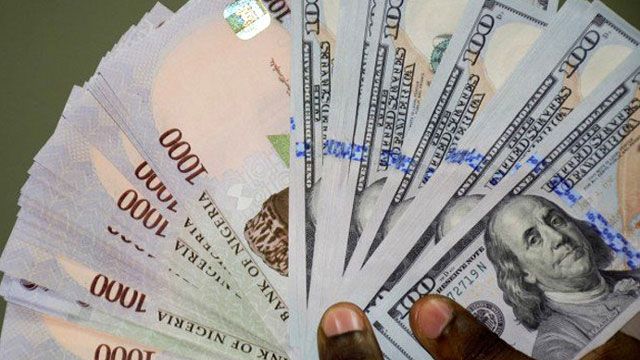
As part of its continued intervention in the foreign exchange market, the Central Bank of Nigeria (CBN) injected a cumulative sum of $8.28 billion to further sustain relative stability in the Foreign Exchange (FX) market.
According to the latest CBN’s Financial Markets Department report for half year 2019 (January – June), the apex bank made available a whopping sum of $8.28 billion to authorised dealers, compared to US$9.49 billion in the corresponding period of 2018.
This indicates a 14.6% decrease in foreign exchange intervention in the financial market of the Nigerian economy.
According to the report, the CBN sustained its direct intervention in the foreign exchange market to manage demand pressure and ensure exchange rate stability.
The report showed that the highest sales recorded by the CBN was on Forwards sales. Specifically, the CBN recorded $4.57 billion as Forward sales.
Also, the CBN sold $2.14 billion at the Inter-bank spot, US$212.11 million at the Investors and Exporters (I&E) window,US$550.70 million for Invisible and US$810.00 million sales were recorded for SMEs.
 On the other hand, the bank purchased $9.36 billion at the inter-bank segment, hence a net purchase of US$1.08 billion.
At the Forwards segment, the sum of US$4.97 billion matured while $2.55 billion was outstanding at end-June 2019.
Since the introduction of the Investor and Exporter window, the CBN has increasingly intervened in the forex market as an active buyer and seller. Meanwhile, in the half-year report, the CBN attributed reductions in its intervention to low demand for foreign exchange, amongst other factors.
Specifically, the CBN stated, “The first half of 2019 recorded an overall reduction in foreign exchange demand pressure, as well as moderation in exchange rate volatility compared with the corresponding period in 2018. The foreign exchange demand pressure and capital outflows witnessed in early 2019 were attributed to uncertainties around the 2019 general elections.”
While providing further insights on the intervention recorded between January and June 2019, the CBN disclosed that the increased sales at the inter-bank spot market in 2019 were attributable to the Bank’s foreign exchange management strategy of sustaining liquidity and maintaining exchange rate stability.
Despite the drop in CBN’s intervention in the foreign exchange market, experts have continued to raise concerns regarding the depletion of the country’s reserves.
A quick check showed that Nigeria’s external reserves has continued its free fall and currently stands at $40.9 billion. Explaining why the country’s reserves depleted, the CBN in its monthly economic report for August 2019 stated that the decrease was due, mainly, to increased foreign exchange market interventions and external debt service payments, as well as, direct payments.













-

 Latest6 days ago
US Immigration fees rise from October 16 as USCIS announces new charges
-
 Latest20 hours ago
Israel marks 3 years since October 7 Hamas attack amid Gaza strikes, election debate
-

 Business5 days ago
Nigeria’s $55bn reserves raise fresh questions over naira value
-

 Health5 days ago
Florida sues Pfizer over deceptive COVID-19 vaccine marketing
-

 Business7 days ago
Tuoyo Erikowa wins digital marketing personality of the Year at 2026 EDGE awards
-

 Crime5 days ago
From camp to captivity: How kidnappers now target NYSC Corps members on highways
-

 Featured5 days ago
2027: Can Nigeria’s opposition still unite behind a single presidential candidate?
-

 Crime5 days ago
Fulani Militia leader linked to Christian killings arrested in Plateau