
Crime
Frontline at Idiroko: How Ogun Customs Is Taking the Fight to Nigeria’s Smugglers

Frontline at Idiroko: How Ogun Customs Is Taking the Fight to Nigeria’s Smugglers
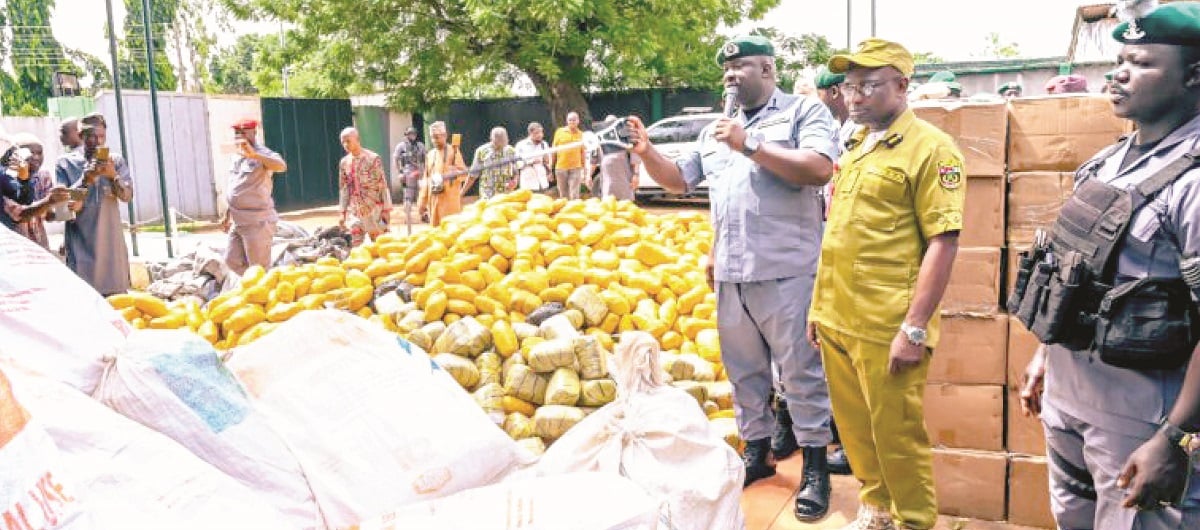
In just 41 days, operatives of the Ogun I Area Command of the Nigeria Customs Service intercepted contraband goods valued at N6.77 billion. The haul, spanning narcotics, foreign rice, petroleum products, counterfeit medicines and expired food items, lays bare the scale of an illegal economy that has long flourished along Nigeria’s western frontier with the Republic of Benin.
At the centre of this crackdown is Deputy Comptroller Oladapo Afeni, the Acting Customs Area Controller, whose aggressive operational tempo has rapidly positioned the Command as one of the country’s most formidable anti-smuggling formations.
For Afeni, the numbers are more than enforcement statistics. They represent a calculated effort to dismantle a smuggling ecosystem that has thrived for decades under the cover of geography, demand gaps and chronically weak border controls.
A Border Like No Other
The Idiroko corridor defies simple description. It is not merely a road; it is a sprawling social and economic ecosystem where legitimate trade and illicit commerce blur into one another with unnerving ease.
Hundreds of unofficial crossing points, known locally as “bush paths,” thread through the terrain connecting Nigeria to Benin Republic, making sustained enforcement both physically demanding and strategically complex. It is along these routes that smuggling syndicates move narcotics, food commodities, petroleum products and counterfeit goods into Nigeria’s densely populated South-West markets.
Since assuming control of the Ogun I Command, Afeni has overseen a decisive shift in approach, from reactive patrols to intelligence-led, coordinated and sustained operations. The Command recorded 73 seizures within a single month, a figure that speaks both to its operational intensity and to the sheer volume of illicit activity in the region.
Ogun-customs
The Drug Crisis at the Border
The single most alarming discovery in recent operations was the interception of 10,126 parcels of cannabis indica, popularly known as “Ghana Loud”, weighing 4,627 kilograms and valued at over N5 billion on the illicit market.
Cannabis remains the dominant contraband moving through the Idiroko axis, feeding a growing domestic consumption market and an increasingly volatile criminal ecosystem across the South-West. Between January and now, the Command has seized more than 26,000 parcels of cannabis sativa and indica combined, evidence, enforcement officials say, of a deeply embedded transnational supply chain.
“This isn’t just a seizure; it’s a preventive measure,” Afeni said during a briefing at Idiroko. “Without this intervention, our society would face a wave of drug-related crises that our already overstretched healthcare and rehabilitation systems cannot manage.”
Security analysts warn that narcotics trafficking through the border can no longer be viewed in isolation. Intelligence agencies increasingly link drug flows to broader patterns of insecurity, armed robbery, cult violence, kidnapping and, in certain cases, terror financing.
The Rice War
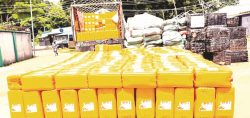
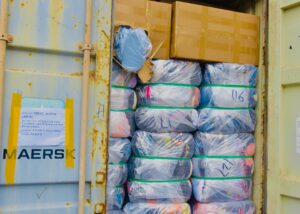
Beyond drugs, foreign rice remains one of the most persistently intercepted commodities along the Ogun smuggling corridors. In the latest operations alone, Customs seized 1,759 bags of foreign parboiled rice, contraband under a longstanding federal policy prohibiting rice importation through land borders.
Nigeria’s rice import restrictions sit at the heart of a broader import substitution strategy pursued by successive governments over the past decade. Authorities argue the policy is essential to protect local farmers and conserve foreign exchange. Yet smuggling networks have consistently exploited the price gap between imported and domestically produced rice.
“Rice is a staple food eaten in many homes across the country,” Afeni said. “It’s importation through the land borders was prohibited by the Federal Government to encourage local production and self-sufficiency.”
The market reality, however, is more complicated. While local rice production has grown significantly in recent years, persistent supply gaps, infrastructure limitations and enduring consumer preferences for certain imported brands continue to sustain demand for the smuggled product. The result is a parallel market economy that Customs officials acknowledge is far from defeated.
seized contrabands
Fuel, Vegetable Oil and the Public Health Threat
The seizure of 14,550 litres of Premium Motor Spirit underscores how the removal of Nigeria’s fuel subsidy — and the price differentials it created across borders, has dramatically intensified cross-border fuel trafficking.
Vegetable oil has also emerged as a significant enforcement priority. Since Afeni assumed command, 12,271 kegs of foreign vegetable oil have been seized, including a major interception of a DAF truck carrying 2,185 kegs along the Shagamu Interchange-Ogere axis.
“The influx of foreign vegetable oil into the country is creating a ripple effect of negative consequences that demands immediate attention,” Afeni warned. Industry stakeholders argue that unchecked smuggling undermines domestic manufacturing, discourages investment and strips jobs from agricultural value chains already under pressure.
Read also:Al Nassr Crowned Saudi Pro League Champions as Ronaldo Brace Seals Historic Title
Perhaps most troubling from a public health standpoint was the discovery of 77 cartons of Analgin injections bearing no NAFDAC registration numbers, alongside expired seasoning cubes and other unregulated food products. Health experts warn that Nigeria’s porous borders leave consumers, particularly low-income populations dependent on cheaper informal markets, dangerously exposed to counterfeit medicines and unsafe food items.
In a development reflecting the increasingly complex nature of border crime, Customs operatives also intercepted six live pangolins, among the world’s most trafficked mammals, pointing to Nigeria’s growing role as both a source and transit point in global wildlife trafficking networks.
From Patrols to Data: A New Enforcement Era
Since taking charge, Afeni has championed a fundamental shift in enforcement philosophy. The Command has deployed geospatial surveillance tools and digital tracking systems in line with the Nigeria Customs Service’s modernisation agenda under Comptroller-General Bashir Adewale Adeniyi, moving from manpower-heavy patrols toward data-driven operations capable of keeping pace with increasingly sophisticated smuggling tactics.
The results are beginning to show. Despite the intensity of enforcement activity, the Command simultaneously recorded N125.43 million in revenue from baggage assessment and auctioned petroleum products, while facilitating the export of 95 metric tonnes of goods valued at over N1 billion (FOB), a reminder that Customs carries a dual mandate as both enforcer and trade facilitator.
Afeni credited collaboration with sister agencies, including the NDLEA, DSS, Nigeria Immigration Service and the Police, as central to sustaining pressure across the corridor.
A Battle Far from Over
Experts caution that smuggling along the Idiroko axis is not merely a law enforcement problem. It is structurally sustained by poverty, regional price disparities, weak infrastructure and persistent consumer demand. Smugglers, they note, have proven highly adaptive — reorganising routes and methods each time pressure intensifies.
The Idiroko border, in this light, is no longer simply a crossing point. It has become a frontline in Nigeria’s broader struggle for economic stability, public safety and territorial sovereignty.
The battle, for now, continues.












-
 Latest6 days ago
Israel marks 3 years since October 7 Hamas attack amid Gaza strikes, election debate
-

 Energy5 days ago
Fuel Battle: Dangote, marketers and government clash over petrol imports
-

 Energy7 days ago
Petrol, diesel prices rise 86% in 2026 as costs hit fresh highs
-
 Energy1 week ago
Has Iran lost control of the Strait of Hormuz? Oil flows rebound as war disruptions persist
-

 Football6 days ago
Nigeria’s World Cup exit under spotlight as FIFA’s DR Congo files emerge
-

 Latest6 days ago
US Court set to rule on release of FBI, DEA records on Tinubu
-

 Business6 days ago
Nigerian investors at a crossroads as fixed-income yields slide
-

 Business7 days ago
LoveWorld Trade and Investment Forum to Convene Business Leaders in Accra