
Crime
CDS Musa highlights funding as key challenge in Boko Haram insurgency

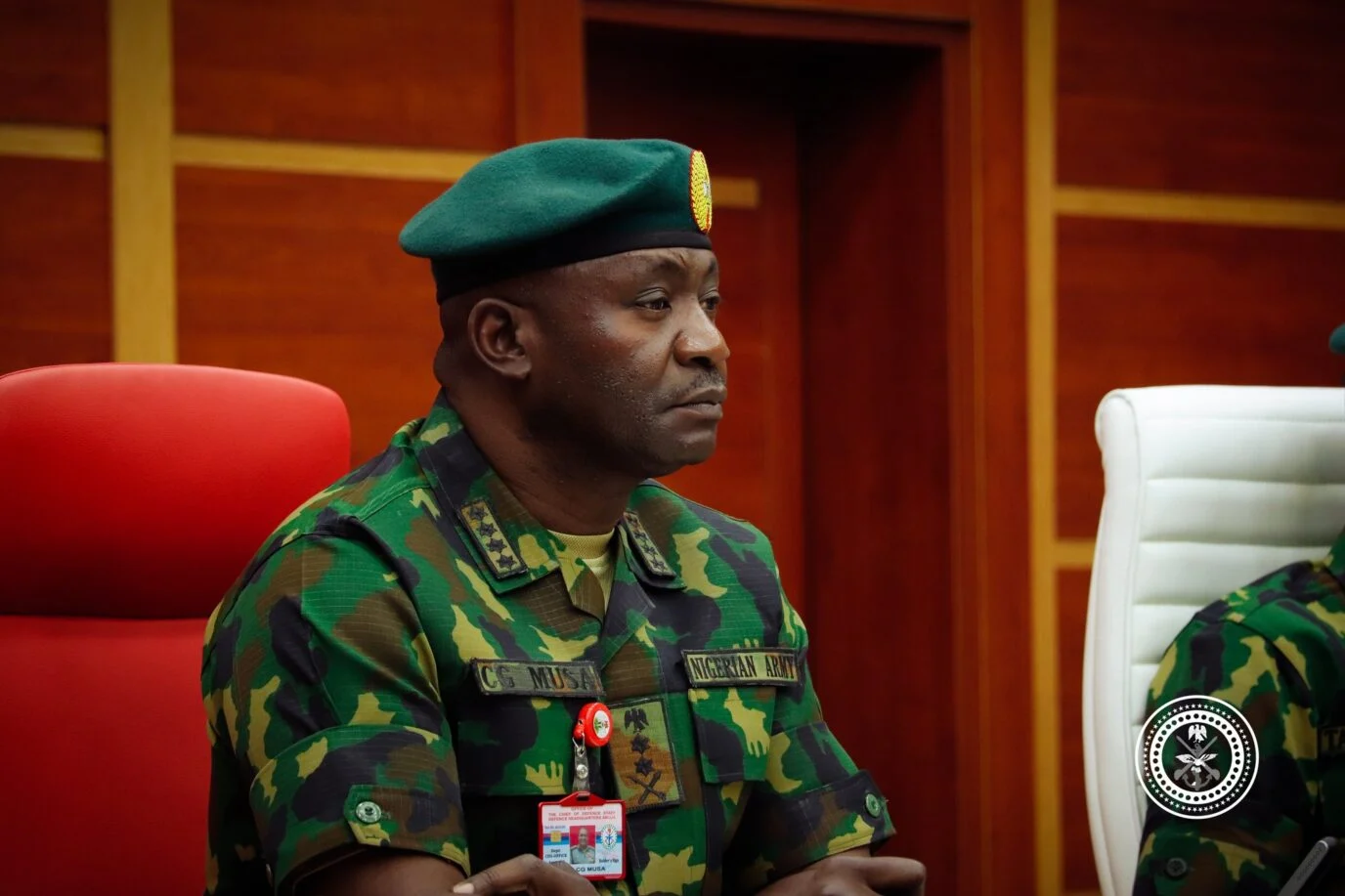
The Chief of Defence Staff, General Christopher Musa, has shed light on the intricate challenges surrounding the fight against Boko Haram, attributing the group’s prolonged insurgency to sustained financial backing from unidentified sources.
Speaking during an interview on Channels Television’s Politics Today, the General emphasized that unraveling these funding networks is crucial to countering the 16-year-long insurgency.
“For them to have survived for 16 years and are still fighting, how are they getting their funding? Who’s sustaining them?” General Musa questioned, urging for a deeper investigation into the shadowy channels financing the group.
He explained that the fight against Boko Haram is not a conventional war but an ideological battle. “You are fighting with people that have nothing to lose. It is an ideology they have in their minds. They believe they are right, and you are wrong,” Musa noted, underlining the unique complexities of the conflict.
General Musa further highlighted the challenges posed by unconventional warfare tactics used by Boko Haram. The insurgents often exploit human shields and operate without regard for international laws, complicating military operations.
“If it were a conventional war, with the equipment and armaments we have now, we could end this in a very short time by targeting their communities. But you can’t do that anymore due to constitutional and international constraints,” Musa explained.
READ ALSO: Military utilising non-kinetic capabilities to achieve operational successes – CDS
These limitations, he said, necessitate innovative strategies and deeper intelligence to dismantle the insurgents’ networks effectively. The General emphasized that military action alone is insufficient, stressing the need to address the ideological, financial, and structural components sustaining the insurgency.
According to Musa, combating Boko Haram requires collaboration between the military, intelligence agencies, and the international community. By disrupting the group’s funding sources and exposing its backers, the government can weaken its operational capabilities.
Experts agree with Musa’s analysis, pointing out that insurgencies like Boko Haram thrive on external support. Dr. Bukola Oni, a security analyst, noted, “Understanding who finances these groups is pivotal. Without funding, their operations would not survive this long.”
Another expert, retired General Ibrahim Yusuf, stressed the importance of international cooperation. “Terror networks often rely on cross-border financing and supply chains. Collaborative intelligence sharing is key to breaking these links,” he said.
As the Nigerian military continues its efforts to combat Boko Haram, General Musa’s insights underline the need for a multifaceted approach.
Beyond military engagement, the fight must encompass cutting off financial streams, addressing ideological indoctrination, and ensuring community resilience to prevent future recruitment.


-

 Featured5 days ago
Nigeria’s youth unemployment paradox: Graduates struggle as millions survive in informal jobs
-

 Business5 days ago
Nigerian Banks earn N521.8bn from E-banking, card fees in nine months
-

 Energy5 days ago
Nigeria’s power crisis deepens as ₦639bn unpaid gas debt threatens electricity supply
-

 Latest5 days ago
Dalung claims ‘message from Buhari’s grave’ urges Nigerians to vote Atiku in 2027
-
 Latest1 week ago
2027 elections: Former INEC commissioner warns against ‘Rig and Die’ slogan, says violence undemocratic
-
 Featured4 days ago
Tinubu’s Renewed Hope: Reforms, hardship and the unanswered question of a second term
-

 Business1 week ago
GTCO fashion weekend: As fashion evolves, Nigerian men are rewriting the rules of style
-

 Featured4 days ago
The cost of Renewed Hope: How Nigeria’s economic reforms are reshaping everyday family life