
Business
Dangote, others make case for groundwater protection

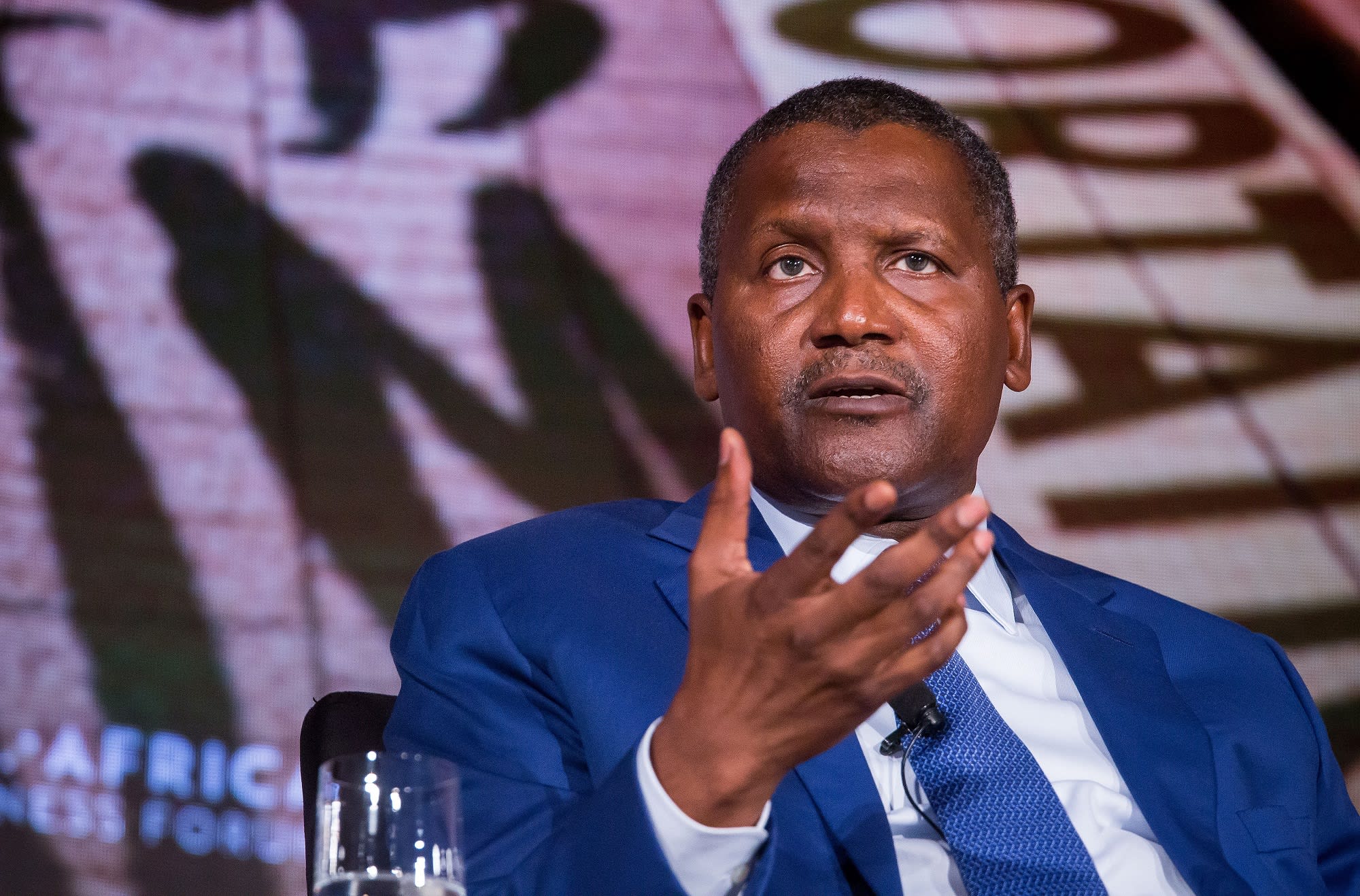
Dangote, others make case for groundwater protection.
Dangote Cement Plc and other stakeholders have charged extractive industries to prioritize protection of groundwater to ensure environmental preservation.
This is according to a statement signed by Mr Francis Awowole-Browne, Corporate Communications Personnel, Dangote Industries Limited, on Tuesday in Lagos.
According to the News Agency of Nigeria, this year’s world water day’s theme is “GroundWater: Making the Invisible Visible”.
The theme is centred on the fact that groundwater is only 3 per cent of the world’s fresh water and yet the largest and most widely distributed source of freshwater.
To mark the 2022 World Water Day, Lagos Business School Sustainability Centre, in collaboration with Dangote Cement Plc and the United Nations Environment Programme (UNEP), hosted a webinar.
At the event, businesses were urged to deliberately incorporate the protection of groundwater in their operational designs and sourcing of industrial production facilities.
Head, Community Affairs and Environment, Dangote Cement Plc, Engr. Tukur Lawal, noted that Dangote Cement had always engaged in the global best sustainability practices in this regard.
Lawal said some of the best practices by Dangote Cement Plc, included the dry cement production process, recycling and reuse of 20 per cent of water at the company’s Ibese plant in South West Nigeria.
“We as well channel treated water to farmers in the surrounding communities; a development which has benefitted about 143 farmers in Zambia,” he said.
Dr Igazeuma Okoroba, Head, Sustainability, Dangote Cement Plc, said the forum was organised to raise awareness and promote collaboration in the sustainable use of groundwater; an essential resource for everyone.
UNEP Water Specialist, Mr Patrick Lumumba M’mayi, emphasised the need for collaboration and partnership between communities, academia, government and businesses to tackle groundwater pollution and drive sustainable management of the precious resource.
“The question then becomes: How much do we invest in this resource so that it’s available for our use today and remains available for our generations yet unborn?,” he queried.
Mrs Oreva Atanya, Manager, LBS Sustainability Centre, also charged the stakeholders to leave with a sense of collective responsibility.
“While organisations like UNEP work based on requests from governments, companies in the extractive industry should also ensure they adhere to the highest environmental standard. NGOs and citizens have a duty as well,” she said.
Kaine Chinwa, a scholar, stressed the importance of Africa finding solutions locally to mitigate groundwater pollution which was already prevalent around the continent, especially in Nigeria’s Niger Delta region.










-

 Featured3 days ago
BREAKING NEWS: Shouts of joy rock the world as Pastor Chris opens final Healing Streams edition for 2026
-

 Football4 days ago
Man United shortlist Emery, Nagelsmann as potential replacements for Carrick
-

 Business4 days ago
Hoodlums raid JED Benue office, abduct 10 staff over power dispute
-

 Football4 days ago
Aston Villa ready to freeze out Garnacho to avoid £43m Chelsea transfer
-

 Business1 week ago
Naira faces exchange rate gap as Dollar hits N1,380 on parallel market
-

 Business4 days ago
EV adoption: Roxettes seeks cheaper financing, local manufacturing incentives
-

 Latest4 days ago
Akpabio tasks Tompolo-backed movement with spreading Tinubu’s renewed hope message
-

 Business3 days ago
How Ethiopian Airlines is challenging Africa’s aviation narrative through self-reliance