
Business
Dollar falls against rivals, hits 2-week low

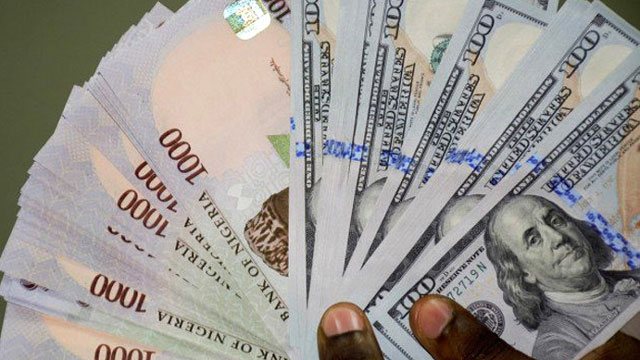
The U.S. dollar slumped across the board on Thursday, February 15, hitting a 15-month low against the yen as worries over twin deficits in the United States mounted amid a government spending splurge and large corporate tax cuts.
The greenback briefly soared on Wednesday after data showed U.S. inflation was stronger than expected in January, bolstering expectations that the Federal Reserve could increase interest rates as many as four times this year.
But it quickly turned lower, eventually posting its worst daily performance in three weeks against a basket of major rivals. The dollar added to those losses on Thursday, with the index hitting a two-week low of 88.585.
The U.S. national debt recently topped $20 trillion, while the 2019 fiscal deficit is projected at near $1 trillion, including deficit-financed tax cuts and two-year spending caps that Congress passed last week.
“The story I hear most frequently from people is it’s the re-emergence of the twin deficits,” said RBC Capital Markets head of currency strategy Adam Cole, in London, of the dollar’s persistent weakness. “There seem to be concerns on the U.S. fiscal position and what that implies for the current account.”
Cole said news events that would normally be seen as buying opportunities for the dollar, such as Wednesday’s inflation data, were only having temporarily positive effects.
“Momentum is very strongly against the dollar and every bounce is seen to be a selling opportunity, even though the catalyst seemed to be quite legitimately taking the dollar higher yesterday,” he added.
Some strategists suggested another reason for the dollar’s falls after Wednesday’s data was that U.S. consumer price growth was seen as a gauge for global inflationary pressures and that, as such, stronger growth would suggest a faster pace of monetary tightening from other central banks.
Against the yen, the dollar skidded as much as 0.8 percent to 106.18 yen, its lowest since November 2016. That marked a drop of 3.8 percent from its early February peak near 110.50 yen.
In the wake of the dollar’s sharp drop against the yen over the past couple of weeks, there was increased focus on whether Japanese exporters and Japanese investors would step up moves to hedge their exposure to the U.S. currency.
Japanese Finance Minister Taro Aso said on Thursday he did not see current yen moves as being strong or weak enough to warrant intervention, adding that there was no plan now to respond to FX moves.
The euro climbed back above $1.25 for the first time in two weeks, trading up as much as half a percent on the day.














-
 Latest6 days ago
Israel marks 3 years since October 7 Hamas attack amid Gaza strikes, election debate
-

 Energy6 days ago
Fuel Battle: Dangote, marketers and government clash over petrol imports
-

 Energy7 days ago
Petrol, diesel prices rise 86% in 2026 as costs hit fresh highs
-

 Energy1 week ago
Has Iran lost control of the Strait of Hormuz? Oil flows rebound as war disruptions persist
-

 Football7 days ago
Nigeria’s World Cup exit under spotlight as FIFA’s DR Congo files emerge
-

 Latest6 days ago
US Court set to rule on release of FBI, DEA records on Tinubu
-

 Business6 days ago
Nigerian investors at a crossroads as fixed-income yields slide
-

 Business1 week ago
LoveWorld Trade and Investment Forum to Convene Business Leaders in Accra