
Business
Dollar liquidity records lowest FX turnover in five months

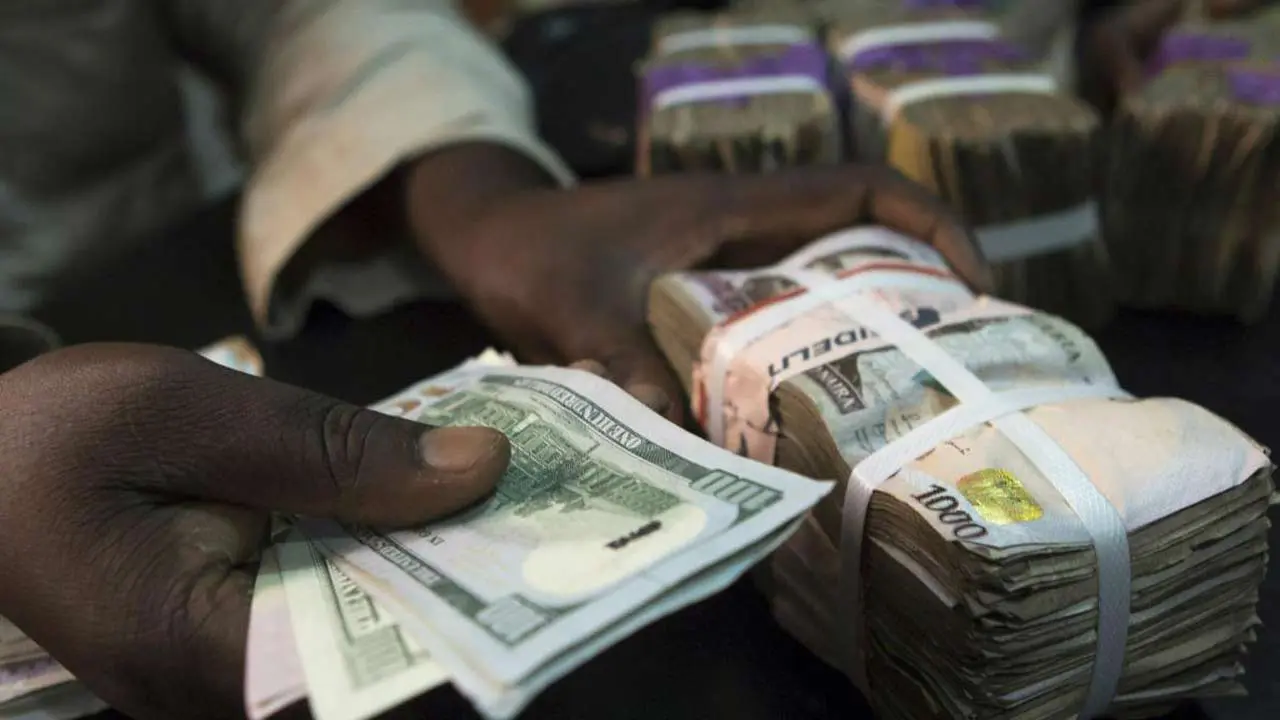
The Nigerian Autonomous Foreign Exchange Market, NAFEM, is set to record its lowest foreign exchange (FX) turnover in five months in June 2024, as dollar illiquidity continues to exert pressure on the naira.
As of June 27th, 2024, FX turnover for the month stood at $3.14 billion, with just one trading day remaining.
This marks a significant decline compared to the $4.61 billion exchanged in the previous month.
Similarly, a daily average of $196.46 million in FX turnover was recorded at the official market, month-to-date, representing a 6.2% decline when compared to the average of $209.39 million recorded in May.
Concurrently, the naira has been on a steady decline against the US dollar over the past two weeks, reaching a monthly low of N1,510.1/$ on Thursday.
On average, the naira has trended downwards, trading at N1,486.63/$1 in June, compared to averages of N1,435.87/$1 in May and N1,244.66/$1 in April 2024.
The downturn in the Nigerian FX market persists despite a slew of policies and reforms implemented by the Central Bank of Nigeria (CBN) aimed at stabilizing the market and achieving price discovery for the naira.
READ ALSO: CBN releases new guideline to enhance FX market, diaspora remittances
Meanwhile, using the Nigerian equities market as a barometer for inflows of foreign portfolio investments in Nigeria, shows that a total of N190.82 billion was invested in Nigerian stocks by foreign portfolio investors between January and May 2024.
On the flip side, a total of N267.47 billion have been repatriated from the market, leaving a net deficit of N76.65 billion. This indicates that as much as hot monies in the form of FPIs are entering into the Nigerian market, a lot more are also exiting the shores.
Despite the limited supply of foreign exchange (FX) in the country, Nigeria has seen a significant increase in FX spending in recent months. Between January and May of this year, the country expended over $3.31 billion on international payments, marking a 31% increase compared to the same period in 2023.
READ ALSO: CBN denies planning to revoke license of Unity Bank, Polaris Bank, Keystone
A closer look at the components of this spending reveals that letters of credit for the importation of visible goods accounted for $279.99 million. Additionally, $841.37 million was used for direct remittances, reflecting the ongoing demand for foreign currency for personal and business transfers.
However, the most substantial portion of the expenditure was on debt servicing and payments, which amounted to $2.19 billion during this period.
This surge in FX spending, despite constrained supply, underscores the economic pressures facing Nigeria. The increase in debt servicing costs and the need to import essential goods continue to strain the country’s FX liquidity position.
On the positive side, Nigeria’s foreign reserves surged to its highest level in over three months, reaching $34.07 billion as of June 26, 2024, compared to $32.69 billion at the beginning of the month.
This increase may be partly attributed to the reduced intervention by the Central Bank of Nigeria (CBN) in the FX market, as well as improved export earnings due to increased crude oil output.


-
 Latest6 days ago
Israel marks 3 years since October 7 Hamas attack amid Gaza strikes, election debate
-

 Energy6 days ago
Fuel Battle: Dangote, marketers and government clash over petrol imports
-

 Energy1 week ago
Petrol, diesel prices rise 86% in 2026 as costs hit fresh highs
-

 Football7 days ago
Nigeria’s World Cup exit under spotlight as FIFA’s DR Congo files emerge
-

 Energy1 week ago
Has Iran lost control of the Strait of Hormuz? Oil flows rebound as war disruptions persist
-

 Latest21 hours ago
Full List: Meet the 2026 Nobel Prize winners across six categories
-

 Latest7 days ago
US Court set to rule on release of FBI, DEA records on Tinubu
-

 Business7 days ago
Nigerian investors at a crossroads as fixed-income yields slide