
News
Economist warns U.S. trade policies could hurt global economy and U.S. itself
German economist Holger George warns that the U.S.’s new trade policies and tariffs could severely harm both the U.S. economy and the global economy, advocating for greater cooperation between the EU and China to stabilize international trade.

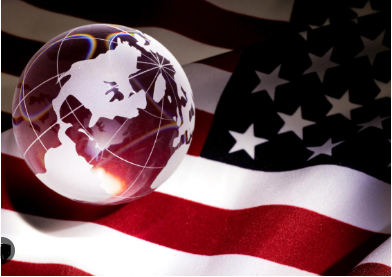
The new trade policies and tariff hikes introduced by the U.S. could exacerbate global economic uncertainty and pose severe risks to the U.S. economy itself, a prominent German economist has warned.
Holger George, a professor of International Economics at the University of Kiel, cautioned that the U.S. economy is likely to bear the brunt of its own new policies.
Speaking to the Chinese News Agency (Xinhua), George stated, “Although it remains unclear whether the U.S. tariffs will lead to a strong recession or just an economic downturn, it is very clear the U.S. will hurt itself with this.”
George, who also serves as the Director of the International Trade and Investment Research Centre at the Kiel Institute, explained that tariffs have a detrimental effect on economies by driving up inflation and diminishing global competitiveness.
He pointed to emerging signs of a slowdown in the U.S. economy, including rising prices and falling stock prices, which he attributed to the tariff policies.
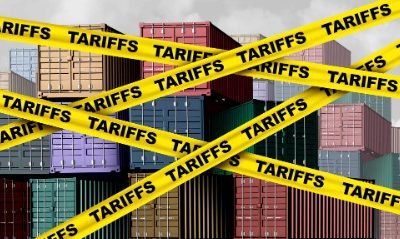
The U.S. recently imposed a 25% tariff on imported steel and aluminum products, triggering retaliatory measures by the European Union.
In response, former President Donald Trump threatened additional tariffs on EU imports if these countermeasures were not lifted. George warned that if the situation escalates into a full-scale trade war, it would result in negative outcomes for all parties involved.
Expressing doubt about the success of the U.S.’s current tariff strategy, George questioned the potential of these policies to shift production back to the U.S.
ALSO READ : Wike vows to ensure Atiku’s failure in future presidential bids
He noted that the unpredictability of the Trump administration’s tariff decisions undermines long-term business planning.
Despite the policies being framed as a strategy to revitalize U.S. industries, the lack of consistency creates a highly uncertain environment that could scare off investors and prevent businesses from making long-term strategic decisions.
On the issue of globalization, George argued that the U.S. had historically benefited from access to lower prices and advanced technologies but was now taking a step back. “We are at a crossroads, and globalization may be under threat as the largest economy in the world is not following international trade rules,” he said. “If the international trade system breaks down, it would be the worst outcome for global markets.”
At this critical juncture, George emphasized the importance of other major economies, such as the EU and China, playing more active roles in maintaining the stability of global trade.
He highlighted the potential for cooperation between the EU and China to counterbalance the disruptive impact of U.S. policies.








-

 Featured3 days ago
BREAKING NEWS: Shouts of joy rock the world as Pastor Chris opens final Healing Streams edition for 2026
-

 Football4 days ago
Man United shortlist Emery, Nagelsmann as potential replacements for Carrick
-

 Business4 days ago
Hoodlums raid JED Benue office, abduct 10 staff over power dispute
-
 Business7 days ago
Naira faces exchange rate gap as Dollar hits N1,380 on parallel market
-

 Football4 days ago
Aston Villa ready to freeze out Garnacho to avoid £43m Chelsea transfer
-

 Business4 days ago
EV adoption: Roxettes seeks cheaper financing, local manufacturing incentives
-

 Latest3 days ago
Akpabio tasks Tompolo-backed movement with spreading Tinubu’s renewed hope message
-

 Business3 days ago
How Ethiopian Airlines is challenging Africa’s aviation narrative through self-reliance