
Featured
Ekiti governorship election enters critical counting stage as voting concludes across state

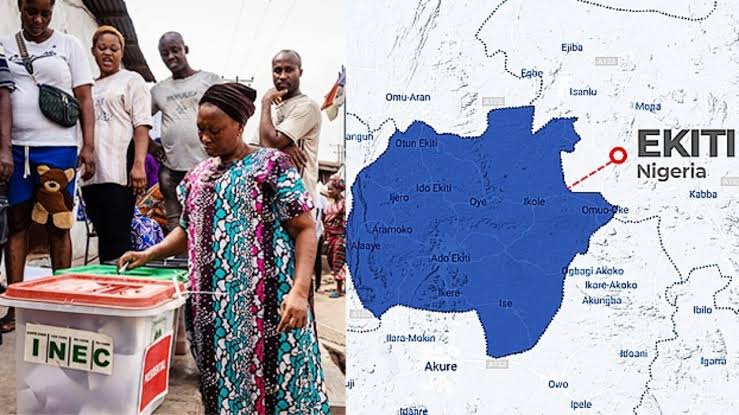
Voting has ended across Ekiti State in the closely watched 2026 governorship election, with electoral officials commencing the sorting, counting, and electronic transmission of results from polling units across the state’s 16 local government areas.
The off-cycle election, widely regarded as an important test of political strength ahead of the 2027 general elections, saw voters choose among 14 candidates contesting for the state’s highest office. However, political observers have largely framed the contest as a three-way battle involving incumbent Governor Biodun Oyebanji of the All Progressives Congress (APC), Dr. Wole Oluyede of the Peoples Democratic Party (PDP), and Ambassador Dare Bejide of the African Democratic Congress (ADC).
The election carries significant political implications for Governor Oyebanji, who is seeking to become the first incumbent governor in Ekiti State’s democratic history to secure re-election for a second consecutive term.
According to figures released by the Independent National Electoral Commission (INEC), the state had over 1.05 million registered voters for the election, with a PVC collection rate exceeding 97 percent—one of the highest recorded in recent electoral cycles.
Political analysts say the high voter registration and collection figures underscored the level of interest generated by the poll, which many stakeholders consider a referendum on the performance of the current administration.
Security agencies deployed thousands of personnel across the state to maintain law and order during the exercise.
Police officers, military personnel, and other security operatives were stationed at polling units and strategic locations across all 16 local government areas to prevent violence and ensure the smooth conduct of the election.
Despite the extensive security presence, a few incidents were reported in some communities.
In Isan-Ekiti, voter turnout was initially affected by fears arising from a fatal shooting incident that occurred on the eve of the election. Community leaders and the traditional ruler, the Onisan of Isan-Ekiti, reassured residents that the incident was unrelated to the election and urged eligible voters to participate peacefully in the process.
Election observers and party agents reported isolated cases of tension at some polling centres during voting.
Supporters of the APC and ADC were involved in disagreements at certain locations over allegations of vote-buying, while ADC candidate Dare Bejide alleged that his driver was assaulted during an incident at a polling unit. The matter was reportedly reported to security authorities for investigation.
Despite the isolated disturbances, election monitors described the overall exercise as largely peaceful, with voting and accreditation proceeding without major disruptions in most parts of the state.
Former Ekiti State Governor Ayodele Fayose, who voted early in the day, commended the conduct of the election and expressed optimism about a credible outcome.
With voting completed, attention has shifted to the collation and electronic transmission of results through INEC’s technological platforms, including the Bimodal Voter Accreditation System (BVAS) and the INEC Result Viewing Portal (IReV).
Civil society organisations and election observers have called on INEC officials to strictly adhere to established procedures to ensure transparency and maintain public confidence in the electoral process.
The Nigeria Civil Society Situation Room emphasized the importance of timely result uploads and accurate transmission from polling units to collation centres, describing the process as crucial to the credibility of the election.
INEC has also urged members of the public to disregard unofficial figures circulating on social media, stressing that only results announced through the commission’s official channels should be considered authentic.
Results Expected After Overnight Collation
As collation continues across the state’s local government areas, political parties, observers, and voters are awaiting the outcome of what has emerged as one of Nigeria’s most closely watched governorship elections.
The final result is expected after the completion of polling-unit, ward, and local government collation processes, with INEC expected to formally declare a winner once all statutory procedures have been concluded.
The outcome of the election is likely to shape political calculations not only in Ekiti State but also across the country as parties begin preparations for the 2027 general elections.


-

 Featured1 week ago
Inside INEC’s race to prepare for Nigeria’s 2027 elections
-
 Featured1 week ago
2027: APC unveils nationwide campaign timetable, Tinubu to rally in 12 states
-

 Business5 days ago
Naira faces exchange rate gap as Dollar hits N1,380 on parallel market
-
 Business1 week ago
Court dismisses ₦170m Trade Fair contract claim, says Zenith Bank was not a party
-

 Latest1 week ago
Breaking: NNPCL raises petrol price to ₦1,405 per litre amid discount controversy
-

 Featured1 week ago
From kitchen to Supreme Court: Nigerian’s fight over alleged support for terrorists
-

 Football1 week ago
Maresca reveals Guardiola’s reaction to Man City’s 4-2 defeat to PSG
-

 Business7 days ago
NCC launches Internet Governance Working Group to tackle AI risks, boost online safety