
Agribusiness
Embargo maize export, Dangote urges FG

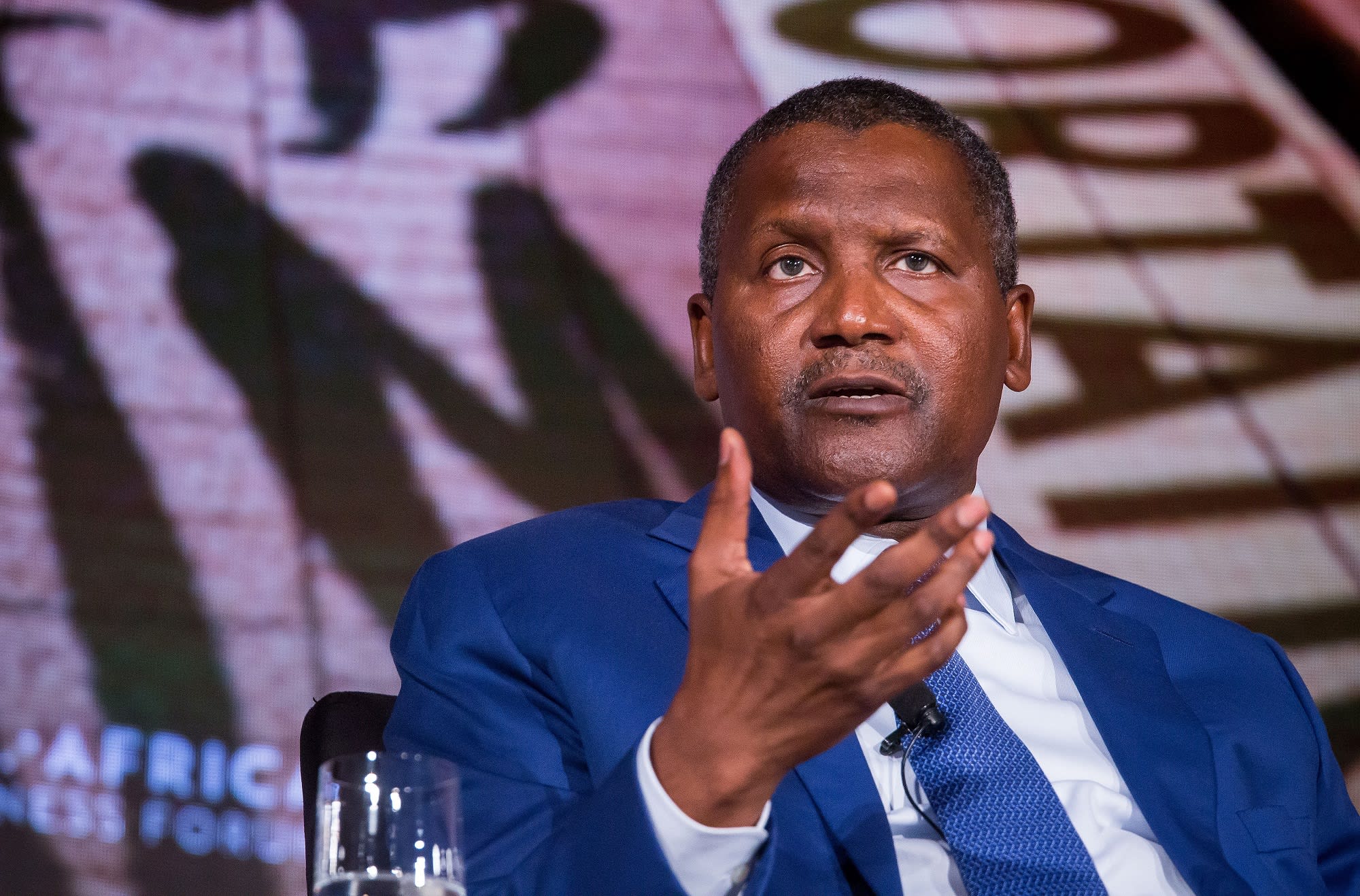
Embargo maize export, Dangote urges FG.
Alhaji Aliko Dangote, Chief Executive, Dangote Industries, has urged the Federal Government to embargo export of maize to ensure food security in the country.
Dangote made the call during the 4th Annual Nigerian Food Processors and Nutrition Leadership Forum on Thursday in Lagos.
The forum was organised by the Aliko Dangote Foundation, the Bill & Melinda Gates Foundation (BMGF), and TechnoServe, under the Strengthening African Processors of Fortified Foods (SAPFF) programme.
The SAPFF Programme aims to address the lingering challenges in the food fortification sector using a market-based approach to assist over 90 food processors increase their capacity to produce and sell fortified foods to local markets.
Dangote said that the ongoing war between Russia and Ukraine would lead to scarcity of food, arising from the inability to access fertiliser.
According to him, the effect might not be immediate, however, the ripple effect of the war on food production will be felt in the next two to three months in the country.
He noted that Russia and Ukraine were the number one and five in wheat production, accounting for one third of global wheat production.
The industrialist said that there would be a shortage of wheat, maize and urea in the global market.
“We would start seeing people exporting maize to earn foreign exchange which I believe we should stop.
“We need to grow more so we don’t have a shortage of food. It is about food security and it’s serious,” he said.
Dangote said that Russia and Ukraine produced about 13 per cent of urea, 26 per cent of potash, and one of the largest producers of phosphate globally.
To ameliorate the supply chain impact on the country, Dangote stressed the importance of engaging the government in a robust discussion to forge likely solutions.
Also, Mr Boye Olusanya, Chief Executive Officer, Flour Mills of Nigeria Plc, said that the war would impact prices of commodities globally.
Olusanya noted that prices of wheat had increased, and there were issues of inventory control and management.
“We need to discuss with government on the measures to take to alleviate the impending crisis.
“The impact will also affect maize as Ukraine is the largest producer; we need to start looking at the issue of cross border trafficking of maize, as more farmers will be moving maize out of the country,” he said.
He noted that fertiliser would be affected with the impact spanning between 12 months and 18 months.
“If we don’t manage the situation effectively, there will be significant volume of pressure on input material and the volume of food sold,” he said.











-
 Latest7 days ago
Israel marks 3 years since October 7 Hamas attack amid Gaza strikes, election debate
-

 Energy7 days ago
Fuel Battle: Dangote, marketers and government clash over petrol imports
-
 Energy1 week ago
Petrol, diesel prices rise 86% in 2026 as costs hit fresh highs
-

 Latest2 days ago
Full List: Meet the 2026 Nobel Prize winners across six categories
-

 Football1 week ago
Nigeria’s World Cup exit under spotlight as FIFA’s DR Congo files emerge
-

 Latest1 week ago
US Court set to rule on release of FBI, DEA records on Tinubu
-

 Business1 week ago
Nigerian investors at a crossroads as fixed-income yields slide
-

 Latest1 week ago
Oyo APC crisis deepens as Oluyole reconciliation meeting ends in brawl