
Business
Equities shave 5.7% as SEC moves to reposition capital market

By Chioma Obinagwam
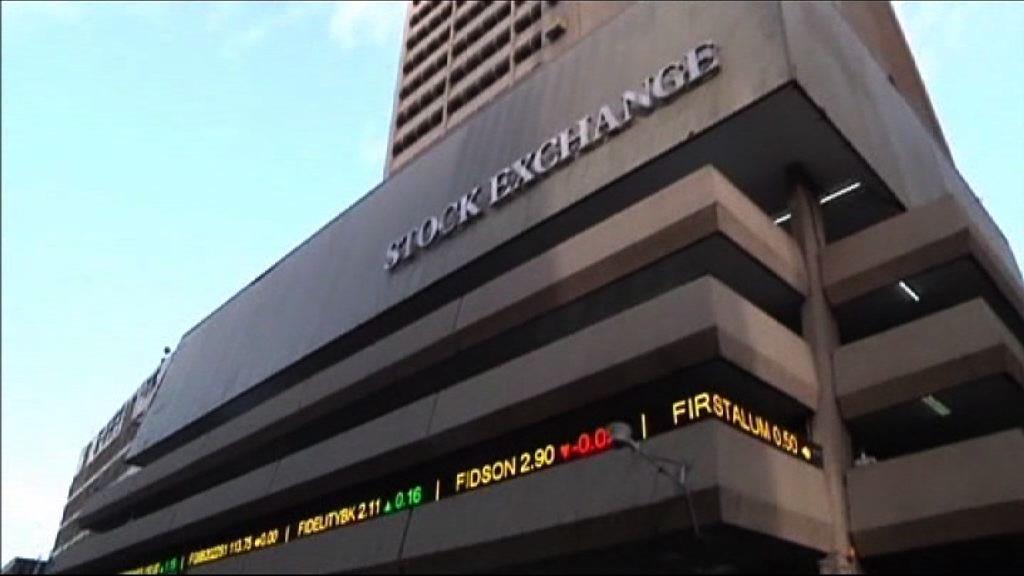
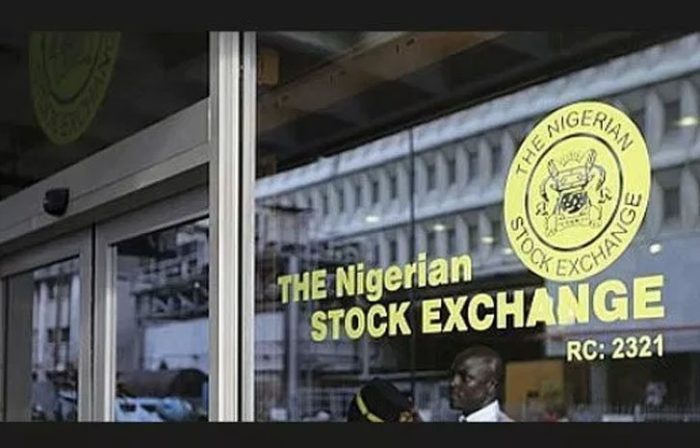
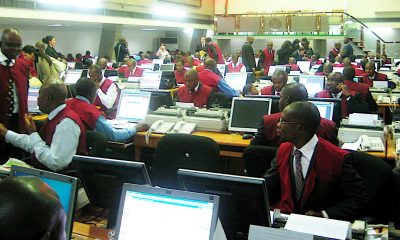
The Nigerian Stock Exchange (NSE) has suffered 5.7 per cent loss since trading began on January 3, 2017 to date. Weekly report of the NSE for the week ended February 10, 2017 indicated.
Recall that the NSE All-Share index opened the year at 26,874.62 basis points (bps), closing at 25,340.02 bps in the review period (February 10, 2017).
Although some analysts believe that a rebound on the NSE will be sustained if the economy begins to look up, since, the capital market is a microcosm of the Nigerian economy.
Nevertheless, the Securities and Exchange Commission of Nigeria (SEC), is taking concerted efforts to reposition the market.
In a communique issued at a meeting held in Lagos, recently, tagged: ‘The 2017 budget of growth and recovery: relevance, implications and perspectives of the Nigerian Capital Market,’ Director General (DG) of the Commission, Mounir Gwarzo, said it would look into boosting investor education, particularly policy makers to enable them have a better understanding of the importance of the capital market as a vehicle for driving economic growth.
The communique, which is to be presented to Minister of Finance and the president, would also consider the capital market as a platform to fund government projects as well as a place to share government shares, especially, during privatisation.
It would also among other things, look at encouraging more listings, which would bring more revenue to the government in terms of tax.
The lead discussant at the event, Dr. Afolabi Olwookere stated that government’s deficit can lead to a further depreciation of the currency (naira).
Reacting to the N2.3 trillion deficit in the 2017 budget, he stated that the equities market would experience recovery if government uses its proceeds to finance infrastructure that are critical for production.
He added that it would reduce the cosy of production of most listed companies, which would translate into more profit for listed companies and more revenue through tax for the government.
“There’ll be recovery in the equities market in the medium to long-term if government uses the proceeds to finance key infrastructure that are critical to the production process of these listed companies that would reduce their cost of production,” he said.


-
 Latest6 days ago
Israel marks 3 years since October 7 Hamas attack amid Gaza strikes, election debate
-

 Energy6 days ago
Fuel Battle: Dangote, marketers and government clash over petrol imports
-

 Energy1 week ago
Petrol, diesel prices rise 86% in 2026 as costs hit fresh highs
-

 Football7 days ago
Nigeria’s World Cup exit under spotlight as FIFA’s DR Congo files emerge
-
 Energy1 week ago
Has Iran lost control of the Strait of Hormuz? Oil flows rebound as war disruptions persist
-
 Latest7 days ago
US Court set to rule on release of FBI, DEA records on Tinubu
-

 Latest20 hours ago
Full List: Meet the 2026 Nobel Prize winners across six categories
-
 Business7 days ago
Nigerian investors at a crossroads as fixed-income yields slide