
Business
Experts warn of mounting fiscal risks as Nigeria’s debt nears $45.1bn mark for 2024

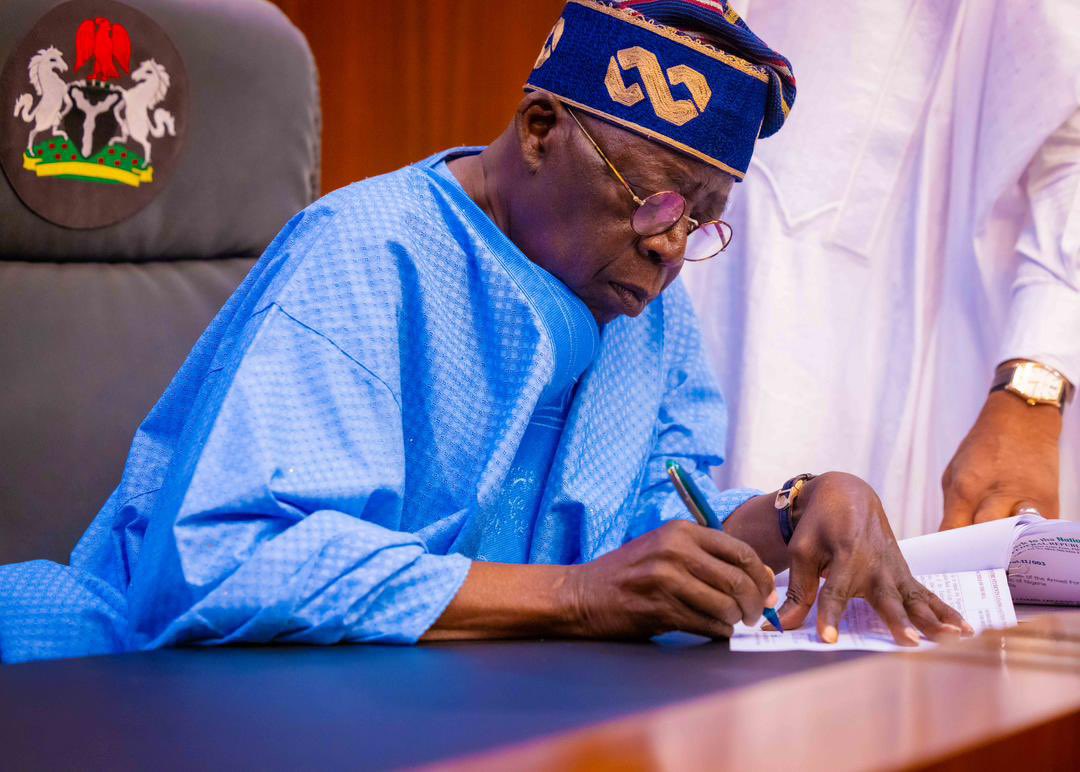
Nigeria’s external debt is projected to climb to $45.1 billion by the end of 2024, marking a notable increase from its June 2024 level of $42.9 billion. This anticipated growth follows the Federal Government’s recent approval of an external borrowing plan aimed at financing the 2024 budget.
The Debt Management Office (DMO) highlighted that external debt surged by $780 million in just the second quarter of the year, underscoring the fiscal challenges confronting Africa’s largest economy.
The Federal Executive Council (FEC) recently sanctioned a $2.2 billion external funding package, consisting of a $1.7 billion Eurobond and a $500 million Sukuk bond.
Minister of Finance Wale Edun characterized this funding initiative as a testament to international confidence in President Bola Ahmed Tinubu’s economic policies. He asserted that accessing the global capital market signifies backing for the administration’s reform agenda, designed to stabilize and stimulate economic growth.
Despite these assurances, economic analysts are raising alarms over the implications of Nigeria’s escalating debt profile. Muda Yusuf, Director of the Centre for the Promotion of Private Enterprise (CPPE), underscored that persistent debt accumulation amid revenue shortfalls jeopardizes the country’s fiscal health.
“Nigeria’s revenue capacity remains a significant constraint. Continuous borrowing without significant revenue improvements or robust economic diversification poses a threat to fiscal sustainability,” Yusuf warned.
READ ALSO: External debts incurred by Nigerian Presidents 1979 – 2024
The Central Bank of Nigeria (CBN) reported a sharp rise in foreign debt servicing costs, which reached $3.58 billion from January to September 2024, reflecting a 39.77% increase over the $2.56 billion recorded during the same period in 2023. This growing expenditure signals mounting pressure on public finances.
The DMO’s latest report, published in October 2024, revealed that Nigeria’s total debt stock had surged to a record N134.3 trillion by mid-year.
Analysts caution that without strategic measures to boost non-oil revenue streams, curtail government spending, and promote private sector-driven infrastructure projects, the nation could face a debt crisis.
Financial experts advocate for a cautious approach to external borrowing. Tunde Adebayo, a financial analyst, noted, “Excessive reliance on international debt can heighten economic vulnerabilities, particularly through exposure to foreign exchange volatility and fluctuating global interest rates.”
As the government seeks to bridge budget deficits, the newly approved $2.2 billion borrowing initiative could further stress Nigeria’s debt-to-GDP ratio, challenging its fiscal recovery in the medium term.
The trajectory of these borrowing strategies will play a critical role in determining whether Nigeria can manage its fiscal challenges or slip deeper into a cycle of debt dependency.


-
 Featured1 week ago
Tinubu’s Renewed Hope: Reforms, hardship and the unanswered question of a second term
-

 Featured7 days ago
The cost of Renewed Hope: How Nigeria’s economic reforms are reshaping everyday family life
-

 Crime4 days ago
Kwara bandit deal under scrutiny as footage shows security operatives negotiating with terrorists [VIDEO]
-
 Business7 days ago
CBN forex reforms under scrutiny as Nigeria’s reserves drop $300m in 10 days
-
 Business7 days ago
NCC plans spectrum incentives to push telecom operators into more network investment
-

 Entertainment6 days ago
2027 Grammys: Asake, Wizkid, Tems, Ayra Starr lead Nigerian nominees in African music category
-

 Latest7 days ago
Nigeria’s security crisis deepens as October death toll hits 835, highest in 2026
-

 Sports1 week ago
Kenya’s Timothy Kibii wins Port Harcourt International Marathon