
Business
FG’s utilization of IMF $3.4billion SDR fund shrouded in mystery – Expert

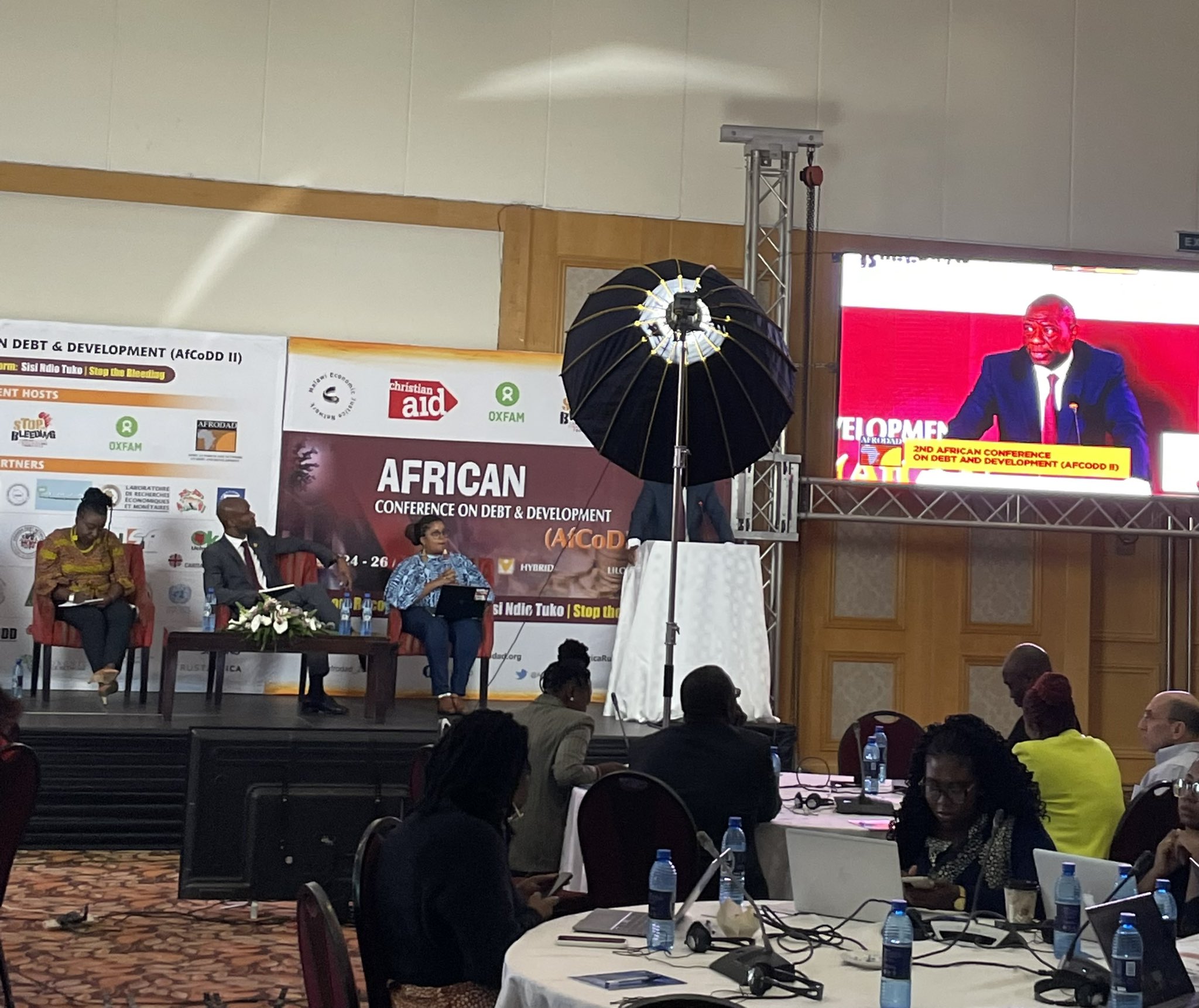
The Executive Director of the African Network for Environment and Economic Justice (ANEEJ), David Ugolor, has raised concerns over the inability the country to account for the $3.5billion Special Drawing Right (SDR) allotted to the country by the International Monetary Fund (IMF) in 2021 as a direct response to the economic crisis unleashed by the Covid-19 pandemic.
Speaking recently at the African Conference on Debt and Development (AFCODD), Ugolo lamented that the utilisation of the SDRs has been shrouded in secrecy with no information in public domain by the Federal Government neither is there parliamentary coverage of the SDRs issue in Nigeria.
To this end, he called on the National Assembly to hold a public hearing on the issue and invite the Minister of Finance, Budget and National Planning and the Governor of Central Bank to explain the use of $3.4bn SDR allocated by IMF since 23 August 2021 sitting idle in the CBN, as well as to explain the use of the $3.4bn Covid-19 facility granted by the IMF which has been fully drawn down.
Ugolor stressed the need for a pan-African approach to the SDRs contribution, allocation and management that takes into recognition the capacity to deliver greater public good to Africans.
READ ALSO: Hidden N13.11tn debt exposed, as report reveals increasing CBN Overdraft to FG
Also speaking, the Country Representative of Policy House International, Taiwo Akerele, pointed out Nigeria’s borrowing appetite is one of the major reasons why the country is in debt crisis.
It was agreed that rather than encouraging further borrowings, Nigeria should leverage its rich resources through an enhanced Debt Recovery Management that knocks out illicit financial flows, profit shifting, tax evasion and avoidance, unbridled looting with impunity and unnecessary tax holidays.
He also lamented that the current Debt Servicing Strategy 2020-2023 is not inclusive as it does not reflect modern day reality and lacks a broader citizen and CSO inclusive approach just as most of the baseline underpinning the strategy such as real GDP, oil production volume and continued reliance on Debt/GDP ratio no longer hold.
Akerele said there is the need for immediate review of Nigeria’s debt strategy and policies to make them inclusive with civil societies’ involvement in loan contraction and monitoring processes.
A communiqué issued at conference, however, called for the need to sustain interrogation of the international financial system as the multilateral financial institutions were established and managed in ways and manners that stifle the growth and development of the south, including Nigeria.
Nigeria’s debt stock stood at $100billion as of March 2022.
A breakdown by the Debt Management Office (DMO) revealed that as at 31 March 2022, external debt stood at $39billion while domestic debts stood at $60billion.


-
 Featured6 days ago
Inside INEC’s race to prepare for Nigeria’s 2027 elections
-
 Latest1 week ago
Global excitement builds as Healing Streams Live Services returns October 23
-
 Featured6 days ago
2027: APC unveils nationwide campaign timetable, Tinubu to rally in 12 states
-
 Business1 week ago
President Tinubu and the Low Transport Fares Fiasco
-
 Business4 days ago
Naira faces exchange rate gap as Dollar hits N1,380 on parallel market
-
 Business6 days ago
Court dismisses ₦170m Trade Fair contract claim, says Zenith Bank was not a party
-
 Latest6 days ago
Breaking: NNPCL raises petrol price to ₦1,405 per litre amid discount controversy
-

 Business1 week ago
Rite Foods targets beverage market growth with LIDA Malt