
Featured
Gbajabiamila reacts to viral video on battered DisCos officials

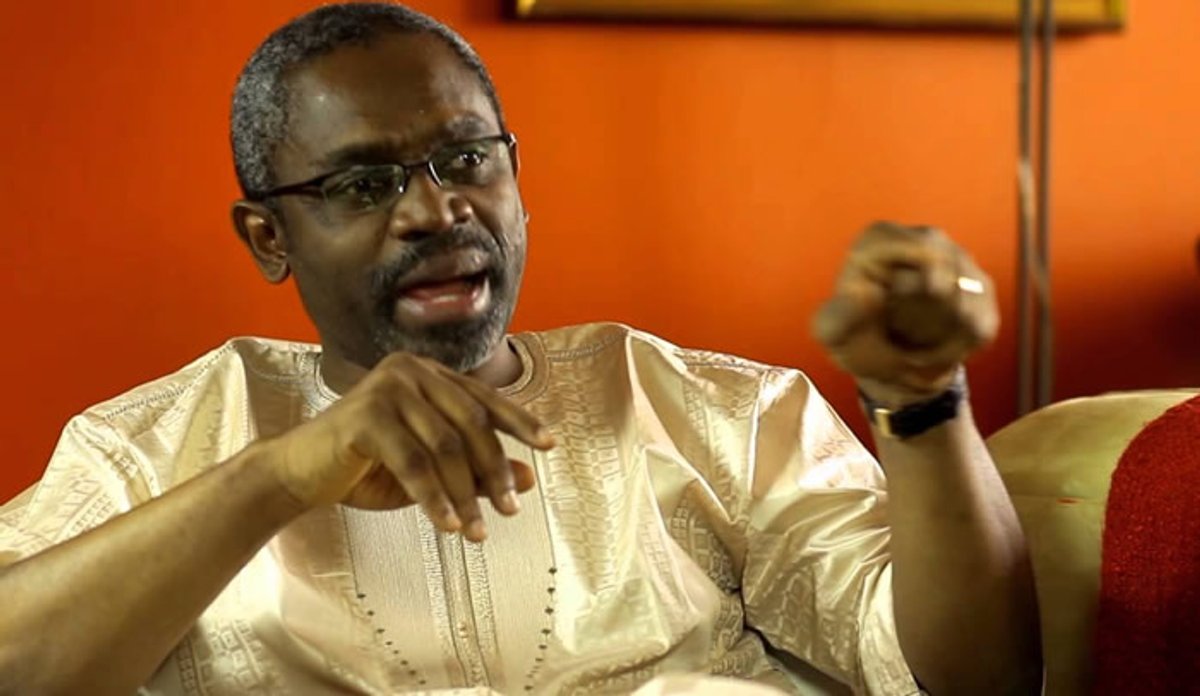
House leader, Honourable Femi Gbajabiamila says the House of Representatives has completed the passage of the bill which seeks to address the controversial issue of estimated billing by Electricity Distribution Companies in the country.
Gbajabiamila who is also contesting for Speakership of the House disclosed this while reacting to a viral video where distribution companies’ officials are seen being beaten by angry customers over estimated billings in a series of tweets on Tuesday.
He tweeted, “In the last few days I have watched clips of distasteful exchange of blows between staff of electricity distribution companies and their customers over ‘crazy’ estimated bills.
“I foresaw this situation earlier hence my sponsorship of the Bill to criminalize estimated billing.
“We have completed passage of this Bill in the @HouseNGR to address estimated billing, energy theft etc but for whatever reason it’s still in the @NGRSenate awaiting concurrence and passage.
ALSO READ: Another APC Rep loses seat for daring to challenge Gbajabiamila
Recall that the House passed the criminalising “Estimated Billing” sometimes in January after several appeals from the public who argued that the DisCos are exploiting electricity consumers.
Essentially, the Electricity Power Reform Act (Amendment Bill) 2018 will make it a crime for power distribution firms to persist in their depraved and scandalous practice of foisting on Nigerians “crazy” bills based on guesstimates and arbitrariness.
It will also be contrary to the law for DisCos to disconnect a customer who has not been provided a meter after 30 days of duly applying for it; refusing to meter customers is not only disgusting and primitive, it is criminal. Different fines and prison terms have been spelt out for failure to comply with the provisions of the new law, including a one-year jail term and N1 million fine for defaulters.
Estimated billing ensures that electricity consumers are deliberately left unmetered so that, at monthly intervals, they can be slapped with outrageous bills that have no bearing whatsoever on the quality or quantity of electricity supplied or consumed. This state-sanctioned fraud has managed to survive over the years due, in the main, to weak regulation, as the Nigerian Electricity Regulatory Commission has found it difficult to curb the excesses of the DisCos.
Many have wondered why firms that are notoriously inefficient should be so prolific in contriving dubious bills for consumers. Even when, for weeks or months, there is no electricity supply, it does not change the billing situation.
The practice of estimated billing is so controversial and deceitful that even when customers are disconnected, the bills keep running. If customers travel out of town, upon return, the bills, sometimes even higher, will be waiting.
This is why the perspective of Femi Gbajabiamila, the Majority Leader of the House, who sponsored the bill, is so critical. He argued, “Any regulation that allows estimation of bills when the actual consumption can be ascertained is against natural justice and equity and should not stand.” It still remains to be seen if, with the new law, a set of firms that are used to getting away with all manner of sharp practices, will now start playing by the rules, if the law is not followed with strict enforcement.


-
 Latest7 days ago
Full List: Meet the 2026 Nobel Prize winners across six categories
-
 Football6 days ago
Premier League Matchweek 7: Five Fixtures That Could Shape the Weekend
-

 Business5 days ago
Dangote Refinery IPO: 70% Subscription claim meets fourfold demand assertion as investors seek clarity
-

 Latest6 days ago
Umahi defends Lagos-Calabar highway route changes amid public outcry
-
Business6 days ago
Dangote Refinery IPO Extension: Was the 70% subscription report overhyped?
-
 Latest4 days ago
UCTH faces morgue crisis as 50 unclaimed corpses await mass burial
-

 Business3 days ago
BREAKING: Nigeria’s Inflation Rate Drops to 14.63% in September
-
 Featured6 days ago
El-Rufai, ADC governorship candidate’s court appearance puts Kaduna opposition politics in focus