
Business
Global oil prices slide amid economic uncertainty, rising supply concerns

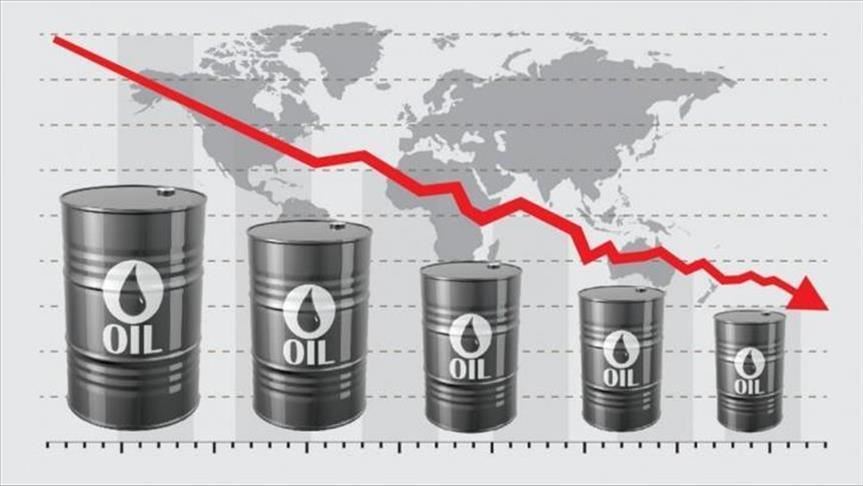
On Friday, global oil prices declined further, extending a week-long trend of market instability.
Brent crude futures fell by 41 cents, or 0.56%, closing at $72.47 per barrel, while U.S. West Texas Intermediate (WTI) crude futures dropped by 39 cents, or 0.56%, settling at $68.99 per barrel. These declines underscore growing concerns about the global economic recovery and the stability of oil demand.
The Organization of the Petroleum Exporting Countries and its allies, known collectively as OPEC+, have once again lowered their global oil demand growth forecast for 2024.
This marks the fifth consecutive downward revision, reflecting a challenging economic environment characterized by sluggish industrial output, inflationary pressures, and weakening consumer demand in key oil-consuming nations.
For oil-importing countries such as Nigeria, the revised outlook signals potential economic hurdles, including higher energy costs and strained fiscal budgets.
At the same time, the uncertainties surrounding demand highlight the delicate balance between maintaining revenue stability for exporters and ensuring affordability for importers.
READ ALSO: Dangote disrupts oil trade, expands refined exports to Africa, Europe
Analysts at J.P. Morgan have projected that the global oil market will transition from equilibrium in 2024 to a surplus of approximately 1.2 million barrels per day (bpd) in 2025.
This anticipated surplus is attributed to a significant increase in non-OPEC+ production, estimated at 1.8 million bpd, while OPEC+ output remains relatively unchanged.
The resulting surplus could exert further downward pressure on oil prices, presenting challenges for oil-exporting economies while offering potential short-term relief for import-dependent nations.
However, prolonged instability in oil prices may discourage investments in energy infrastructure and new production capacities, exacerbating long-term vulnerabilities in the global energy market.
Adding to the market complexities, G7 nations are reportedly exploring stricter measures to curb Russian oil exports.
Options under consideration include tightening the price cap currently set at $60 per barrel or implementing an outright ban. These measures aim to counteract Russia’s ability to evade sanctions through the use of a “shadow fleet” of covert shipping operations.
READ ALSO: OPEC reiterates commitment to cut supply as crude oil price falls
Recent sanctions introduced by the European Union and the United Kingdom target these shadow fleets, aiming to close loopholes that have allowed Moscow to sustain its oil trade despite earlier restrictions.
The evolving geopolitical landscape surrounding Russian oil exports is expected to contribute to ongoing market volatility.
For Nigeria and other oil-dependent nations, the shifting dynamics in global oil markets present a dual-edged sword. Declining prices could ease domestic energy costs, but they also threaten to reduce revenues from oil exports.
Additionally, geopolitical tensions and supply chain disruptions stemming from sanctions on Russian oil could amplify economic instability in vulnerable regions.
To mitigate these challenges, policymakers must prioritize the diversification of revenue streams, develop strategic energy policies, and accelerate investments in renewable energy infrastructure. Such measures will be crucial in fostering resilience amid a volatile global oil market.
The global oil market faces significant uncertainties as 2025 approaches. Key factors shaping the market include OPEC+ strategies, non-OPEC+ production growth, geopolitical developments, and evolving demand patterns.
Stakeholders across the energy sector must remain agile and proactive to navigate the challenges and opportunities ahead, ensuring stability in an increasingly unpredictable landscape.


-

 Featured1 week ago
Inside INEC’s race to prepare for Nigeria’s 2027 elections
-

 Featured1 week ago
2027: APC unveils nationwide campaign timetable, Tinubu to rally in 12 states
-
 Business5 days ago
Naira faces exchange rate gap as Dollar hits N1,380 on parallel market
-
 Business1 week ago
Court dismisses ₦170m Trade Fair contract claim, says Zenith Bank was not a party
-
 Latest1 week ago
Breaking: NNPCL raises petrol price to ₦1,405 per litre amid discount controversy
-

 Featured1 week ago
From kitchen to Supreme Court: Nigerian’s fight over alleged support for terrorists
-

 Football1 week ago
Maresca reveals Guardiola’s reaction to Man City’s 4-2 defeat to PSG
-

 Business7 days ago
NCC launches Internet Governance Working Group to tackle AI risks, boost online safety