
Featured
IKOYI: Osibona’s got govt approval for 6 storeys, came twice for additions

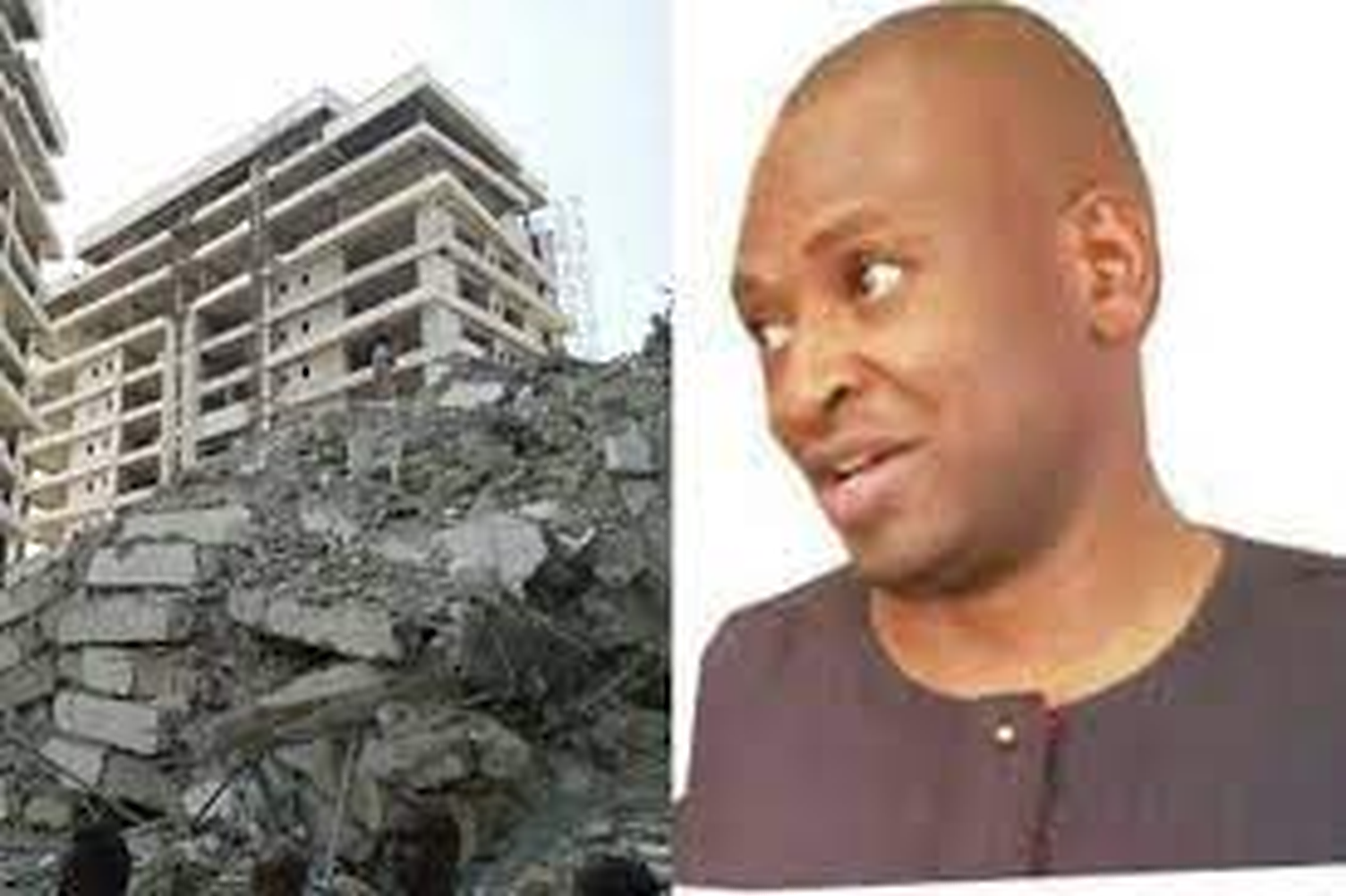
Lack of quality control, quality assurance, and structural inadequacy may have led to the recent collapse of the 21-storey building in Ikoyi, Lagos.
According to the Nigerian Institute of Structural Engineers, there was a surge in the request for structural integrity appraisal by property owners and occupiers following the collapse.
The President, FNIStructE, Dr Kehinde Osifala, stated the summary of the findings of the preliminary investigation during a press briefing on Monday.
“There are clear indications of several design brief changes on the project and the engineering and management of these changes appear to have been seriously inadequate,” Osifala said.
“The building that collapsed was initially designed for six floors, later 12 floors and further 15 floors. It could not yet be established the adequacy of any properly designed and documented further revision to the eventual 21 floors that was implemented and which collapsed.”
Lagos Dep.Gov Femi Hamzat dismissed the initial statement of agency that grants approval which revealed the developer, Fourscore Heights Ltd, got approval for 12 floors. Hamzat insisted the 360 Degree tower got approval for21 storeys.
“There are also indications that more than two structural engineering design firms worked on the project at different times.
“The preliminary investigation also revealed some evidence of structural inadequacy in the construction and that signs of some structural distress had already started to show within certain elements of the building.”
According to him, you can’t test a column or a beam and say you have carried out an integrity test.
“That is arrant nonsense. You need integrity appraisal of the building. It can only be done by a professional. You need to get the right professionals to do the right thing and build the right ways. Do not assume it is a small project.”
He also emphasised insurance companies’ responsibility to insist that professionals are on the job.
“We need to educate government agencies, approving authorities and engineers and those in the built industry about the need for professionals so that you can identify what is wrong with your site.
“It is when the workers are knowledgeable enough to see the signs we are talking about, that they can alert us to what is wrong.”
Osifala added that the institute’s findings are not meant to jeopardise the outcomes of the more detailed investigations being organised by various professional and regulatory bodies.
The 21-storey building collapsed November 1—on the developer Femi Osibona, friend, and workers, numbering more than 50.
No fewer than 40 dead victims were evacuated from the rubble.


-
 Latest6 days ago
Israel marks 3 years since October 7 Hamas attack amid Gaza strikes, election debate
-

 Energy6 days ago
Fuel Battle: Dangote, marketers and government clash over petrol imports
-

 Energy1 week ago
Petrol, diesel prices rise 86% in 2026 as costs hit fresh highs
-

 Football7 days ago
Nigeria’s World Cup exit under spotlight as FIFA’s DR Congo files emerge
-

 Energy1 week ago
Has Iran lost control of the Strait of Hormuz? Oil flows rebound as war disruptions persist
-

 Latest7 days ago
US Court set to rule on release of FBI, DEA records on Tinubu
-

 Latest18 hours ago
Full List: Meet the 2026 Nobel Prize winners across six categories
-

 Business7 days ago
Nigerian investors at a crossroads as fixed-income yields slide