
Business
IMF advises Nigeria on policy flexibility as external reserves lose $112m in 5 days

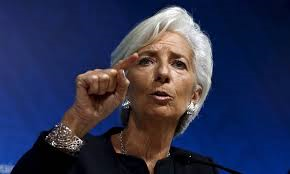
Following the persistent reduction in Nigeria’s foreign reserves as a result of strict forex restriction policies, the International Monetary Fund Managing Director, Christine Lagarde has advised the government to allow some forms of flexibility in handling the crisis.
While meeting with the President on Tuesday, visiting IMF boss, Christine Lagarde said “A nation’s foreign reserves are usually an indication of the health of its international trade, with import-dependent countries often disadvantaged in their current account balance as a result of forex expenditure outstripping income.”
Lagarde, who stressed the need for flexibility with monetary policies in order not to deplete the reserves, said the rigid stands of the Government should not deplete the reserves of the country but advised the government on some form of flexibility.” I’m not suggesting that rigidity be totally removed, but some form of flexibility would help.”
She said, “We believe that with very clear primary ambition to support the poorer people of Nigeria, there could be added flexibility in the monetary policy, particularly if as we think the price of oil is likely to be low for longer (period).
The CBN, however, said it was planning to implement a new guideline for forex trading on the parallel market to curb speculation and forex scarcity.
Nigeria’s foreign reserves have fallen by $112m in just five days to 28.960 billion between December 31 and January according to the latest figures released by the Central Bank of Nigeria.
This latest reduction was the biggest in Nigeria’s reserves since the CBN implemented the use of Bank Verification Number in the forex trading. In just one day (January 4 – January 5), the data showed that the nation lost $20m, dropping from $28.978m to $28.958m.
The external reserves declined by 15.79 per cent year-on-year to about $29.070bn on December 31, 2015, compared to $34.52bn a year ago, according to data from the CBN.
The interbank foreign exchange market was closed by the CBN on December 21, 2015 to conserve forex for an opening on January 4, 2016, leaving the parallel market as the only source of forex through the festive period.









-
 Featured5 days ago
Inside INEC’s race to prepare for Nigeria’s 2027 elections
-
 Featured5 days ago
2027: APC unveils nationwide campaign timetable, Tinubu to rally in 12 states
-

 Latest1 week ago
UCTH faces morgue crisis as 50 unclaimed corpses await mass burial
-

 Business7 days ago
President Tinubu and the Low Transport Fares Fiasco
-

 Business1 week ago
BREAKING: Nigeria’s Inflation Rate Drops to 14.63% in September
-
 Business5 days ago
Court dismisses ₦170m Trade Fair contract claim, says Zenith Bank was not a party
-
 Business3 days ago
Naira faces exchange rate gap as Dollar hits N1,380 on parallel market
-
 Latest6 days ago
Global excitement builds as Healing Streams Live Services returns October 23