
Business
January: Naira circulation declines by 11.63%

By Chioma Obinagwam
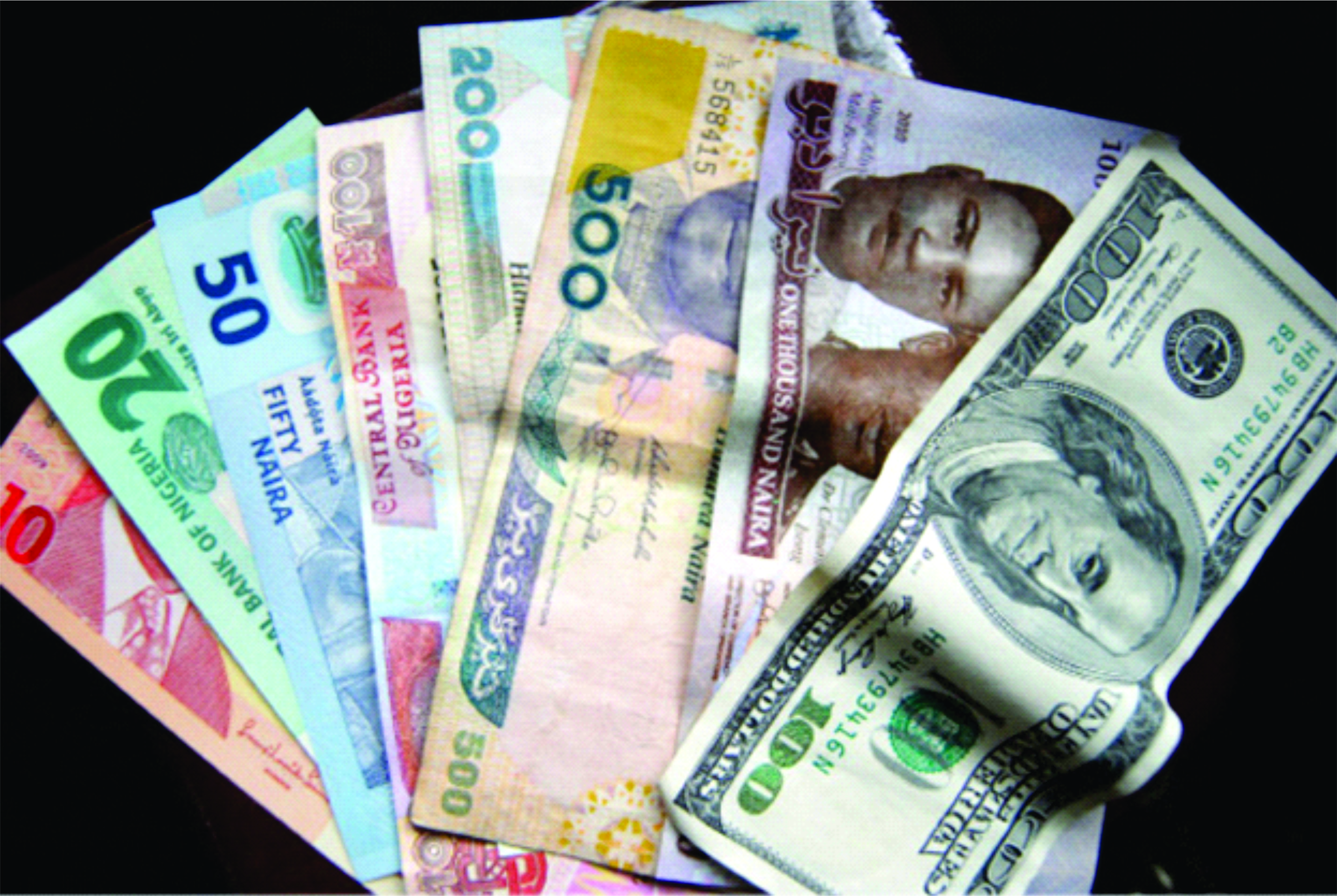
Currency(naira) in circulation in the month of January has declined by 11.63 per cent or N25 billion, the Central Bank of Nigeria (CBN) disclosed in its fourth quarter economic report.
According to the report, currency in circulation dropped to N1.9trillion in January 2018 from N2.15 trillion in December 2017.
The report further showed that at N2.15 trillion in 2017, it was the highest currency in circulation for the period.
“At N2.15 trillion, currency-in-circulation rose by 21.1 per cent, above the level in the third quarter of 2017. The development reflected the growth in currency outside banks,” the report indicated.
The report stated that total deposits at the CBN amounted to N13.17 trillion, indicating 7.5 per cent increase over the level at the end of the third quarter of 2017.
The development, it continued, was as a result of the rise in the deposits of banks, Federal Government and the ‘others’ in the review quarter.
“Of the total deposits at the CBN, the shares of the Federal Government, Banks and „‟Others‟‟ were N6,018.10 billion (45.7 per cent), N4,320.37 billion (32.8 per cent) and N2,834.02 billion (21.5 per cent), respectively,” it disclosed.
“Growth in banks’ reserves at the CBN and currency-in-circulation accounted for the 16.5 per cent rise in Reserve Money (RM) to N6,477.6 billion at end-December 2017, compared with the level at end-September 2017,” it indicated.
Currency in circulation between November and December 2017 was at N1.79 trillion and N1.89 trillion respectively, the CBN revealed on its website.
CBN disclosed that the currency in circulation, which is the physical money used for transactions between consumers and businesses, opened this year at N1.99 trillion and closed in February at N1.97 trillion.
Commenting on the accretion in currency circulation, currency analysts at Ecobank Nigeria, Mr. Kunle Ezun stated that excess liquidity in the economy is due to Yuletide celebration that has leveraged growth in currency in circulation, stressing that Nigerians are finding it difficult to embrace the cashless policy of the CBN.
“The market is liquid and it is due to current season of the year. We have seen a lot of Treasury Bills that have matured which the CBN has not rolled over. Market is awash with liquidity coming from CBN suspension of Open Market Operation (OMO) and slow down in the foreign exchange sales,” he said.
He added that Nigeria is still more of a cash economy, facing infrastructure challenges.
“Someone can blame infrastructure deficit as a major challenge to CBN’s good intentions of making Nigeria a cashless society. The infrastructure that will make the cashless policy work is missing compared to what we have in Kenya,” he noted.
The apex bank in 2002 introduced the cashless policy to eliminate the amount of physical cash (coins and notes) circulating in the economy, and encouraging more electronic-based transactions (payments for goods, services, transfers, among others).












-
 Latest6 days ago
Israel marks 3 years since October 7 Hamas attack amid Gaza strikes, election debate
-

 Energy6 days ago
Fuel Battle: Dangote, marketers and government clash over petrol imports
-

 Energy1 week ago
Petrol, diesel prices rise 86% in 2026 as costs hit fresh highs
-

 Football7 days ago
Nigeria’s World Cup exit under spotlight as FIFA’s DR Congo files emerge
-

 Energy1 week ago
Has Iran lost control of the Strait of Hormuz? Oil flows rebound as war disruptions persist
-

 Latest22 hours ago
Full List: Meet the 2026 Nobel Prize winners across six categories
-

 Latest7 days ago
US Court set to rule on release of FBI, DEA records on Tinubu
-

 Business7 days ago
Nigerian investors at a crossroads as fixed-income yields slide