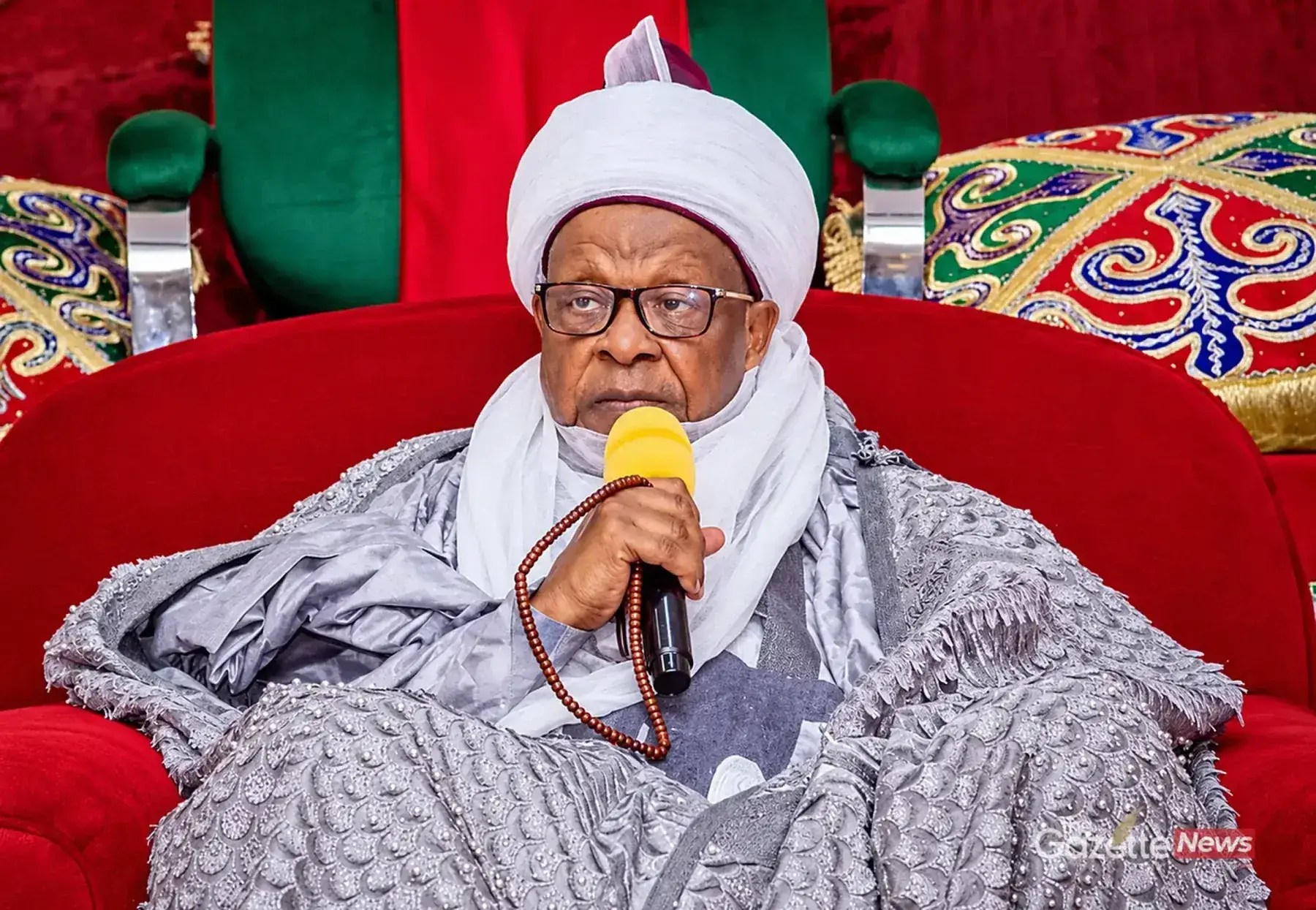
The Emir of Katsina, His Royal Highness Alhaji Dr Abdulmumini Kabir Usman, has reportedly criticised political leaders over insecurity, hunger and what he described as the growing culture of selfishness in Nigerian politics.
In remarks contained in a commentary titled “When a Revered Emir Spoke Raw Truth to Power and Its Lieutenants,” the traditional ruler was quoted as challenging leaders of the All Progressives Congress (APC) to prioritise the welfare and security of citizens over political ambitions ahead of the 2027 general elections.
The Emir reportedly expressed concern that politicians routinely visit his palace to seek prayers and support during election campaigns but abandon the people after securing political office.
He questioned the sincerity of political engagement that revolves around elections rather than sustained efforts to address the needs of ordinary Nigerians.
According to the quoted remarks, the Emir lamented that politics had shifted from community service to the pursuit of personal and family interests.
He also criticised the use of the slogan “Renewed Hope,” arguing that residents of Katsina continued to face severe economic hardship.
The traditional ruler reportedly raised concerns about internal political disagreements among APC figures and their supporters, including Governor Dikko Radda and factions associated with former Governor Aminu Bello Masari.
He questioned why political actors were preoccupied with positioning themselves for the 2027 elections while communities in Katsina State continued to face attacks by bandits.
“Your people are dying, you are fighting for ticket,” he was quoted as saying.
Insecurity takes centre stage
The Emir reportedly cited the closure of 52 schools because of banditry within his emirate and restrictions preventing farmers from accessing their farmlands in 12 local government areas.
He also referred to reports of families paying ransoms running into millions of naira to secure the release of kidnapped relatives.
The remarks highlighted the continuing challenge of insecurity in parts of Katsina State, where attacks, kidnappings and disruptions to farming and education have placed considerable pressure on rural communities.
The Emir was also quoted as questioning the government’s handling of security, specifically referring to notorious bandit leader Bello Turji.
He challenged political leaders to demonstrate tangible results in tackling insecurity before turning their attention to election campaigns.
“Where is Bello Turji? You promised to handle security. Turji is in the forest 100km from here. Go and bring him, then come and campaign,” he was quoted as saying.
The comments framed security as an immediate responsibility of government rather than an issue to be overshadowed by preparations for the next general election.
Emir warns politicians over voters’ response
The traditional ruler also reportedly warned that politicians who approached public office primarily as an avenue for personal enrichment should not expect unquestioning loyalty from voters.
He argued that distributing food, cash and other campaign incentives would not necessarily translate into electoral support if citizens remained dissatisfied with governance.
“If you do politics of selfishness — only for your family, your cronies, your contacts — then people will also do politics of selfishness,” he was quoted as saying.
He further argued that voters could accept campaign gifts while independently deciding whom to support at the ballot box.
Reflecting on the 2023 general elections, the Emir reportedly noted that the distribution of rice and money did not prevent voters in Katsina from splitting their support among different political candidates.
He warned that similar campaign strategies in 2027 might not deliver the desired results if politicians failed to address public concerns.




 Featured5 days ago

 Latest1 week ago
 Featured5 days ago
 Business6 days ago

 Business1 week ago

 Business5 days ago

 Business2 days ago

 Latest5 days ago