
Health & Fitness
Lab-grown meat sparks global policy battle as nations take opposing sides

By Princess.o. aluede
As advances in food technology promise to reshape how meat is produced and consumed, a growing political and economic divide is emerging across the world over one of the industry’s most controversial innovations—cultivated meat, also known as lab-grown meat.
Produced by cultivating animal cells in controlled laboratory environments rather than raising and slaughtering livestock, cultivated meat has been hailed by scientists and technology companies as a breakthrough capable of reducing greenhouse gas emissions, improving food security and addressing animal welfare concerns.
Yet, despite these promises, a number of governments have chosen a different path.
Instead of opening their markets to the emerging industry, some countries and U.S. states have enacted outright bans, arguing that the technology threatens traditional agriculture, rural livelihoods, food sovereignty and long-established cultural food traditions.
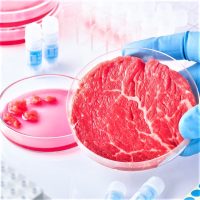
The resulting policy divide has transformed cultivated meat from a scientific innovation into one of the world’s most closely watched agricultural and political debates.
Supporters of cultivated meat argue that producing meat directly from animal cells could significantly reduce the environmental footprint associated with conventional livestock farming.
The technology requires no large-scale animal slaughter and is viewed by many climate advocates as a potential solution to rising global food demand amid population growth and environmental pressures.
However, critics contend that the industry remains commercially immature, while raising concerns about consumer acceptance, long-term health implications, regulatory oversight and the economic consequences for livestock farmers.
For many governments, the debate extends beyond science into national identity and economic security.
READ ALSO: Experts renew concerns over GMOs, warn of health, environmental, economic risks
Italy Becomes the First Country to Impose a Nationwide Ban
Italy became the first nation in the world to prohibit the production and sale of cultivated meat when legislation was enacted in November 2023.
The law, championed by the government of Prime Minister Giorgia Meloni, was presented as a measure to protect Italy’s globally recognised food culture, livestock industry and agricultural heritage.
Government officials argued that food represents more than economic activity—it is a cultural asset closely tied to national identity.
Agriculture Minister Francesco Lollobrigida defended the legislation by stating that Italy’s culinary traditions should not be replaced by laboratory-produced alternatives.
The ban also received strong backing from Coldiretti, Italy’s largest farmers’ association, which represents approximately 1.6 million members.
The organisation argued that cultivated meat could undermine livestock farming and weaken the international reputation of Italy’s “Made in Italy” food brand.
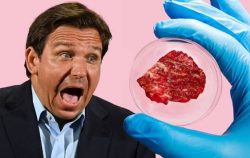
The stakes are substantial.
Italy’s agri-food industry generates more than €60 billion in annual exports, making agriculture one of the country’s most strategically important economic sectors.
Hungary Follows with Similar Restrictions
Hungary became the next European country to prohibit cultivated meat after passing legislation in 2025 banning its production and sale.
The Hungarian government justified the move as part of efforts to safeguard domestic livestock farming and preserve traditional food production methods.
Officials argued that conventional agriculture remains essential to rural employment, national food security and economic stability.
READ ALSO: Nigerians reject GMOs: Outcry grows as citizens demand immediate Government action
Although the European Commission reportedly questioned whether the legislation aligns with European Union single-market principles, Hungarian authorities maintained that protecting domestic agriculture justified the restrictions.
The development illustrates the growing tension between technological innovation and national agricultural policy within Europe.
United States: A Patchwork of State-Level Bans
Unlike Italy and Hungary, the United States has not introduced a nationwide prohibition on cultivated meat.
Instead, regulation has become increasingly fragmented, with individual states adopting different positions.
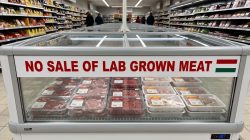
This comes despite the U.S. Food and Drug Administration (FDA) and the U.S. Department of Agriculture (USDA) approving the first cultivated chicken products for commercial sale in 2023, marking a major milestone for the industry.
Florida Leads the Opposition
Florida became the first U.S. state to ban the manufacture, sale and distribution of cultivated meat.
Governor Ron DeSantis signed the legislation into law in May 2024, with the ban taking effect on July 1, 2024.
State officials described the measure as an effort to defend Florida’s ranching industry and resist what they viewed as attempts to replace conventionally produced meat with laboratory alternatives.
Florida has one of the largest cattle industries in the United States, with nearly one million head of beef cattle, making livestock production a major contributor to the state’s agricultural economy.
The legislation has since faced legal challenges from cultivated meat producer Upside Foods, which argues that the ban conflicts with federal regulatory approvals.
However, in 2026, a federal appeals court allowed the law to remain in force while litigation continues.
Alabama Joins the Growing List
Shortly after Florida enacted its legislation, Alabama introduced a similar ban on the manufacture and sale of cultivated meat.
Governor Kay Ivey signed the measure into law in 2024.
Supporters argued that the legislation would protect livestock producers while maintaining public confidence in conventionally produced meat products.
The move reinforced a broader trend among livestock-producing states seeking to shield traditional agricultural industries from emerging food technologies.
Economics, Culture and Politics Collide
The debate surrounding cultivated meat increasingly reflects more than scientific innovation.
For supporters, lab-grown meat offers an opportunity to reduce environmental pressures, strengthen food resilience and create a more sustainable protein industry.
For opponents, it raises concerns about the future of farming communities, rural employment, consumer transparency and the preservation of national food traditions.
Agricultural organisations in several countries have warned that rapid commercialisation of cultivated meat could disrupt livestock markets and weaken investments in conventional farming.
Technology companies, meanwhile, argue that cultivated meat is intended to complement rather than replace traditional agriculture, particularly as global demand for protein continues to rise.
What Comes Next?
With some governments embracing regulated commercialisation while others impose outright prohibitions, cultivated meat has become one of the most politically contested innovations in the global food industry.
The contrasting approaches adopted by Italy, Hungary and several U.S. states highlight a broader policy dilemma confronting governments worldwide: how to balance technological innovation with the protection of traditional agriculture, rural economies and cultural identity.
As more countries decide whether to approve, regulate or prohibit cultivated meat, the outcome of this global debate is expected to shape the future of food production, agricultural investment and consumer choice for decades to come.


-

 Featured5 days ago
Inside INEC’s race to prepare for Nigeria’s 2027 elections
-

 Featured5 days ago
2027: APC unveils nationwide campaign timetable, Tinubu to rally in 12 states
-

 Latest1 week ago
UCTH faces morgue crisis as 50 unclaimed corpses await mass burial
-

 Business7 days ago
BREAKING: Nigeria’s Inflation Rate Drops to 14.63% in September
-

 Business6 days ago
President Tinubu and the Low Transport Fares Fiasco
-
 Business5 days ago
Court dismisses ₦170m Trade Fair contract claim, says Zenith Bank was not a party
-

 Business2 days ago
Naira faces exchange rate gap as Dollar hits N1,380 on parallel market
-
 Latest5 days ago
Breaking: NNPCL raises petrol price to ₦1,405 per litre amid discount controversy