
Latest
Lagos, Ogun, Rivers, 17 others face heavy rain as NiMet issues alert

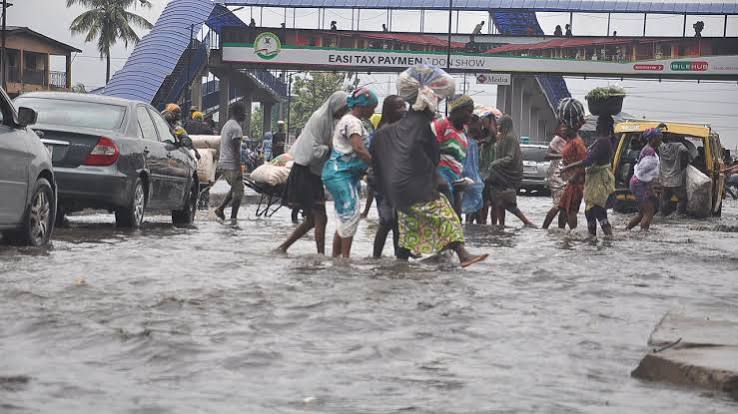
Residents in parts of southern and central Nigeria are being advised to prepare for thunderstorms and moderate rainfall as the Nigerian Meteorological Agency (NiMet) forecasts unsettled weather across several states between Monday and Wednesday.
The latest three-day weather outlook places several southern states, including Lagos, Ogun, Oyo, Ondo, Ekiti, Osun, Rivers, Bayelsa, Delta, Edo, Cross River and Akwa Ibom, among areas expected to experience thunderstorms and moderate rainfall, particularly from Tuesday.
NiMet also identified Benue, Kogi, Nasarawa, Niger and Plateau, as well as the Federal Capital Territory (FCT), for possible thunderstorms and moderate rainfall during the period.
The agency issued the forecast in its three-day weather outlook released on Sunday night, warning that strong winds could precede thunderstorms in some locations.
On Monday, cloudy conditions are expected across southern Nigeria, with light rainfall forecast over parts of Ebonyi, Enugu, Cross River and Akwa Ibom in the morning.
Moderate rainfall is expected to become more widespread across the southern region later in the day.
READ ALSO; NiMet warns of flash flood risk in Lagos, Ogun, 25 others
The situation is expected to intensify on Tuesday, when NiMet forecasts afternoon and evening thunderstorms with moderate rainfall across Ekiti, Osun, Ogun, Ondo, Oyo, Edo, Enugu, Abia, Ebonyi, Imo, Anambra, Lagos, Delta, Bayelsa, Cross River, Akwa Ibom and Rivers.
Intermittent light rainfall is expected over parts of the South-East and coastal areas on Wednesday morning, followed by moderate rainfall across much of the southern region later in the day.
North, North-Central also affected
In the North, NiMet forecasts morning thunderstorms and light rainfall on Tuesday over parts of Borno, Gombe, Bauchi, Yobe, Taraba and Adamawa, with moderate rainfall expected across most of the region later.
On Wednesday, thunderstorms and moderate rainfall are expected over Taraba, Borno, Adamawa, Bauchi and Gombe, before spreading across much of northern Nigeria.
In the North-Central, parts of Benue, Kogi, Plateau and Nasarawa could experience morning thunderstorms and light rainfall on Tuesday, while isolated thunderstorms and moderate rainfall are expected later.
On Wednesday, Nasarawa and Plateau are forecast to record thunderstorms and light rainfall in the morning, with moderate rainfall spreading across most of the zone later.
Flooding concerns
The latest forecast comes against a backdrop of repeated weather alerts issued by NiMet in 2026 over heavy rainfall, thunderstorms and potential flash flooding.
The agency had previously identified Lagos and other coastal states as vulnerable to flash flooding following sustained rainfall, particularly in low-lying communities.
The concentration of Tuesday’s forecast along the South-West and coastal belt could therefore heighten concerns in flood-prone urban areas, especially where drainage systems are inadequate.
Residents are advised to avoid exposed locations during thunderstorms and exercise caution around trees, power infrastructure and flooded roads.
NiMet also advised airline operators to obtain airport-specific weather reports and flight documentation to support flight planning and operational safety.
The agency’s latest forecast underscores the need for residents, motorists, emergency responders and aviation operators in the affected states to monitor subsequent weather updates as conditions evolve.


-

 Latest1 week ago
Full List: Meet the 2026 Nobel Prize winners across six categories
-

 Football1 week ago
Premier League Matchweek 7: Five Fixtures That Could Shape the Weekend
-

 Business6 days ago
Dangote Refinery IPO: 70% Subscription claim meets fourfold demand assertion as investors seek clarity
-

 Latest1 week ago
Umahi defends Lagos-Calabar highway route changes amid public outcry
-
Business7 days ago
Dangote Refinery IPO Extension: Was the 70% subscription report overhyped?
-

 Featured3 days ago
Inside INEC’s race to prepare for Nigeria’s 2027 elections
-

 Latest5 days ago
UCTH faces morgue crisis as 50 unclaimed corpses await mass burial
-

 Business5 days ago
BREAKING: Nigeria’s Inflation Rate Drops to 14.63% in September