
Latest
Lebanon hit by second wave of deadly explosions amid escalating tension

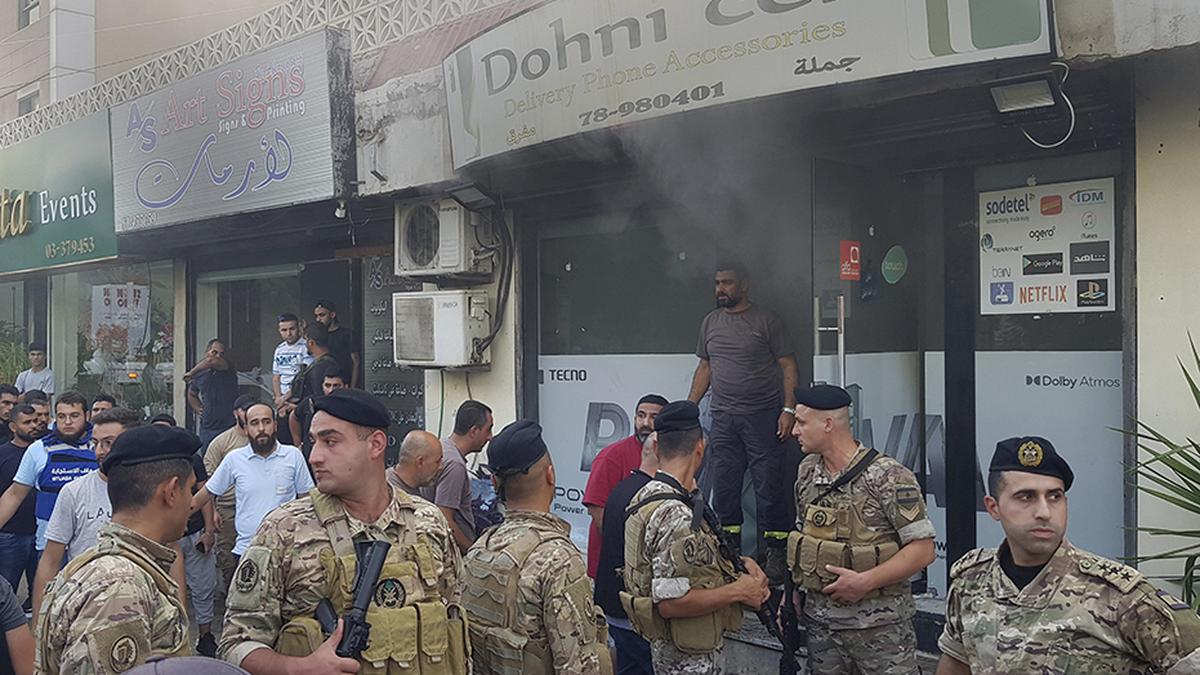
Just one day after a series of deadly explosions targeting Hezbollah’s pagers, a second wave of attacks struck Lebanon on Wednesday, deepening fears of escalating conflict.
The latest detonations, which reportedly included devices at a funeral in Beirut, killed at least 20 people and injured over 450, according to the Health Ministry.
The initial wave of explosions on Tuesday had already caused significant devastation, killing at least 12 people, including two children, and injuring thousands.
These attacks, believed to have been orchestrated by Israel, involved small explosives embedded in pagers used by Hezbollah members. An American official confirmed that Israel had briefed the U.S. about the operation, which utilized sophisticated remote-trigger technology.
Wednesday’s attacks targeted a range of electronic devices, including walkie-talkies and solar energy systems, further compounding the chaos.
READ ALSO: Fighting escalates in south Lebanon after Hezbollah fighters killed
Reports suggest that these devices, similar to those used in the earlier explosions, were also rigged with explosives. Hezbollah’s leader, Hassan Nasrallah, had previously warned against using cellphones, favoring pagers to avoid electronic surveillance.
Elijah J. Magnier, a Brussels-based political risk analyst, revealed that the pagers used in Tuesday’s explosions were procured more than six months ago, with uncertain origins.
Meanwhile, Taiwanese company Gold Apollo and Hungarian intermediary BAC Consulting KFT were linked to the pagers, though no direct exports to Lebanon were recorded.
The sophistication of the attacks raises concerns about the extent of infiltration in Lebanon’s supply chains. Experts suggest that such elaborate operations require extensive planning and intelligence gathering.
Nicholas Reese, adjunct instructor at NYU’s School of Professional Studies, noted that the attack’s complexity indicates a long-term strategy involving deep penetration into the target’s supply chain.
The attacks have escalated tensions between Israel and Hezbollah, and there are growing concerns about the broader implications for regional stability. Dr. Bamidele Akanbi, an economist, and other experts point out that the escalation could lead to a more significant conflict if diplomatic efforts fail.
The situation remains fluid, with Lebanon still grappling with the aftermath of the explosions. As investigations continue, the international community watches closely, wary of the potential for further violence in the already volatile region.


-
 Latest5 days ago
Israel marks 3 years since October 7 Hamas attack amid Gaza strikes, election debate
-

 Energy5 days ago
Fuel Battle: Dangote, marketers and government clash over petrol imports
-

 Energy6 days ago
Petrol, diesel prices rise 86% in 2026 as costs hit fresh highs
-
 Energy7 days ago
Has Iran lost control of the Strait of Hormuz? Oil flows rebound as war disruptions persist
-

 Football6 days ago
Nigeria’s World Cup exit under spotlight as FIFA’s DR Congo files emerge
-

 Latest6 days ago
US Court set to rule on release of FBI, DEA records on Tinubu
-

 Business6 days ago
Nigerian investors at a crossroads as fixed-income yields slide
-

 Business7 days ago
LoveWorld Trade and Investment Forum to Convene Business Leaders in Accra