
Business
Naira declines as U.S. Dollar strengthens, trading near lowest level

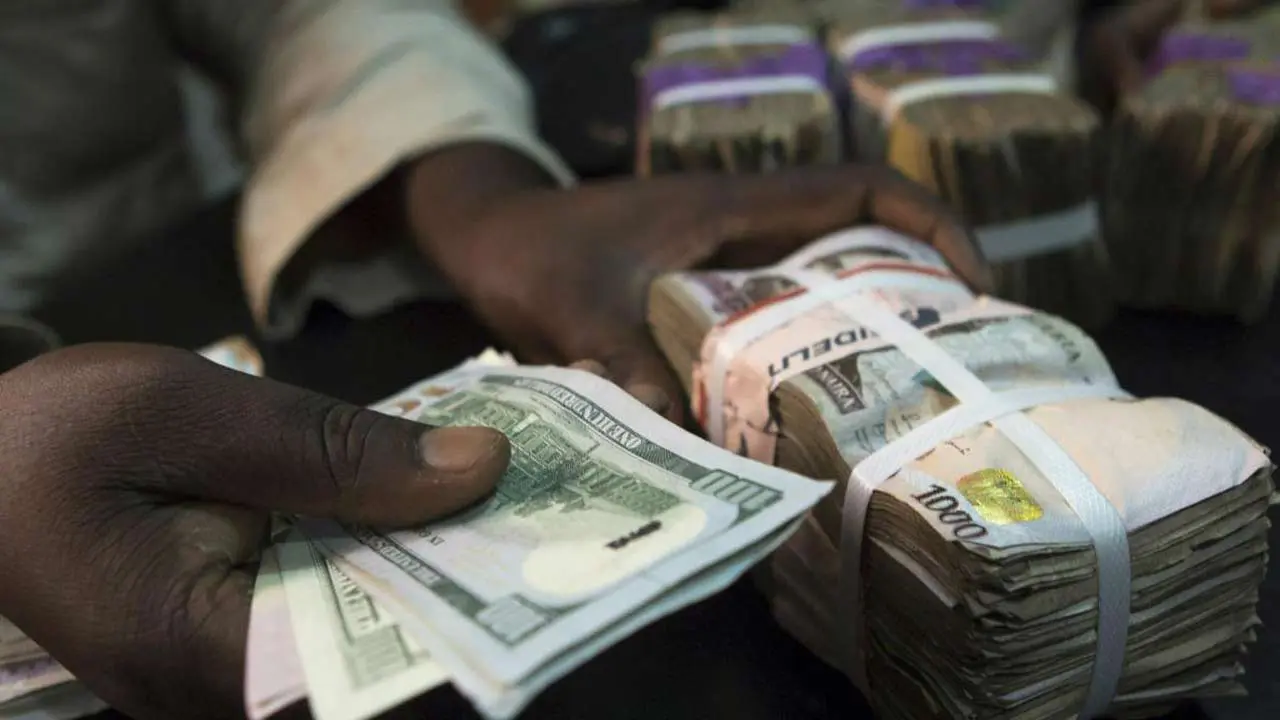
The Nigerian naira began the week on a bearish note, weakening to N1,596.6 against the U.S. dollar as the global dollar index showed strong performance.
The naira’s exchange rate is now at its lowest level since March, amid rising speculation about potential interest rate cuts by the U.S. Federal Reserve.
This decline represents a 1.66% drop from Friday’s rate of N1,570.14 at the Nigerian Autonomous Foreign Exchange Market, according to data from the FMDQ.
The drop in the naira’s value was accompanied by a reduction in foreign exchange (FX) liquidity, with daily market turnover falling 14.8% from $120.81 million on Friday to $102.93 million on Monday.
Despite the naira’s weakness in the official market, the currency showed slight resilience in the black market, where it was quoted at N1,610/$ on Monday, compared to N1,615/$ on Friday.
READ ALSO: Naira weakens against dollar amid increased FX turnover
The naira has experienced significant volatility since being floated in June of last year, losing over 45% of its value. This volatility has made the currency more vulnerable to market fluctuations, including global economic developments and shifts in U.S. monetary policy.
At the recent Jackson Hole Symposium, U.S. Federal Reserve Chair Jerome Powell hinted at a potential rate cut, but this had minimal immediate impact on the naira.
Meanwhile, the Central Bank of Nigeria (CBN) has maintained a hawkish stance, raising the benchmark interest rate by 800 basis points to 26.75% in less than a year, in an effort to stabilize prices and attract investment in naira-denominated assets.
However, the naira’s value remains constrained by ongoing fiscal challenges, including underinvestment, low oil production, and insecurity. These issues continue to weigh on the currency, despite the CBN’s efforts.
On the global stage, the U.S. Dollar Index regained some strength on Monday, hovering around 101 index points after dipping last week.
Citi analysts have noted the potential for further dollar strength, citing several factors, including emerging weaknesses in European economic data and upcoming U.S. elections. Historical trends also suggest that September could be a favorable month for the dollar, further adding pressure on the naira.
As the naira continues to struggle, the outlook remains uncertain, with both domestic and international factors contributing to its ongoing challenges.


-

 Sports2 days ago
Senegal opens Dakar 2026 Youth Olympic Games, Africa’s first Olympic event
-

 Latest5 days ago
Tinubu endorses Nigeria’s participation in 2026 World Travel Market London
-

 News7 days ago
Rugby: Borthwick Faces Key Selection Questions as World Cup Looms
-

 Football4 days ago
U-17 Women’s World Cup: Flamingos Beat Mexico to Reach Quarter-Finals
-

 Crime7 days ago
Passengers feared abducted on Kebbi-Abuja journey as viral video shows armed men threatening captives (VIDEO)
-
 Featured4 days ago
How court ruling reshapes APC’s Imo West Senatorial contest
-

 Featured1 week ago
Kaduna APC rally sparks row over turnout, alleged rented crowd and AI disinformation
-

 Latest3 days ago
Netanyahu, Eisenkot face coalition deadlock as Israel struggles to form new government