
Business
Naira plunges to new low at N951.22 in official market

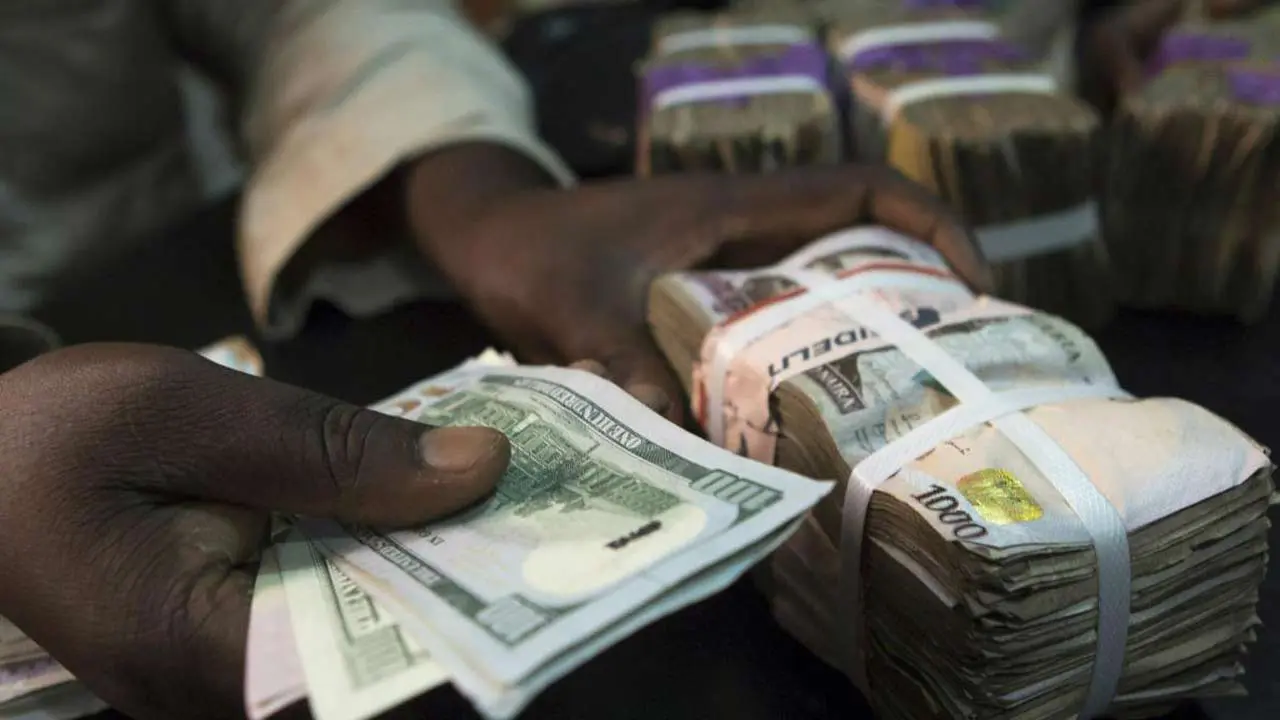
The intraday high recorded N1159.10/$1 as the naira hit a fresh record low on Wednesday, closing at N951.22 per dollar in the official market.
The domestic currency depreciated 15.19% to close at N951.22 to a dollar at the close of business, data from the NAFEM where forex is officially traded, showed.
This represents an N144.49 loss or a 15.19% decline in the local currency compared to the N806.73 it closed on Tuesday and a new all-time low per the Nairametrics tracker. The last all-time low was N956.33 recorded on November 23rd.
The intraday high recorded was N1159.10/$1, while the intraday low was N701/$1, representing a wide spread of N458.1/$1.
According to data obtained from the official NAFEM window, forex turnover at the close of the trading was $135.58 million, representing a 4.94% decrease compared to the previous day.
However, the naira gained at the parallel forex market where forex is sold unofficially, the exchange rate appreciated by 0.43 per cent, quoted at N1165/$1, while peer-to-peer traders quoted around N1173.51/$1.
READ ALSO: Naira sustains freefall as NAFEM closing rate drops to N927.19/$
Amid the rising free fall of the Naira both at the official Nigerian Foreign Exchange Market (NAFEM) and the unofficial market, financial experts had called on the Central Bank of Nigeria (CBN), to de-dollarize the economy by declaring any local transactions in the US dollars illegal.
Speaking on strategies that can be used for the naira to regain strength, the founder and chief consultant of B. Adedipe Associates Limited (BAA Consult), Dr. Biodun Adedipe, said the CBN should stop government agencies from charging local operators and entities in US dollars.
According to him, the sale of crude oil to local refineries should also be made in Naira rather than in US dollars.
Adedipe said: “CBN should deal transparently with participating banks at the I&E Window. De-dollarize the economy by declaring as illegal any local transactions in US dollars (sale of assets, rent/leases, and other services, including school fees and medical bills) and ensure that government agencies stop charging local operators and entities in US dollars (quite common in the maritime sector).
“Other suggestions include the need to ensure that the sale of crude oil to local refineries should be made in Naira rather than dollars. “
“President Bola Tinubu should have a direct engagement with bank CEOs to generate ideas and use moral suasion to enlist their support for the market reforms. Face the reality that unified exchange rates (not any different than floating the Naira) is a poor policy choice for a structurally defective and weak economy like ours,” he added.











-
 Featured1 week ago
Tinubu’s Renewed Hope: Reforms, hardship and the unanswered question of a second term
-

 Featured7 days ago
The cost of Renewed Hope: How Nigeria’s economic reforms are reshaping everyday family life
-

 Crime3 days ago
Kwara bandit deal under scrutiny as footage shows security operatives negotiating with terrorists [VIDEO]
-
 Business6 days ago
CBN forex reforms under scrutiny as Nigeria’s reserves drop $300m in 10 days
-

 Business6 days ago
NCC plans spectrum incentives to push telecom operators into more network investment
-

 Entertainment5 days ago
2027 Grammys: Asake, Wizkid, Tems, Ayra Starr lead Nigerian nominees in African music category
-

 Latest6 days ago
Nigeria’s security crisis deepens as October death toll hits 835, highest in 2026
-

 Sports1 week ago
Kenya’s Timothy Kibii wins Port Harcourt International Marathon