
Business
Naira posts mixed performance across markets

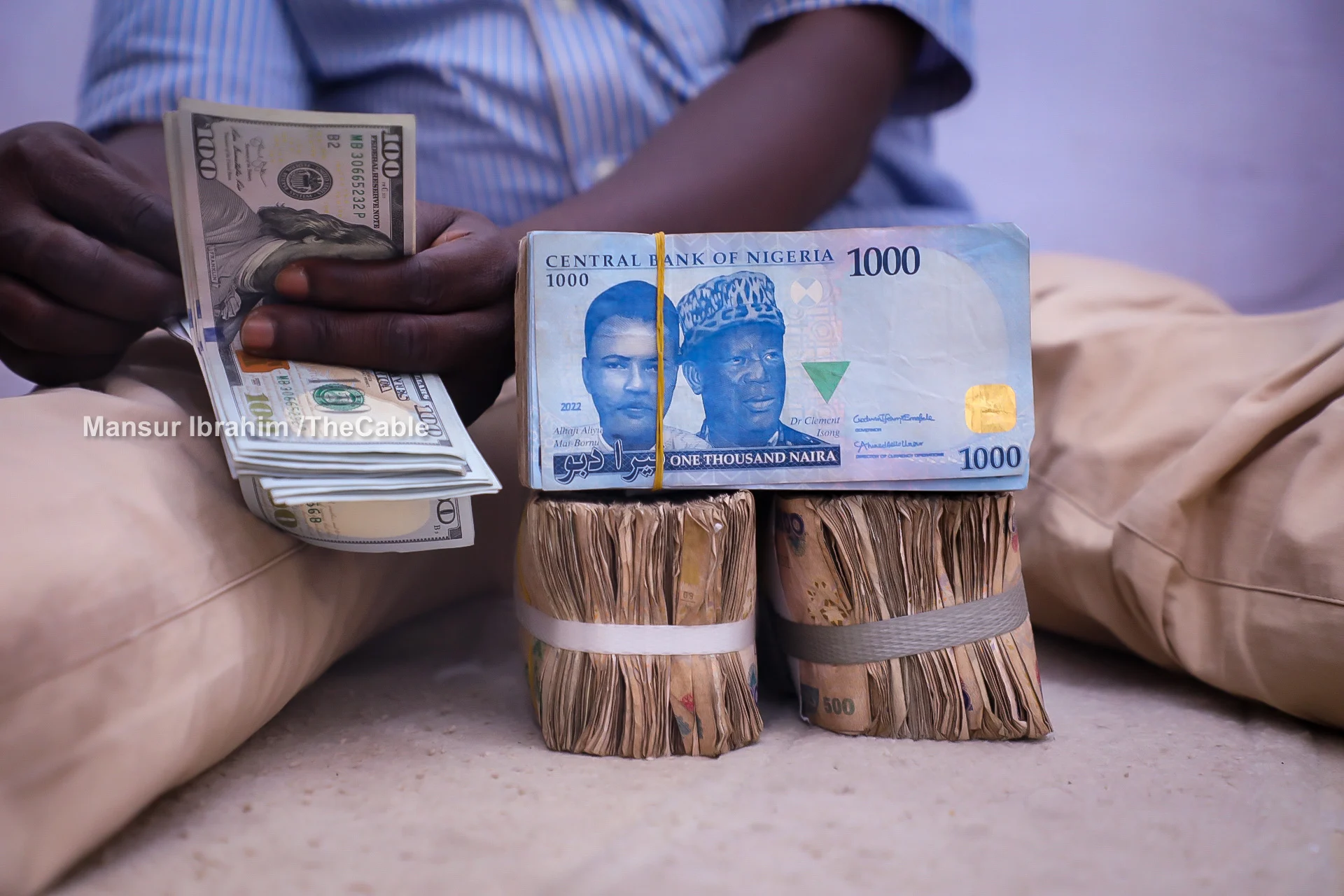
The Nigerian currency, the naira, displayed a mixed performance across various markets on Thursday, January 16, 2025, as the exchange rates showed marginal gains and losses against key global currencies.
According to data released by the FMDQ Exchange, the naira appreciated slightly against the US dollar at the official window, closing at ₦1,548.47/$1. This represents a gain of ₦2.63 compared to the ₦1,551.10/$1 recorded on Wednesday, January 15, 2025.
Conversely, the naira depreciated in the black market, where it traded at ₦1,680/$1, a loss of ₦20 from the previous day’s rate of ₦1,660/$1. Market analysts attributed this disparity to persistent demand pressures in the informal market despite relative stability in the official segment.
The naira strengthened against the British Pound Sterling, trading at ₦2,070/£1, improving by ₦10 from the previous day’s rate of ₦2,080/£1. Also, it gained traction against the Euro, exchanging at ₦1,690/€1, a ₦10 improvement from ₦1,700/€1 on Wednesday.
The naira maintained stability against the Canadian Dollar, holding steady at ₦1,280/CA$1 for a second consecutive day.
Currency analysts note that the naira’s marginal appreciation at the official window reflects ongoing interventions by the Central Bank of Nigeria (CBN) to stabilize the local currency.
READ ALSO: Naira dips against Dollar at official window, gains in black market
Dr. Adebayo Olayinka, a financial economist, explained: “The central bank’s management of foreign exchange liquidity has contributed to maintaining stability in the official window. However, the widening disparity between official and black market rates remains a concern, highlighting structural issues in the forex market.”
Similarly, Dr. Chika Nwafor, a currency strategist, commented on the naira’s gains against the pound and euro, attributing it to fluctuations in global currency markets influenced by recent economic data from the UK and the Eurozone.
The loss in the black market underscores persistent pressures from importers and businesses unable to access forex through official channels. Analysts argue that addressing this demand-supply gap is key to narrowing the exchange rate spread.
Looking ahead, experts emphasize the need for sustained policy interventions to support the naira. Measures such as boosting non-oil exports and improving forex accessibility in official channels are seen as critical to reducing reliance on the black market and achieving long-term currency stability.
This mixed performance comes amidst heightened attention to Nigeria’s broader economic reforms aimed at fostering economic growth and resilience.


-

 Latest5 days ago
Full List: Meet the 2026 Nobel Prize winners across six categories
-

 Football5 days ago
Premier League Matchweek 7: Five Fixtures That Could Shape the Weekend
-

 Latest4 days ago
Umahi defends Lagos-Calabar highway route changes amid public outcry
-

 Business3 days ago
Dangote Refinery IPO: 70% Subscription claim meets fourfold demand assertion as investors seek clarity
-
Business4 days ago
Dangote Refinery IPO Extension: Was the 70% subscription report overhyped?
-

 Latest2 days ago
UCTH faces morgue crisis as 50 unclaimed corpses await mass burial
-

 Featured4 days ago
El-Rufai, ADC governorship candidate’s court appearance puts Kaduna opposition politics in focus
-

 Business2 days ago
BREAKING: Nigeria’s Inflation Rate Drops to 14.63% in September