
Business
Naira slips against Dollar, Pound as Interbank FX transactions plunge 77.7%

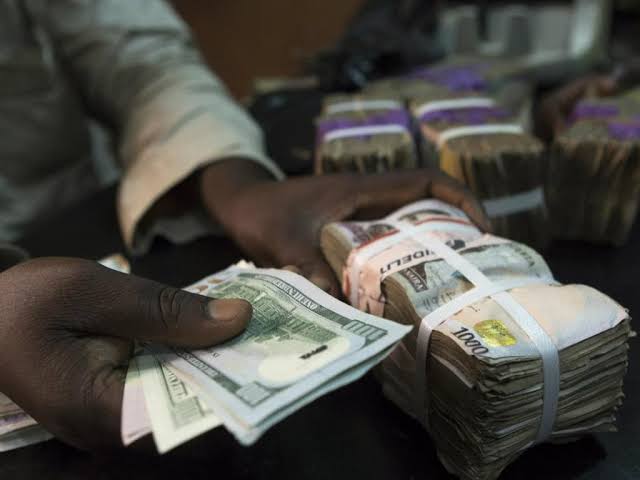
The naira weakened against the United States dollar and British pound at the official foreign exchange market on Monday, October 12, 2026, while recording a marginal gain against the euro.
The local currency depreciated by 90 kobo against the dollar to close at N1,332.09, compared with N1,331.19 recorded at the previous trading session on Friday.
Against the British pound, the naira lost N3.47 to close at N1,762.63, down from N1,759.16.
However, the currency appreciated by N1.64 against the euro, closing at N1,489.15 compared with N1,490.79 recorded on Friday.
At GTBank’s foreign exchange desk, the naira strengthened against the dollar to N1,338 from N1,340, while it remained unchanged at N1,360 per dollar in the parallel market, also known as the black market.
The mixed performance came as foreign exchange transactions between banks declined sharply, with data from the Central Bank of Nigeria (CBN) showing that interbank FX transactions fell by 77.7 per cent to $36.24 million from $162.74 million recorded previously.
The decline in trading activity comes amid changing patterns of dollar demand and supply, with market participants monitoring foreign investment inflows, external reserves and preparations by importers for the year-end festive season.
Despite the sharp drop in interbank foreign exchange transactions, the value of dollar transactions increased significantly in the broader market during the previous week.
Dollar transactions rose to $3.37 billion from $1.70 billion recorded in the preceding week, with much of the increase attributed to spot market transactions, where currencies are exchanged at prevailing rates.
The development points to increased activity in the foreign exchange market even as transactions between banks recorded a substantial decline.
READ ALSO; Naira slips to N1,332.75/$ as FX turnover surges past $1bn
Meanwhile, Nigeria’s net foreign reserves have reportedly risen to $46 billion, supported by increased foreign investment.
The reserves provide the CBN with an important buffer to support foreign exchange market stability when necessary, although their effectiveness depends partly on the availability of liquid external assets and the scale of dollar demand.
Market participants are also watching for a possible increase in demand for foreign exchange as businesses and importers prepare for the December festive season, a period that typically brings higher demand for imported goods and other foreign-currency payments.
Any sustained increase in demand without a corresponding rise in dollar supply could place additional pressure on the naira.
In its weekly economic and market report for the week ended October 9, Cordros Securities said the outlook for foreign exchange inflows would depend on the continued attraction of foreign investment and improvements in domestic sources of dollar supply.
Sustained foreign portfolio investment could provide additional liquidity to the market, while stronger export earnings and other foreign exchange receipts could help improve the availability of dollars.
However, changes in global financial conditions, investor sentiment and domestic demand could influence the pace of inflows and the direction of the exchange rate.
The performance of the naira in the coming weeks will therefore depend partly on whether dollar supply can keep pace with demand from importers, manufacturers and other market participants.
Meanwhile, major cryptocurrencies recorded losses as investors adopted a more cautious stance amid weakness in Asian chip stocks and US technology futures.
Concerns over rising oil prices, driven by fears of supply disruptions in the Middle East, also heightened worries about inflation and the possibility that the United States Federal Reserve could maintain or raise interest rates if price pressures persist.
Higher interest rates can weigh on risk-sensitive assets, including cryptocurrencies, by increasing the relative appeal of interest-bearing investments and tightening financial conditions.
Investors are now awaiting the United States consumer price index report expected on Thursday, which could provide fresh indications of the direction of inflation and future monetary policy.
Among major digital assets, Cardano recorded one of the steepest declines, falling 5.2 per cent to $0.2394.
However, Tether and USD Coin, two stablecoins designed to maintain parity with the US dollar, remained unchanged at $1 each.
The broad-based declines reflect investors’ sensitivity to global economic developments, particularly changes in inflation expectations, oil prices and interest-rate outlooks.
With the US inflation report approaching, cryptocurrency markets may remain sensitive to fresh economic data and any resulting changes in expectations about the Federal Reserve’s policy direction


-
 Latest6 days ago
Israel marks 3 years since October 7 Hamas attack amid Gaza strikes, election debate
-

 Energy6 days ago
Fuel Battle: Dangote, marketers and government clash over petrol imports
-

 Energy1 week ago
Petrol, diesel prices rise 86% in 2026 as costs hit fresh highs
-

 Football1 week ago
Nigeria’s World Cup exit under spotlight as FIFA’s DR Congo files emerge
-

 Energy1 week ago
Has Iran lost control of the Strait of Hormuz? Oil flows rebound as war disruptions persist
-

 Latest1 day ago
Full List: Meet the 2026 Nobel Prize winners across six categories
-

 Latest1 week ago
US Court set to rule on release of FBI, DEA records on Tinubu
-

 Business1 week ago
Nigerian investors at a crossroads as fixed-income yields slide