
Latest
Netanyahu, Eisenkot face coalition deadlock as Israel struggles to form new government

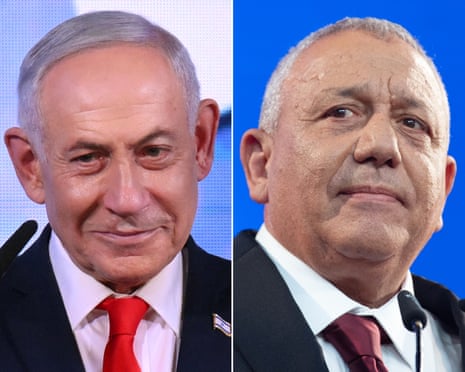
With Netanyahu’s bloc holding 53 seats and opposition parties securing 48, both sides need additional support to reach the 61-seat majority required to govern. Arab-led parties, which won a historic 19 seats, have emerged as a potential factor in negotiations.
Israeli Prime Minister Benjamin Netanyahu and opposition leader Gadi Eisenkot are facing a difficult coalition-building contest after final election results left neither political bloc with enough seats to form a government independently.
The final results released on Friday, October 30, 2026, gave Netanyahu’s bloc 53 seats in the 120-member Knesset, while the opposition alliance led by Eisenkot secured 48. Arab-led parties won the remaining 19 seats, their strongest parliamentary showing to date.
With 61 seats required for a parliamentary majority, the results have opened the door to weeks of negotiations involving parties with sharply different political positions. The outcome will determine whether Netanyahu can retain power, Eisenkot can assemble an alternative government or Israel will have to return to the polls.
Although Netanyahu’s Likud party remains the largest individual party, securing 27 seats, the combined strength of his allies is insufficient to command a majority.
The prime minister has maintained that he intends to form another right-wing government and has urged his political partners to remain united. However, the 53-seat result means his bloc needs at least eight additional lawmakers to reach the parliamentary threshold.
One possible route would involve attracting lawmakers from outside his existing alliance or negotiating a broader unity government with some opposition parties.
However, the opposition has campaigned largely on removing Netanyahu from office, making an agreement with his political allies potentially difficult.
Netanyahu has also rejected the prospect of forming a government dependent on Arab-led parties, further limiting his coalition options.
Eisenkot’s opposition alliance faces a different challenge. Although its 48 seats are fewer than Netanyahu’s bloc, it could potentially form a government with support from parties outside the existing opposition grouping.
The 19 seats held by Arab-led parties could provide a route to parliamentary support for an alternative administration.
Leaders of the Arab parties have indicated willingness to help remove Netanyahu from power, but cooperation remains politically sensitive because of disagreements over security, national policy and the role of Arab parties in government.
There are also divisions within the opposition itself. Its constituent parties have different ideological positions, meaning that reaching agreement on a shared government programme and distribution of ministerial positions could prove difficult.
Eisenkot must therefore decide whether to pursue cooperation with Arab representatives, negotiate with smaller Jewish parties or consider a broader political arrangement.
The 19 seats won by Arab-led parties have placed them in an influential position in the coalition negotiations.
Their performance followed a record level of participation by Arab voters, according to reports on the election results.
The two main Arab political groupings, the Joint List and the United Arab List (Ra’am), could provide parliamentary backing for an opposition-led government, either through direct coalition participation or support from outside government.
However, the possibility of such an arrangement has generated political resistance.
Netanyahu and his allies have argued against a government that depends on Arab parties, while some opposition politicians have also faced pressure over their willingness to cooperate with them.
The political divisions have become more pronounced following allegations by Netanyahu and Likud that Arab-led parties benefited from electoral interference and vote-buying. The allegations have been made without publicly established evidence.
Israeli election officials have said there is no basis for claims of systematic violations of the election’s integrity, while security agencies are examining specific allegations of possible interference. Arab political leaders have rejected the accusations.
Beyond a direct alliance between Eisenkot’s bloc and Arab-led parties, negotiations could involve smaller religious and ultra-Orthodox parties.
United Torah Judaism, which holds seven seats, has emerged as a possible partner for opposition negotiators. However, its participation alone would not give Eisenkot’s existing 48-seat bloc a majority.
Shas, another ultra-Orthodox party, has indicated that it would not join an opposition-led government without Likud, complicating efforts to build an alternative coalition.
A wider arrangement involving several opposition parties and ultra-Orthodox lawmakers could theoretically reach the required number, but disagreements over military conscription, religious policy and other issues remain significant obstacles.
Another possibility is a national unity government involving Netanyahu and some of his opponents. Such an arrangement could reduce dependence on Arab-led parties but would require compromises over leadership, policy and ministerial appointments.
If neither side succeeds in assembling a government, Israel could face another general election early next year.
Under the country’s coalition-formation process, President Isaac Herzog will consult representatives of the elected parties after the results are formally certified before assigning a lawmaker the task of forming a government.
The person selected will initially have 28 days to secure a coalition, with a possible 14-day extension.
If the attempts fail, another candidate may be given an opportunity. A continued deadlock could eventually trigger another election.
The new Knesset is expected to convene on November 10, even as negotiations continue.
For Netanyahu, the immediate challenge is keeping his existing political partners together while attracting additional support. For Eisenkot, it is building an alliance broad enough to replace the prime minister without being undermined by ideological disagreements.
With neither side holding the numbers needed to govern, the 19 seats won by Arab-led parties and the decisions of smaller political groups could determine the direction of Israel’s next government.


-

 Featured6 days ago
BREAKING NEWS: Shouts of joy rock the world as Pastor Chris opens final Healing Streams edition for 2026
-

 Football1 week ago
Man United shortlist Emery, Nagelsmann as potential replacements for Carrick
-

 Business1 week ago
Hoodlums raid JED Benue office, abduct 10 staff over power dispute
-

 Football1 week ago
Aston Villa ready to freeze out Garnacho to avoid £43m Chelsea transfer
-

 Business1 week ago
EV adoption: Roxettes seeks cheaper financing, local manufacturing incentives
-

 Latest7 days ago
Akpabio tasks Tompolo-backed movement with spreading Tinubu’s renewed hope message
-

 Business6 days ago
How Ethiopian Airlines is challenging Africa’s aviation narrative through self-reliance
-
 Latest1 week ago
2027: Adeyanju predicts Tinubu will defeat Atiku, win 25% votes in every state