
Latest
Nigerians groan as cooking gas prices rise again

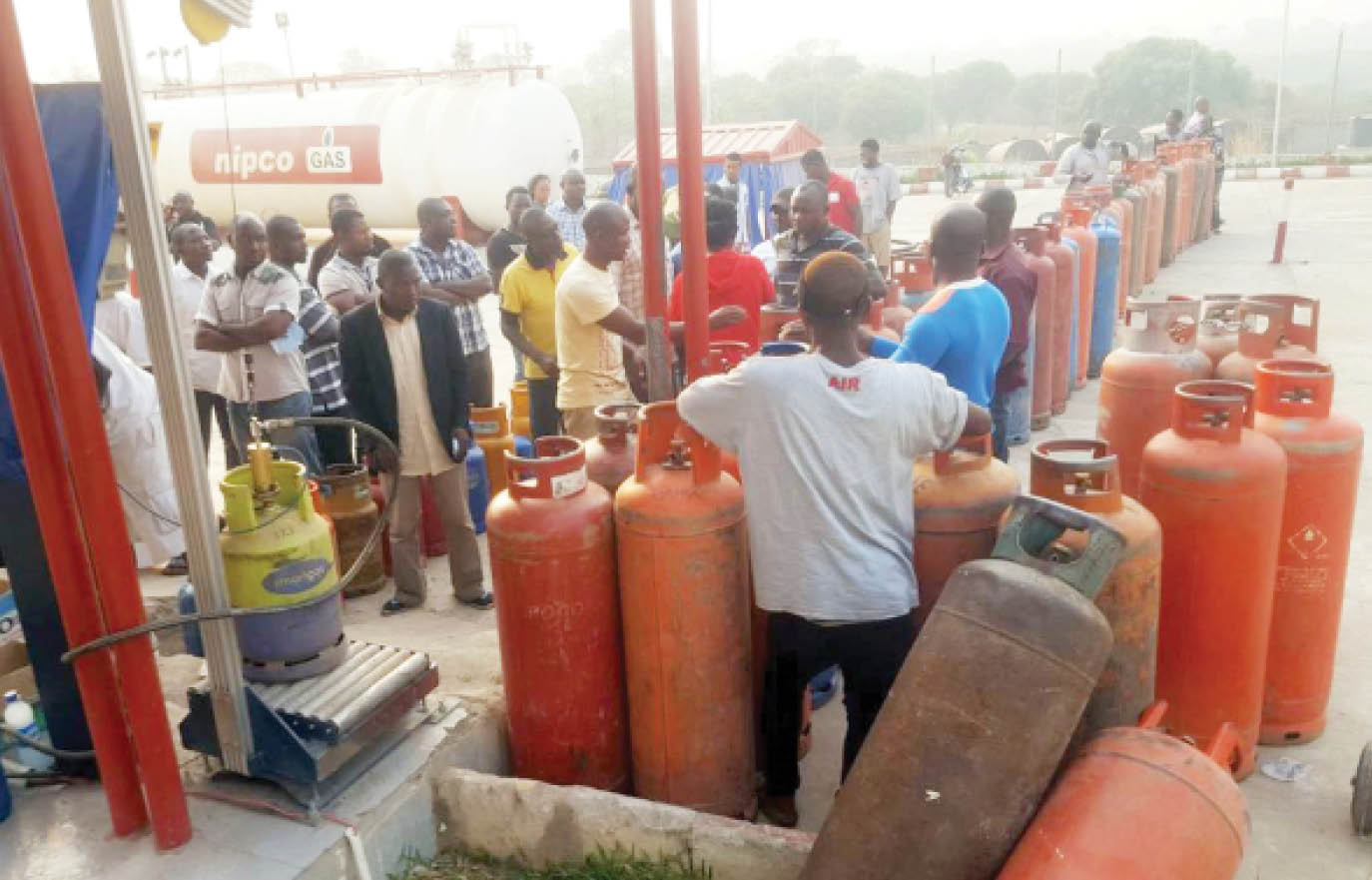
The latest increase in the price of Liquefied Petroleum Gas (LPG), popularly known as cooking gas, has triggered fresh concerns across Nigeria, with many households struggling to cope amid worsening economic hardship and rising living costs.
The sudden jump in cooking gas prices over the weekend has further compounded the burden on millions of Nigerians already grappling with inflation, high food prices, rising transportation costs, insecurity and poor public infrastructure.
Findings from several gas retail outlets in Lagos revealed that the price of cooking gas rose sharply from about N1,200 per kilogramme to between N1,400 and N1,500 in many locations, pushing the cost of refilling a 12.5kg cylinder from approximately N14,200 to as high as N17,500.
The development has sparked frustration among consumers, many of whom were seen lamenting their situation at gas stations in areas around Amuwo Odofin and Festac in Lagos State.
Some residents who arrived to refill full 12.5kg cylinders reportedly reduced their purchases to smaller quantities after discovering the new prices, while others left without buying any gas at all.
For several families, the increase represents another painful adjustment in an economy where incomes have remained largely stagnant despite soaring costs of living.
Many consumers interviewed blamed the continuous rise in cooking gas prices on the ripple effects of fuel subsidy removal introduced by the administration of President Bola Ahmed Tinubu in 2023.
READ ALSO: Dangote vows to slash cooking gas prices, threatens direct sales to consumers
According to them, the removal of subsidy on petrol triggered inflationary pressure across multiple sectors, increasing transportation, logistics and energy costs nationwide.
A resident identified as John Chukwuebuka warned that the rising cost of cooking gas could force many Nigerians back to the use of firewood and charcoal for cooking, a shift he said would have severe environmental consequences.
“When people can no longer afford cooking gas, they naturally look for alternatives. That means more trees will be cut down for firewood and charcoal,” he said.
Another resident, Morenike, expressed frustration over the worsening economic conditions, describing the latest increase as unbearable for ordinary Nigerians already struggling with rising food and transportation costs.
She criticised the government over insecurity, inflation and the growing cost of living, arguing that many Nigerians have become increasingly frustrated by the economic realities confronting households.
Public affairs commentator, Rowland Adenuga, described the latest increase as unfortunate, noting that cooking gas had become one of the few alternatives Nigerians relied on following the rise in petrol prices.
According to him, allowing LPG prices to rise further could worsen poverty levels and push more citizens toward unsafe and environmentally harmful cooking methods.
“Cooking gas should ordinarily serve as relief for Nigerians after fuel subsidy removal, but it is gradually becoming unaffordable for average citizens,” he said.
He urged the Federal Government to consider policy interventions capable of stabilising cooking gas prices, warning that continued increases could trigger greater public anger ahead of the 2027 elections.
Adenuga also advocated targeted subsidy measures for cooking gas to discourage dependence on charcoal and firewood.
“If there should be any subsidy at all, it should be on cooking gas because of its environmental importance,” he argued.
He warned that unchecked deforestation resulting from increased firewood usage could worsen desertification and ecological imbalance in several parts of the country.
Political analysts, on the other hand, believe the worsening economic hardship may influence voter sentiment ahead of the 2027 general elections.
Several commentators argued that Nigerians are increasingly evaluating political leadership through the lens of daily economic survival, especially amid rising living costs and declining household incomes.
While the Federal Government has repeatedly defended ongoing economic reforms as necessary for long-term stability, many citizens insist that immediate relief measures are urgently needed to cushion the impact of inflation and rising energy costs.


-

 Featured2 days ago
BREAKING NEWS: Shouts of joy rock the world as Pastor Chris opens final Healing Streams edition for 2026
-

 Football3 days ago
Man United shortlist Emery, Nagelsmann as potential replacements for Carrick
-

 Business3 days ago
Hoodlums raid JED Benue office, abduct 10 staff over power dispute
-
 Business6 days ago
Naira faces exchange rate gap as Dollar hits N1,380 on parallel market
-

 Football3 days ago
Aston Villa ready to freeze out Garnacho to avoid £43m Chelsea transfer
-

 Business3 days ago
EV adoption: Roxettes seeks cheaper financing, local manufacturing incentives
-

 Latest3 days ago
Akpabio tasks Tompolo-backed movement with spreading Tinubu’s renewed hope message
-
 Business3 days ago
Naira suffers biggest daily drop in 18 months, falls to N1,365/$